Forty percent of pantry storage goes to waste in the average kitchen. Not because the space isn’t there, but because nobody designed it around how the kitchen actually gets used. The flour lives three shelves above, where bread gets made. The canned goods stack four deep, so the back row might as well not exist.
The spices are everywhere and nowhere at once. Good pantry design fixes all of that without requiring a gut renovation or a contractor.
It requires a clear-eyed look at your cooking habits, a few smart storage decisions, and the willingness to start building around the ones you actually need. And this guide shows you exactly how to do that.
Kitchen Pantry Design Ideas for Modern Homes
Most pantries waste nearly half their storage capacity. Not because the kitchen is too small, but because the shelving was designed around convention rather than how anyone actually cooks.
The difference between a pantry that frustrates you and one that disappears into your workflow comes down to a few decisions made early: zoning, vertical space, and how you move through the kitchen at 6 pm on a Tuesday when three things are on the stove.
Get those right, and you stop fighting your kitchen. Get them wrong, and you’re reorganizing the same shelf for the fourth time this year.
How Modern Pantry Layouts Improve Daily Kitchen Flow
The pantry designs that hold up over years are built around workflow, not aesthetics. Think about where you stand when you’re prepping dinner, then position your most-used staples within arm’s reach of that exact spot.
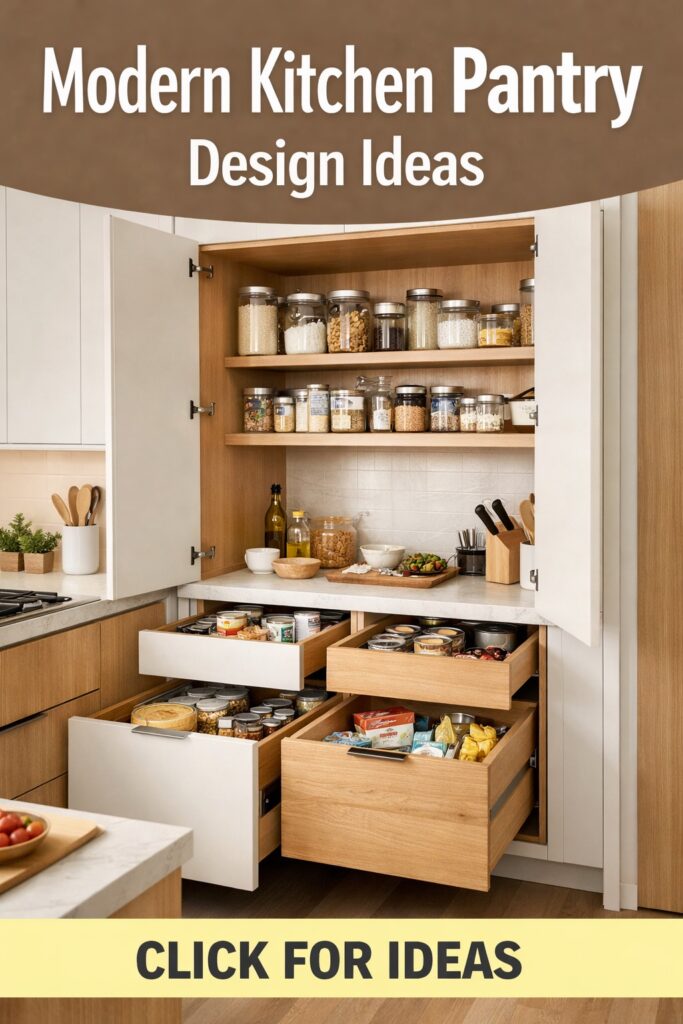
Pull-out drawers beat fixed deep shelves every time because you stop losing things in the back, and adjustable shelving means the space grows with your habits rather than locking you into someone else’s configuration. A pantry that mirrors how you cook stops feeling like storage and starts feeling like a system.
Small Kitchen Pantry Design That Maximizes Every Inch
Vertical Storage Solutions for Tiny Kitchens
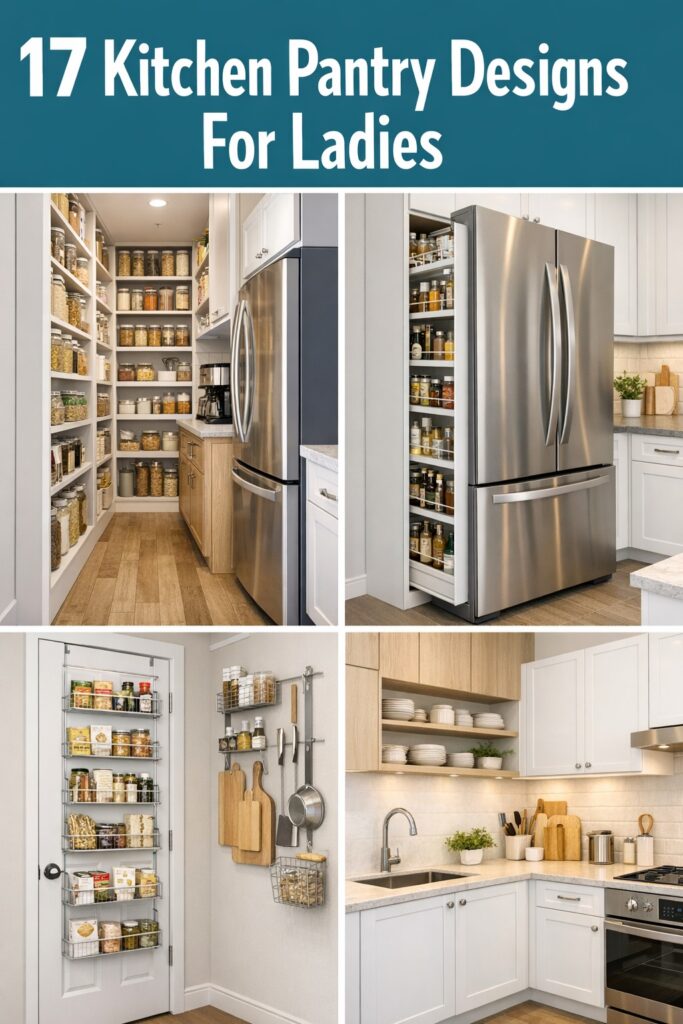
Compact kitchens punish horizontal thinking, so the only real move is up. Floor-to-ceiling shelving, stackable organizers, and over-the-door racks reclaim wall space that’s been sitting idle since the house was built.
Stacking upward rather than outward is what preserves counter space, which in a small kitchen is the most valuable real estate you have. Once you start treating the full height of the room as usable, the kitchen stops feeling like it’s working against you.
Slim Pantry Cabinets and Pull-Out Systems That Work
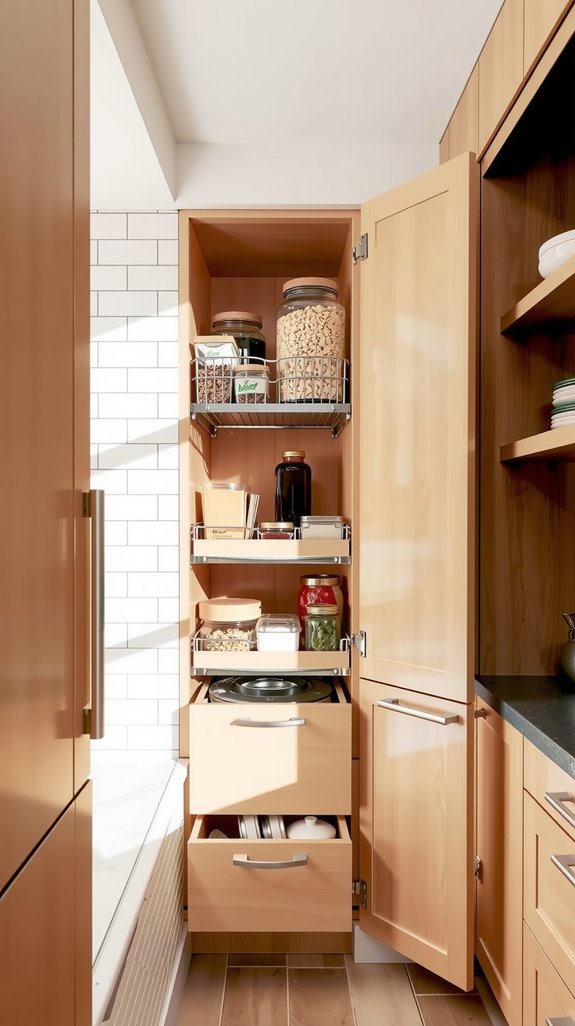
Slim pull-out cabinets, even ones only eight inches deep, slot neatly into the gap beside the fridge or between appliances and hold spices, oils, and condiments without eating into counter space.
These aren’t compromise solutions: a well-configured six-inch pull-out with full-extension glides gives you better visibility than a twelve-inch fixed shelf stuffed three rows deep.
Soft-close mechanisms matter here too, because a cabinet you’re opening twenty times a day needs to hold up to that kind of use. The trick is treating those awkward gaps between appliances as opportunities rather than dead zones.
Walk-In Kitchen Pantry Design for Organized Storage
Ideal Walk-In Pantry Layouts for Busy Households
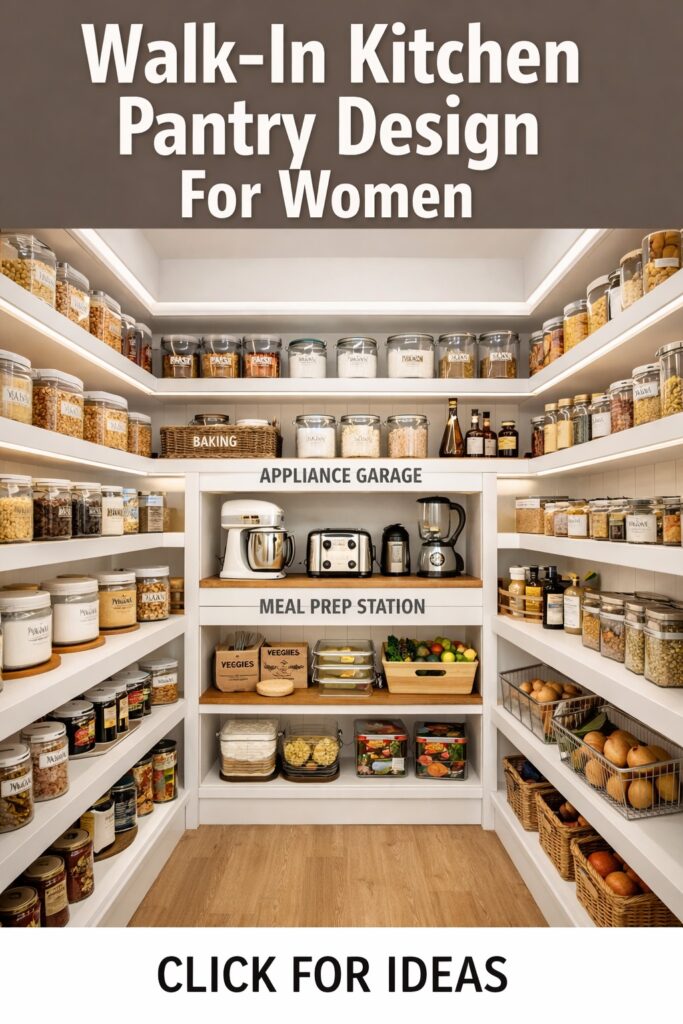
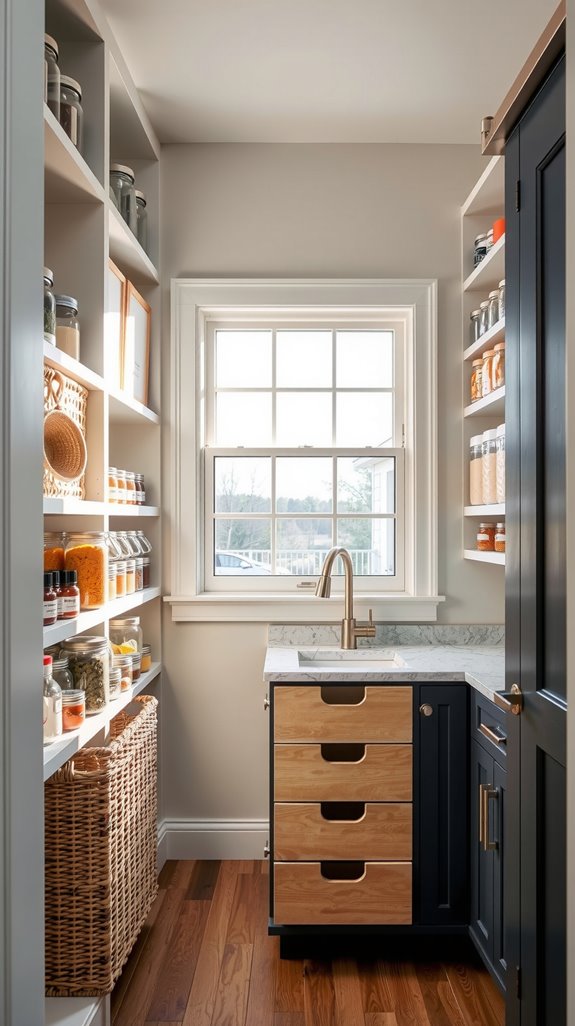
A walk-in pantry earns its square footage only when the layout matches the household using it. U-shaped configurations give you the most storage surface and let two people work the space at once without bumping into each other, which matters more than most design guides admit.
L-shaped layouts handle smaller footprints well, especially when one wall holds dry goods and the other handles appliances or bulk stock. Straight galley runs work when depth is limited, provided the shelving on both sides is deep enough to justify the footprint.
Lighting and Shelving Tips for Walk-In Pantries
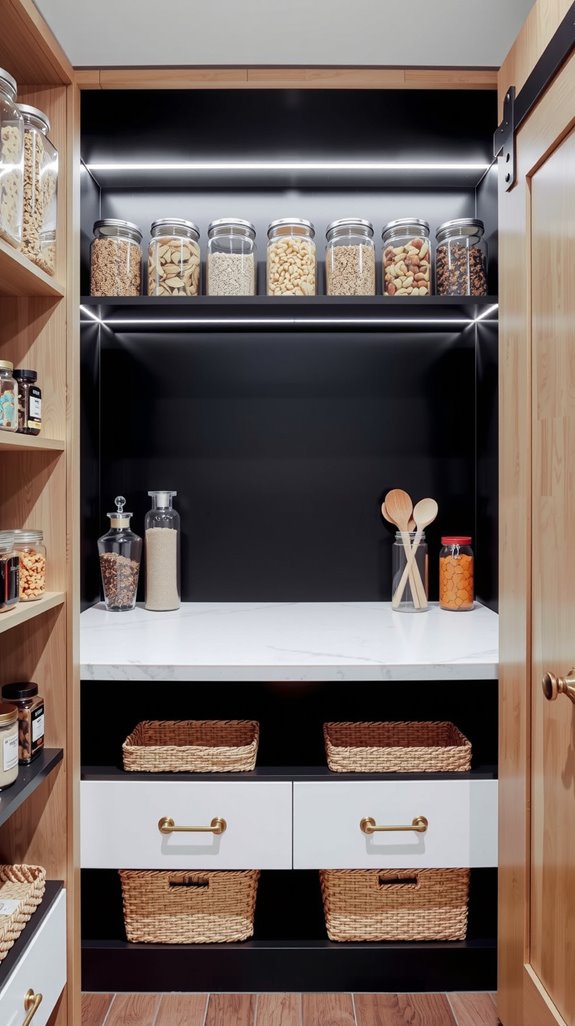
Lighting is non-negotiable in a walk-in pantry, and a single overhead bulb is never enough. LED strips mounted under each shelf eliminate the shadows that make you pull three things out just to find the one you want.
A motion-sensor ceiling fixture means your hands stay free when you’re carrying groceries in, which sounds like a small thing until you’ve done it a hundred times in the dark. Pair the lighting with adjustable shelving so the system adapts as your storage needs change rather than forcing you to work around fixed heights.
Kitchen Pantry Design Ideas for Small Spaces
Corner Pantries and Hidden Pantry Solutions
Dead corners are one of the most reliably wasted spaces in a kitchen, and pull-out corner units fix that without requiring a full renovation. Toe-kick drawers below base cabinets recover another overlooked zone, deep enough for flat items like cutting boards and baking sheets that have no good home anywhere else.
Integrated panel-ready pantries that blend with surrounding cabinetry are worth considering when you want the storage without the visual weight of an additional piece of furniture. These solutions stack on top of each other, so a small kitchen can carry a surprising amount of organized storage once you start treating every surface as an option.
Smart Door Storage and Wall-Mounted Options
The back of a pantry door is storage space that most kitchens never touch. Door-mounted racks handle spices, condiments, and cleaning supplies without consuming a single inch of shelf space, and they put frequently grabbed items at eye level rather than buried behind something else.
Wall-mounted wire baskets and magnetic strips work the same logic on vertical surfaces: keep things visible, keep them reachable, and stop relying on shelf depth to do all the work. Once you’ve used the doors and walls well, the shelves themselves become dramatically easier to manage.
Indian Kitchen Pantry Design for Daily Cooking Needs
Pantry Storage for Spices, Grains, and Bulk Staples
Daily Indian cooking puts specific demands on a pantry that standard layouts don’t address. Whole spices and masalas need airtight, clearly labeled containers because mixing up jeera and fennel mid-recipe is a real and painful mistake.
Heavy grains like rice and toor dal do best in pull-out drawers at a low height so you’re not lifting a five-kilo container above your waist. Graduated shelf heights let you see everything at once instead of stacking containers so deep that the back row becomes invisible.
Ventilation and Layout Considerations in Indian Kitchens
Daily tempering and frying push heat, moisture, and aromatic oils outward in ways that a standard kitchen ventilation plan doesn’t account for. Position the pantry away from direct stove exposure while keeping it close enough that the workflow between cooking and restocking stays efficient.
Exhaust fans or cross-ventilation are non-negotiable: without real airflow, stored grains and spices absorb ambient odors over time and the pantry starts to smell like yesterday’s tadka. Design the walkways wide enough for two people, because in a busy Indian household the kitchen rarely has just one person in it.
Open Kitchen Pantry Design Trends
When an Open Pantry Works Better Than Closed Cabinets
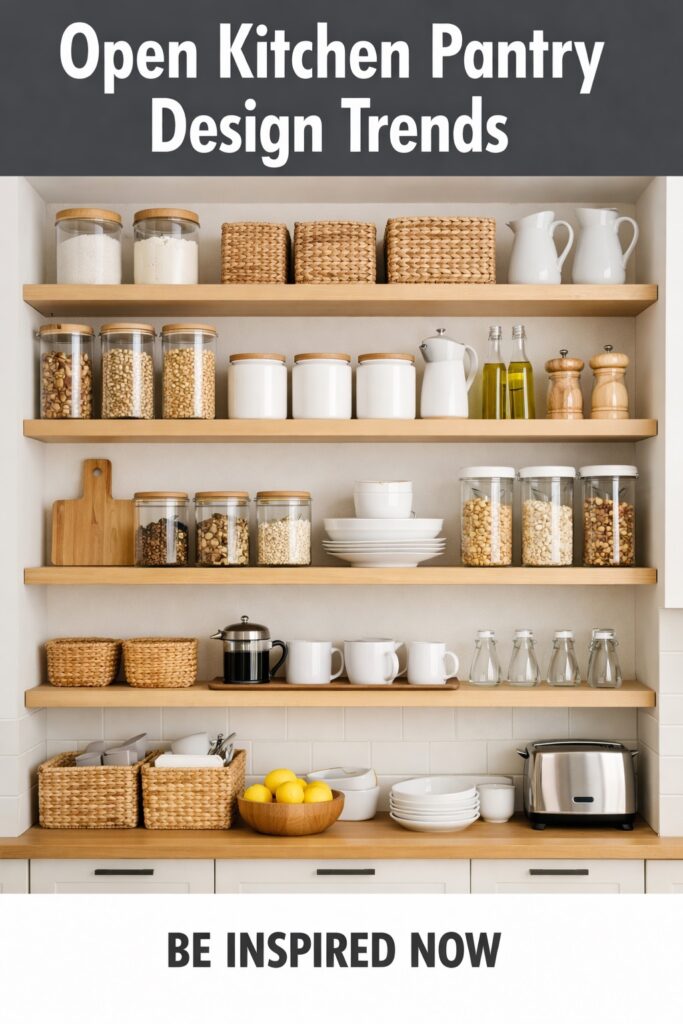
Open pantries have been gaining ground for good reason: when they work, they make a kitchen feel larger and more accessible than closed cabinetry ever could. They’re particularly effective in smaller kitchens where glass-front cabinets or floating shelves push the walls back visually without requiring a single structural change.
The practical advantage is that you can see everything at a glance, which cuts down restocking mistakes and the mystery-item problem that plagues deep closed shelves. They work best for people who cook frequently enough that nothing sits long enough to collect dust.
Styling an Open Pantry Without Creating Visual Clutter
An open pantry rewards discipline and punishes the absence of it faster than any other storage format. Uniform containers, a limited color palette of two or three complementary tones, and consistent restocking habits are what separate a display that looks intentional from one that looks like a garage sale.
Adjustable shelving lets you dedicate specific zones to baking supplies, snacks, and canned goods so the organization holds up under daily use rather than collapsing by Thursday. If you’re not ready to maintain the system, closed doors are the more forgiving choice.
Modular Kitchen Pantry Design Systems
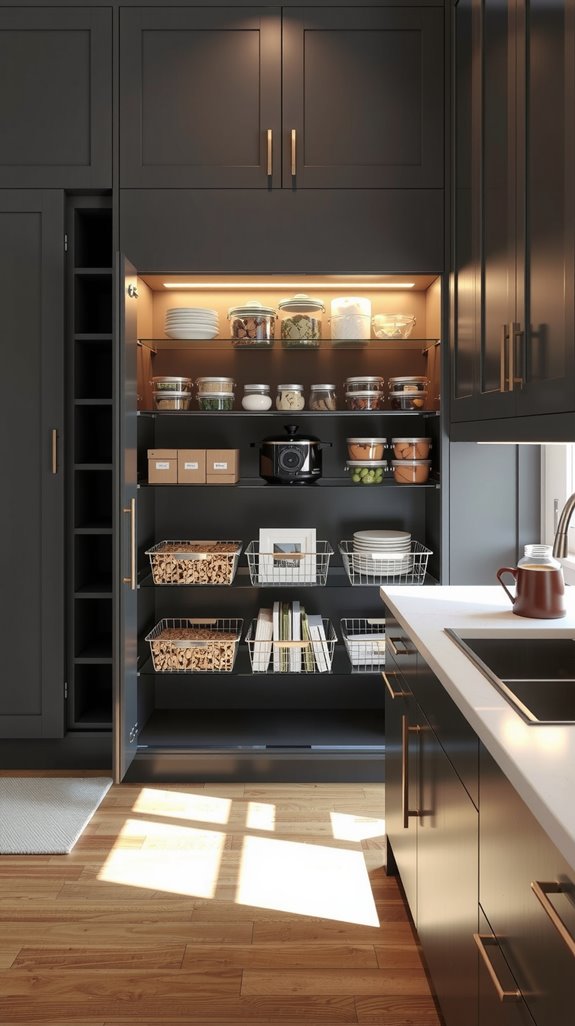
Custom vs Modular Pantry Units: What to Choose
Custom cabinetry handles odd dimensions, unusual ceiling heights, and architectural quirks that modular units simply can’t accommodate. But modular systems have closed the gap considerably, and for a standard kitchen footprint they’re faster to install, easier to reconfigure, and significantly cheaper.
The decision usually comes down to whether your space has constraints that require a bespoke solution or whether a well-configured modular system would cover ninety percent of your needs at half the cost. Spend custom money where the space genuinely demands it and modular money everywhere else.
Popular Modular Pantry Accessories and Inserts
The accessories are where modular systems earn their keep. Pull-out spice racks, tiered shelf organizers, and adjustable dividers recover vertical space that a bare shelf wastes entirely.
Lazy Susans finally make corner cabinets functional rather than the place where things go to be forgotten, and can dispensers bring older stock forward automatically so you stop buying duplicates of things you already have. Drawer inserts for utensils and cutting boards keep the flat items separated and accessible without a dedicated cabinet of their own.
Kitchen Pantry Cabinet Design Ideas
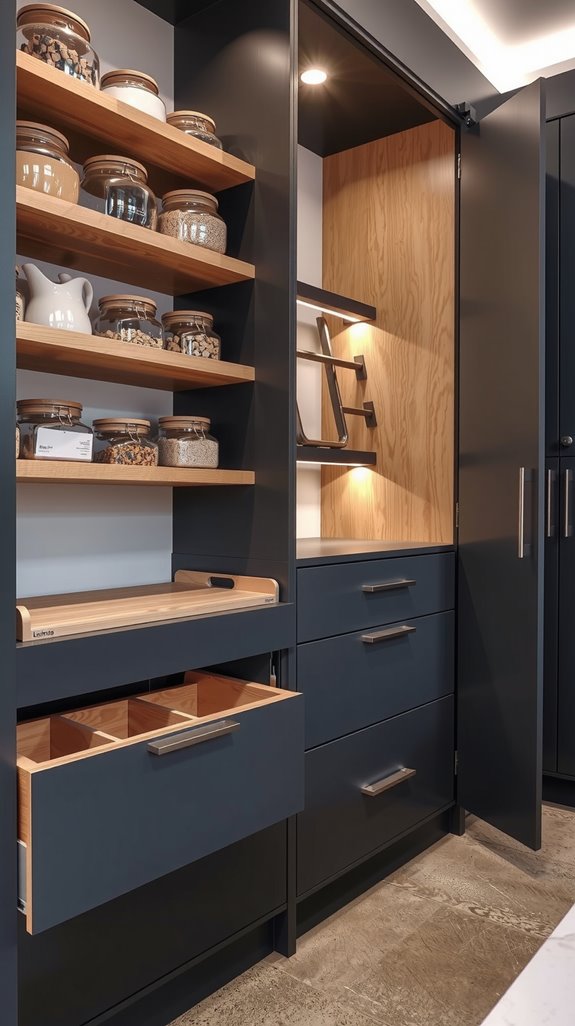
Tall Pantry Cabinets vs Base Pantry Storage
Tall pantry cabinets maximize vertical real estate and make the most sense in smaller kitchens where floor space is the real constraint. They keep everyday items at eye level and push bulk or rarely used goods to upper shelves where they stay out of the daily workflow.
Base pantry storage trades height for convenience, putting heavy appliances and large containers at a level where you’re not wrestling them down from overhead. Most kitchens benefit from a combination of both: tall cabinets for packaged goods and canned staples, base units for the heavy stuff.
Choosing Cabinet Doors, Drawers, and Finishes
Once the configuration is set, the doors, drawers, and finishes you choose define how the pantry feels to use every day. Glass-front doors are honest: they show what’s inside and quietly hold you accountable for keeping things organized. Pull-out drawers improve access to deep shelves dramatically, replacing the reach-and-hope method with something you can actually see.
Match finishes to your existing cabinetry, whether that’s painted, stained wood, or a contemporary matte surface, because a pantry that looks like it belongs costs less effort to maintain than one that always looks like an addition.
Pantry Design Ideas for Apartment Kitchens
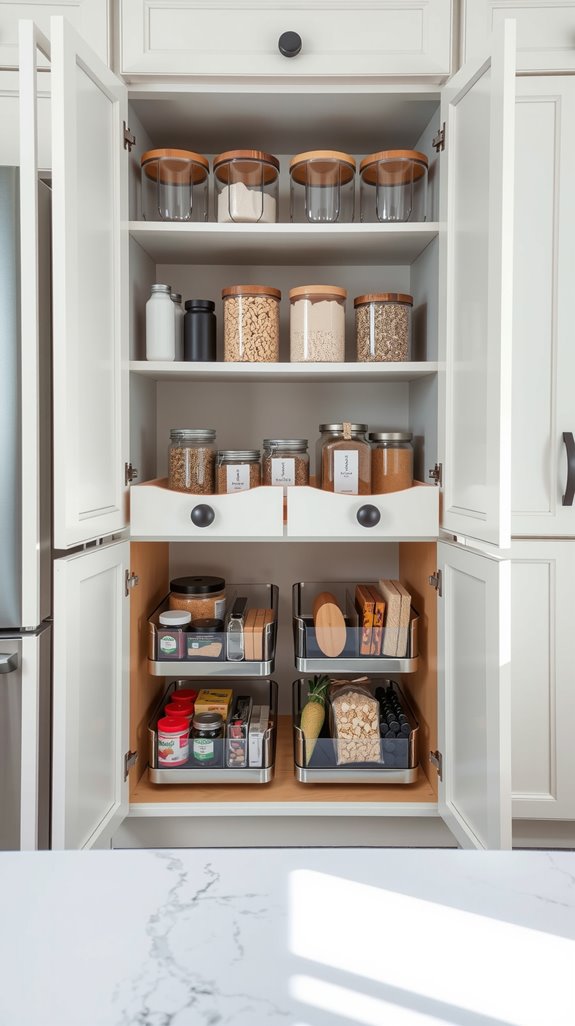
Space-Saving Pantry Solutions for Apartments
Apartment kitchens rarely give you much to work with, so the upgrades that matter most are the ones that don’t require a contractor. Over-the-door organizers, slim rolling carts, and magnetic spice racks turn unused vertical surfaces into functional storage without touching the walls.
Pull-out drawers retrofitted into base cabinets and stackable clear containers make the existing space dramatically more usable than it was before. Wall-mounted shelving adds capacity without eating into the floor plan, which in a small apartment is the difference between a kitchen that functions and one that constantly frustrates.
Rent-Friendly Pantry Storage You Can Remove Later
As a renter, every solution you install needs to leave without taking the security deposit with it. Freestanding storage racks, over-the-door organizers, and tension rod systems provide real organization without a single hole in the wall.
Command strips and adhesive hooks handle lightweight baskets and small containers on surfaces that would otherwise go unused. When you move, the whole system comes with you, which means you’re not starting from scratch in the next place.
Kitchen Pantry Storage Design for Families
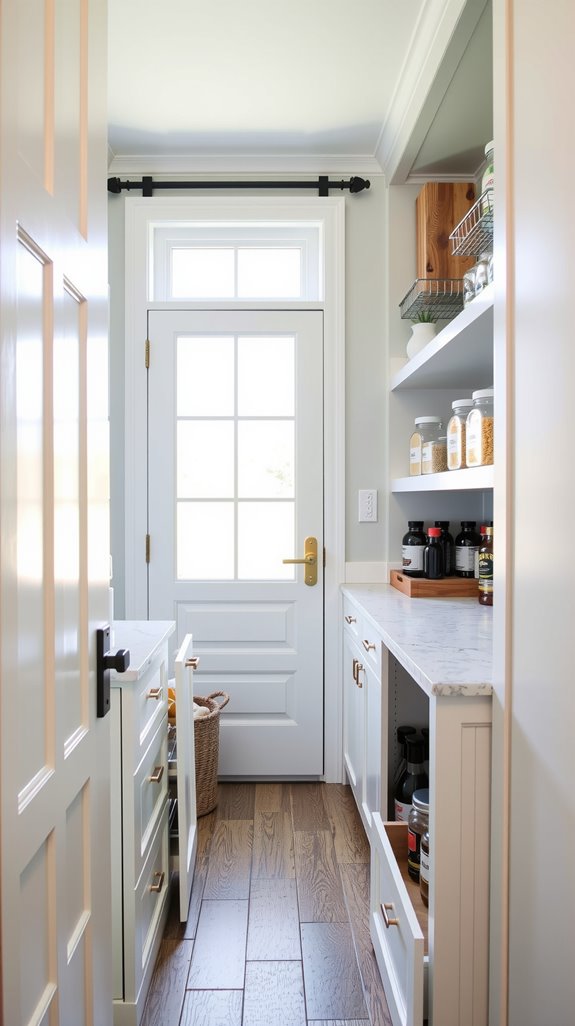
Zoning Your Pantry for Snacks, Meals, and Bulk Items
A family pantry without zones turns into a scavenger hunt by Wednesday. Snacks belong at a height kids can reach without climbing, dinner staples go where the cook grabs them without thinking, and bulk purchases sit low where the weight doesn’t become a hazard.
The zoning also makes restocking faster because everything has a defined home, so groceries go away in minutes rather than requiring a reorganization session every time someone comes back from the store. Once the system is in place and everyone knows where things live, it largely maintains itself.
Child-Friendly and Easy-Access Pantry Layouts
Lower shelves should be treated as dedicated kid territory: snacks, lunch-packing supplies, and age-appropriate utensils within reach, hazardous items and medications well above and behind a latch if the household calls for it. Pull-out drawers on those lower levels replace deep fixed shelves so children aren’t tempted to climb to find what they want.
Clear containers with picture labels give younger kids enough independence that they stop asking where everything is, which is worth more than any organizational system you could build. The goal is a pantry that works for every person using the kitchen, not just the adults.
Minimalist Kitchen Pantry Design
Clean Lines, Neutral Colors, and Hidden Storage
A minimalist pantry strips everything back to what actually needs to be there. Clean lines create order, neutral tones provide a backdrop that doesn’t compete with the rest of the kitchen, and hidden storage keeps the visual noise down to almost nothing.
The design part is genuinely straightforward: consistent containers, a restrained color palette, and nothing on the shelf that doesn’t belong there. The harder part is building the habits that keep it that way.
How to Keep a Minimal Pantry Functional Long-Term
A minimalist pantry is only as good as the systems that maintain it, and those systems need to be simple enough that everyone in the household actually uses them. One-in-one-out rules for new purchases, consistent labeling, and a monthly ten-minute inventory check are the three habits that do most of the work.
Uniform containers and designated zones prevent the slow accumulation that turns a clean pantry into a cluttered one over six months. Skip the maintenance and the minimalist pantry becomes a cluttered pantry with better lighting.
Luxury Kitchen Pantry Design Inspiration
High-End Pantry Features That Elevate Your Kitchen
At the higher end of the budget, a few features genuinely earn their price. Temperature-controlled wine storage solves a real problem if you buy in volume, and pull-out shelving with integrated task lighting means you stop squinting at labels on the lower shelves.
Soft-close mechanisms on every drawer and door extend the life of the hardware and make the space feel considered rather than assembled. Smart inventory displays and built-in charging stations push the pantry further into the workflow of the kitchen rather than keeping it as a separate afterthought.
Glass Doors, Lighting, and Premium Storage Finishes
Glass-front cabinetry does two things at once: it puts what’s inside on display and quietly keeps you honest about organization. Integrated LED lighting transforms storage into something that’s genuinely pleasant to open, adding ambient warmth while making contents easy to read at a glance.
Brushed brass hardware, natural wood shelving, and custom metalwork hold up under daily use and age better than finishes that look good in the showroom but wear fast in a working kitchen. When the investment is there, these are the details that make the space feel like it was designed rather than assembled.
Pantry Design Ideas Without a Walk-In Space
The absence of a walk-in pantry is less of a limitation than most people assume. Existing cabinets retrofitted with pull-out shelving, tiered risers, and drawer organizers recover space that was being wasted by poor configuration.
Awkward nooks beside appliances or in corners take narrow rolling carts or custom shelving and become legitimate storage rather than dead zones. The goal isn’t to replicate a walk-in pantry in miniature but to design around your actual cooking needs, whatever the footprint allows.
Creating a Pantry Using Cabinets and Nooks
Not every home has the square footage for a dedicated pantry room, but that’s rarely the obstacle it sounds like. Existing cabinets transformed with pull-out shelving, drawer organizers, and tiered risers recover vertical space that standard fixed shelves waste entirely.
Narrow nooks near appliances or beside the fridge take on rolling carts or slim custom shelving and stop being dead zones. The difference between a kitchen that feels storage-poor and one that feels organized is usually a few targeted upgrades, not a full renovation.
Kitchen Pantry Organization Design Tips
Shelf Heights, Containers, and Labeling Systems
Shelf spacing matters more than most people plan for: twelve to eighteen inches between shelves handles standard pantry items, and a ten-inch gap works for heavy containers on lower levels. Airtight containers in uniform sizes create visual order and extend food life, and waterproof labels with expiration dates mean you stop finding mystery grains from two years ago at the back of a shelf.
Clear containers do most of the work automatically because you can see when something is running low before it runs out entirely. The labeling system only works if it’s simple enough that everyone in the household uses it, not just the person who set it up.
Designing a Pantry That’s Easy to Maintain
A pantry that’s hard to clean stops being maintained, and a pantry that isn’t maintained stops working within a few months. Smooth, non-porous surfaces like sealed wood or metal shelving wipe down in seconds and don’t hold spills the way raw wood or fabric liners do.
Pull-out drawers replace deep fixed shelves so you’re not excavating the back row every time you need something. Adequate lighting and fingerprint-resistant finishes sound like minor details until you’ve lived with their opposites.
Budget-Friendly Kitchen Pantry Design Ideas
Affordable Pantry Upgrades with Big Impact
You don’t need to gut the kitchen to fix a frustrating pantry. Adhesive shelf liners, LED strip lighting, and uniform storage containers are low-cost changes that make a shelf feel intentional rather than improvised.
Tension rods create vertical dividers for baking sheets and cutting boards, and door-mounted racks add storage without touching the walls. These upgrades stack on each other, so even a modest budget can produce a pantry that works significantly better than it did before.
DIY Pantry Storage Ideas Using Readily Available Materials
Mason jars, wire baskets from discount stores, and contact-paper-covered cardboard boxes aren’t compromises: they work just as well as expensive versions and hold up fine under daily use. Tension rods repurposed as shelf dividers, adhesive hooks for hanging utensils, and repurposed containers for dry goods are all solutions that cost almost nothing and solve real organizational problems.
The materials are beside the point; what matters is that everything has a defined place and you can find it without moving six other things first. A pantry built from dollar-store basics and maintained well outperforms an expensive one that nobody bothers to keep organized.