What this is: Thirteen dorm room ideas for guys that work within the actual constraints. No nails, no painting, shared
square footage, institutional furniture. And still produce a space that looks deliberately designed rather than temporarily inhabited.
Who benefits most: Men heading into their first or second year of university who want their dorm to look like a room they chose, not a room they were assigned.
Why it’s worth reading: Most college dorm room ideas for guys content ignores the constraints entirely. This guide works with them.
Every dorm room in every university starts the same way. Beige walls, a twin XL bed bolted to a frame that can’t be moved.
A desk that came with the building, and about 120-square feet to make look like a place you actually want to live. The constraints are real. No nails. No paint. No permanent changes.
Work with the room you were given, not the room you wish you had.
Kill the Overhead Light Immediately
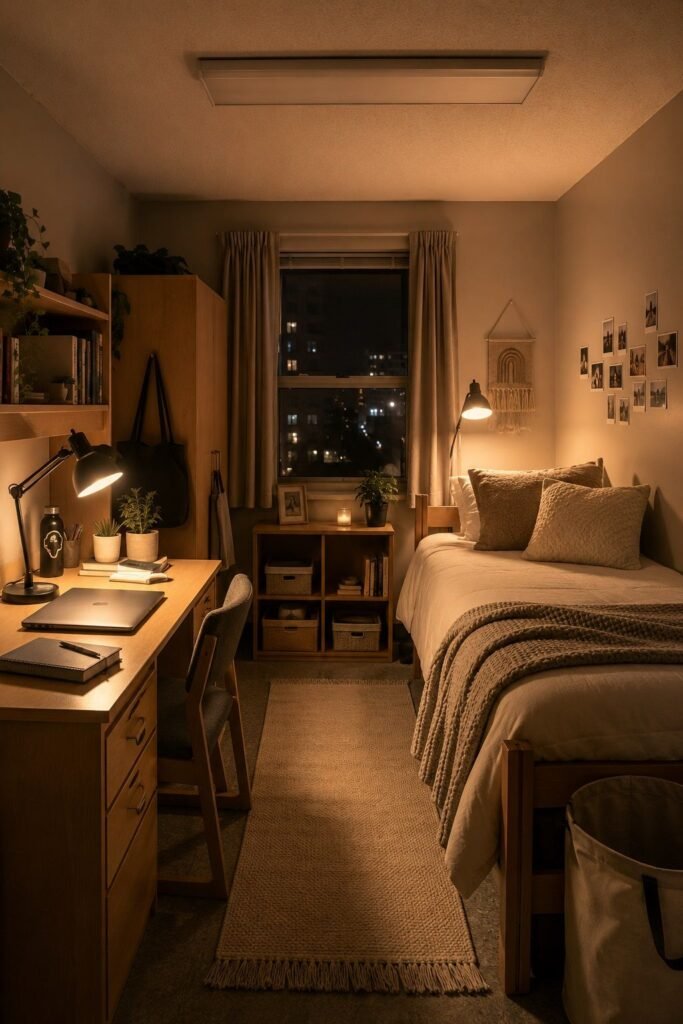
The overhead fluorescent is the enemy of every student room university setup. That single light makes every dorm look like a filing room. Switch it off on day one and never turn it on again.
Replace it with a warm 2700K LED desk lamp for the study surface and a warm clip-on or freestanding lamp for the bed area.
Both cost under $30 combined.
The difference between cool overhead light and warm lower-source lamps is the difference between a room that looks like institutional housing and one that looks like a deliberate space.
LED Strip Lighting Along the Desk or Bed Frame
A warm white LED strip.
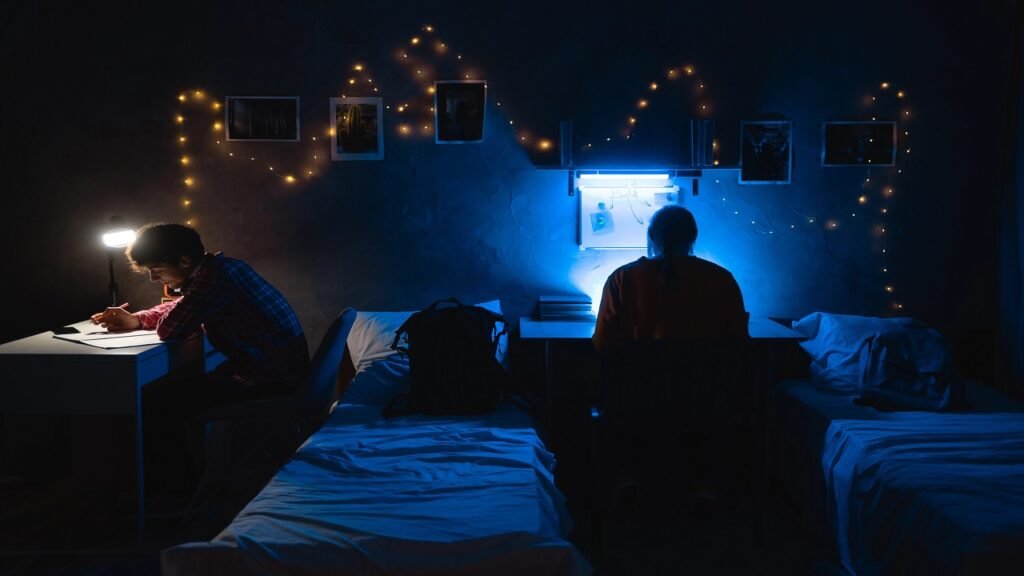
Not RGB, not color changing, mounted along the underside of the bed frame or behind the desk surface adds ambient depth that the room’s flat institutional lighting cannot provide.
Running at 3000K, it adds warmth without looking like a gaming setup that belongs in a 14-year old’s basement.
Peel and stick LED strips cost $8-$15 and leave no mark on removal.
The strip behind the desk creates a bias lighting effect that reduces eye strain during late study sessions. Applied along the underside of the lofted bed frame, it turns the bed zone into a warm enclosed space rather than a mattress on a metal box.
RELATED: First Apartment Guide for Men: From Empty Room to Finished in a Weekend!
Removable Wallpaper on One Wall
Removable wallpaper is the single biggest visual upgrade available in a no paint dorm.
Applied to one wall. The wall behind the desk, the wall behind the bed, or the wall opposite the door.
It transforms the room’s entire first impression without touching the paint underneath.
Dark textured options. Linen effect, concrete look, or simple geometric patterns in charcoal. It read as intentional design rather than decoration.
The paper peels off cleanly at the end of the year when applied correctly to a clean wall surface. A single roll covers approximately 30-square feet and runs between $20-$45 depending on the pattern.
RELATED: Small Room Setups for Men: 14 Layouts That Actually Work in 10×10 and 10×12 Spaces!
Command Strips: The Only Wall Hanging Tool You Need
Every piece of art, every mirror, every shelf that goes on a dorm wall needs to come down clean.
Command strips are the solution for every wall hanging need that doesn’t exceed 4kg. Framed art, mirrors, floating shelves, over door hooks; all manageable with the right strip weight.
The critical instruction most men skip…
Follow the removal process exactly, stretch the strip slowly at a low angle rather than pulling it off the wall. Done correctly, command strips leave no mark and cause no paint damage.
Done incorrectly, they take paint with them and cost the security deposit.
Making the Twin XL Bed Look Intentional
A twin XL mattress on a standard dorm frame looks temporary by default.
Three changes make it look chosen:
First, upgrade the bedding.
The standard university issued mattress cover in beige or grey communicates institutional. A fitted sheet in charcoal linen or dark olive, combined with a quality duvet cover in the same tone, communicates that someone made a decision about this bed.
Second, add one quality throw blanket folded at the foot.
Not a fleece blanket from the campus bookshop. A wool or chunky knit throw in a complementary tone that creates a visual layering moment rather than just warmth.
Add two or three pillows
Third, add 2 or 3 pillows in dark tones rather than using the institutional pillow in its white case. The pillow arrangement is what separates a bed that looks dressed from one that looks slept in.
One Quality Rug That Covers the Floor Zone
Dorm floors are either carpet or laminate, and neither is neutral.
A dark area rug.
Charcoal, olive, or warm grey, in a size large enough to extend past both sides of the bed covers both flooring problems simultaneously and defines the sleeping zone as distinct from the study zone.
A 4×6 or 5×7 rug covering the bed area is the single most impactful visual change in any dorm room setup.
It grounds the furniture, adds texture to the space, and makes the institutional bed frame look like it was placed intentionally rather than assigned.
Most university specification rooms have no furniture restrictions on rugs, making it one of the safest purchases on this list.
Loft the Bed and Create a Workspace Underneath
Most university-provided bed frames allow lofting.
Raising the bed to maximum height and creating 5 to 6ft of clearance underneath.
That under-bed space is the highest-value storage and workspace area in any dorm room if used with intention rather than as an overflow zone for boxes and dirty laundry.
Place the desk underneath the lofted bed.
Mount the LED strip to the underside of the bed frame above the desk. Add a compact shelf unit on the wall beside the desk.
The resulting workspace is contained, well lit, and psychologically separate from the sleeping zone — which matters significantly for study focus during the year.
Floating Shelf Above the Desk for Visual Depth
A tension mounted or command strip mounted floating shelf above the desk surface adds a vertical layer to the desk zone without drilling. Stack three or four books, one small plant, and one object of personal significance on the shelf.
The shelf creates a visual backdrop for the desk area that makes it read as a designed space rather than furniture placed against a wall.
Every study room in university looks like a desk in front of a blank wall. A shelf above the desk differentiates the room from every identical unit on the corridor.
One Plant in a Quality Pot
A snake plant or pothos in a concrete or matte black pot costs $15 to $20 and introduces the only living element in the room besides the person living in it.
Both species survive the erratic watering schedule of a university semester without complaint.
Position the plant on the floating shelf above the desk or on the windowsill where natural light reaches it.
The plant signals that someone tends to the space. The quality pot signals that they have taste. Every university room with a plant looks more inhabitable than the identical room without one.
Framed Prints Instead of Posters
Every other dorm on the corridor has posters taped to the wall.
Two framed prints mounted with command strips differentiates the room from every other one on the floor.
Minimal photography, architectural line art, or graphic prints in matte black frames cost under $30 for two pieces from sites like Society6 or Desenio.
Hung at eye level with command strips. One above the desk, one above the bed.
They create two visual anchors that make the room read as designed rather than decorated temporarily.
Over Door Organiser for the Back of the Door
Every dorm door has a back that most men leave completely unused.
An over door organiser (shoe pockets, hook bars, or shelving units), claims that surface for storage without any drilling and removes items from the desk and floor that would otherwise create clutter.
Use it for shoes, gym gear, charger cables, toiletry overflow, or anything that would otherwise live on the floor.
The back of the door is some of the most wasted storage surface in any small room. Claim it on move-in day.
A Dark Accent Colour to Unify the Room
Most dorm rooms are a mix of beige walls, dark institutional furniture, whatever bedding came with the kit, and whatever the previous occupant left.
Choosing one dark accent colour and running it through the bedding, rug, and any decor creates cohesion that makes the room look like a decision was made about it.
Charcoal works with everything.
Olive works with warm wood tones. Deep navy works with cream and natural linen.
Pick one, apply it to the largest visual surfaces first — bedding and rug — and add smaller accent pieces in the same family.
The Desk Setup That Looks Like a Workspace, Not a Surface
Most university desks get used as a dumping surface that occasionally has studying happen on it.
A desk that reads as a proper workspace changes the energy of the room and the focus of the person sitting at it.
Three changes make any desk look like a proper setup:
- A desk lamp at the correct height, running at 4000K for focus during study
- A monitor riser or laptop stand at eye level
- Everything else off the surface — cables managed, books on the shelf above, no loose items
The desk is the room’s primary functional zone. Every other upgrade in this list supports it.
A clear, well lit desk with vertical storage above it is the foundation the whole room builds on.
The Dorm Room Quick Reference
| Upgrade | Cost | Drilling required | Reversible |
|---|---|---|---|
| Warm LED desk lamp | $15 to $30 | No | Yes |
| LED strip (warm white) | $8 to $15 | No | Yes |
| Removable wallpaper (1 wall) | $20 to $40 | No | Yes |
| Command strip art mounts | $5 to $15 | No | Yes |
| Quality bedding upgrade | $40 to $80 | No | Yes |
| One quality throw blanket | $20 to $40 | No | Yes |
| Area rug 5×7 | $40 to $80 | No | Yes |
| Lofted bed under-desk | Free (reposition) | No | Yes |
| Floating shelf above desk | $15 to $25 | No | Yes |
| One plant in quality pot | $15 to $20 | No | Yes |
| Two framed prints | $20 to $35 | No | Yes |
| Over-door organiser | $15 to $25 | No | Yes |
| Dark accent colour unification | $40 to $80 | No | Yes |