What this is: A complete first apartment move in guide for men. Covering what to buy first, what to skip entirely, how to allocate a limited budget, and rental friendly ways to make an empty space feel finished in a weekend.
Who benefits most: Men moving into their first apartment who want the room to feel like a deliberate decision rather than an Ikea floor display.
Why it’s worth reading: Most first apartment content tells you everything you need. This guide tells you what order to buy it in, what not to buy at all, and what the smart money moves actually are.
Moving into your first apartment is one of the few moments in life when you start with a completely blank room and get to decide exactly what goes in it.
Most men respond to that blank room by buying a bunch of things at once, running out of money, and ending up with a space that feels like a part finished project they’ve stopped looking at.
The move is simpler than that. Three things first. Everything else after.
Here’s the order.
The Priority Order: What to Buy Before Anything Else
Getting a first apartment right means understanding that the first weekend sets the tone for every room decision that follows. Buy the wrong things first and you’ll spend the next 6-months working around them.
The three non negotiable first purchases, in order:
The bed and mattress.
Sleep quality determines everything else in your daily life.
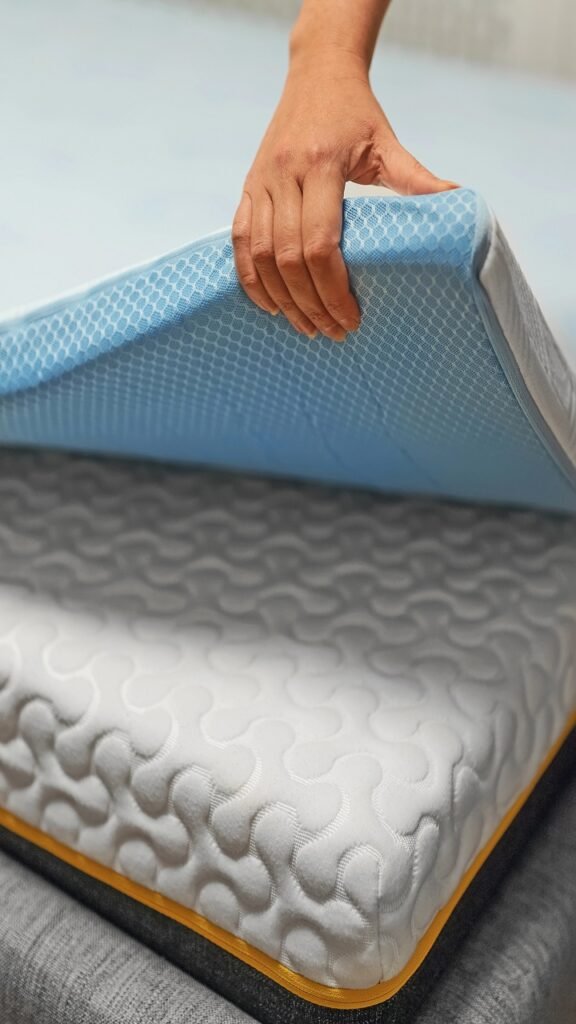
A decent platform bed frame in the $60-$150 range from Zinus or IKEA. And a quality foam mattress at $200-$300 covers the most important function of the bedroom before anything else.
A lamp on the nightstand and a glass of water are the only other things the sleep zone needs on day one.
A warm lamp.
Not the overhead light. Every apartment overhead is the wrong temperature for living in the space. Typically 4000K or above, which reads as clinical and institutional.
A warm 2700K table lamp on the nightstand or floor lamp in the corner costs between $20-$40 and immediately changes how the apartment feels after dark.
Buy the lamp before the curtains, the rug, or any decor.
RELATED: 13 Dorm Room Ideas for Guys That Don’t Look Like Every Other Dorm!
A functional desk.
Most men in a first apartment are working, studying, or gaming from home.
A floating shelf desk for $20-$49 or a compact desk from Amazon for $60-$80 covers the work zone before anything else competes for budget.
The desk is infrastructure. Everything else is optional.
What to Skip: The Things Most Men Buy That They Regret
The bachelor pad apartment starter kit is a marketing category, not a design philosophy.
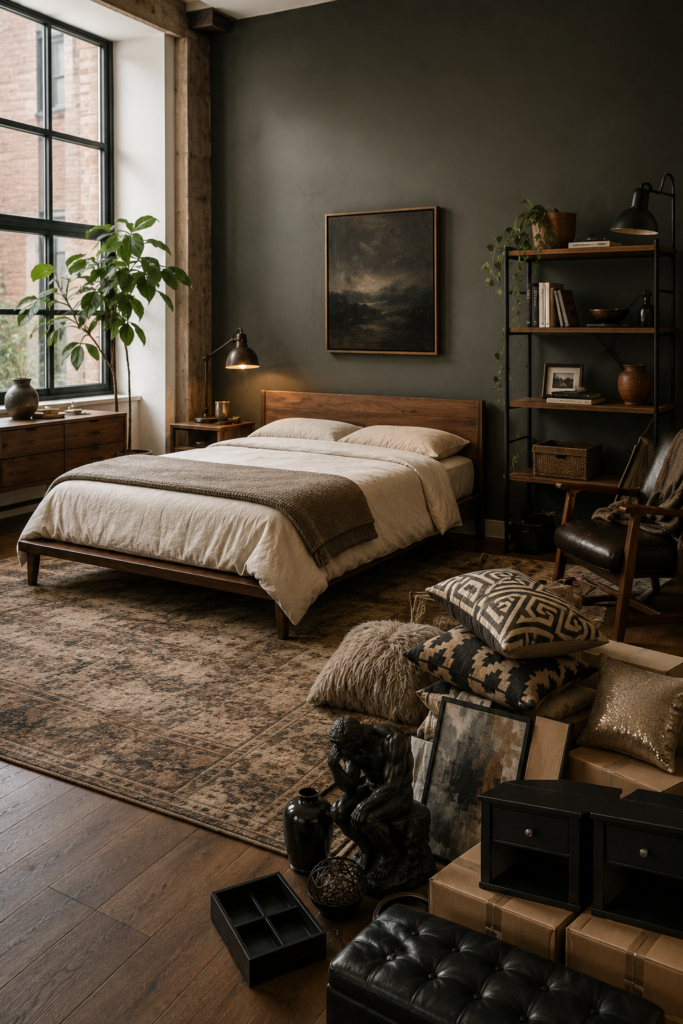
Matching furniture sets, decorative throw pillows, “man cave” signage, and those identical dark bedroom decor bundles that look the same in every apartment?
Skip all of it!
Matching furniture sets cost more than buying pieces separately and create a room that reads as a showroom rather than a home.
Mixing a secondhand lamp with an Amazon rug and an IKEA shelf creates more visual interest than three coordinated pieces from the same set.
The eye is drawn to contrast and character. Uniformity reads as temporary.
Decorative throw pillows serve the person who placed them, not the person who lives there. A single quality blanket folded at the foot of the bed communicates the same warmth without the staging photo energy.
RELATED: Small Room Setups for Men: 14 Layouts That Actually Work in 10×10 and 10×12 Spaces!
Skip the pillow set.
Spend that budget on a better quality rug. As well as any decor item without a specific visual placement in mind.
Buying art, plants, or accessories without knowing exactly where they’re going leads to objects on the floor waiting for a decision that never comes.
Buy the furniture first.
Then identify the gaps. Then fill them intentionally.
The Budget Allocation: Where the Money Actually Goes
Most men apartment decor content shows you the end result without addressing how to sequence the spending.
Here’s a realistic allocation for a first bedroom setup at three different budget tiers:
| Item | Budget ($400–600) | Mid ($600–1000) | Comfortable ($1000–1500) |
| Mattress | $200 | $350 | $500 |
| Bed frame | $80 | $150 | $250 |
| Desk | $40 (floating shelf) | $100 | $200 |
| Warm lamp | $25 | $40 | $80 |
| Rug | $40 | $80 | $150 |
| Curtains | $25 | $50 | $100 |
| Nightstand | $0 (crate/shelf) | $40 | $80 |
| Wall decor | $20 (2 framed prints) | $40 | $120 |
| Plant | $15 | $25 | $50 |
The budget tier matters less than the sequence. Buy in priority order (mattress, lamp, desk), and add everything else only after those three are functioning.
A room with a quality mattress and no rug is more liveable than a room with a beautiful rug and a bad mattress.
The First Apartment Checklist: What the Room Needs vs What It Wants
Most apartment checklist essentials guides hand you a shopping list without telling you which items are load-bearing and which are optional. This breakdown separates what the room cannot function without from what can wait until month two or three.
Non negotiable. Buy before anything else:
Mattress and bed frame – One warm lamp (2700K) – Desk or floating shelf workspace – Floor length curtains in any material – One set of bed linen in a neutral tone
High value, buy in the first month:
Rug sized correctly for the bed zone – One plant in a quality concrete or ceramic pot – Two framed prints mounted with command strips – Under bed storage containers for seasonal items – A nightstand or wooden crate at bed height
Skip entirely, regardless of budget:
Matching bedroom furniture sets – Decorative throw pillows – Any curated bachelor pad starter bundle – Large television mounted before the room layout is settled – Decorative objects without a specific intended placement
Non negotiable items make the room functional. High value items make it feel finished. Skip entirely items make it look like no decisions were made.
Buy in that order and the room builds itself correctly.
Rental Friendly Walls and Floors: What Stays When You Leave
The most common first apartment mistake is not decorating.
It’s decorating in ways that damage the walls and cost the security deposit on the way out.
Command strips and adhesive hooks handle the vast majority of wall hanging needs without drilling and hold reliably for most art and mirror weights.
Rental friendly wall solutions that work:
- Command strips for framed art and mirrors up to eight kilograms
- Adhesive picture ledges for leaning multiple prints at different heights without multiple holes
- Removable wallpaper on a single feature wall — peel and restick when you leave
- Leaning mirrors against the wall rather than mounting — no drilling, full effect
For floors, most apartments have neutral carpet or basic laminate that neither looks interesting nor responds well to furniture.
A large area rug in a dark tone — charcoal, olive, or warm grey — covers both problems simultaneously.
It defines the sleeping zone, adds texture, and comes up when you move out.
Spend 30%-60% more on the rug than feels reasonable for the size. The rug is the room’s foundation and a cheap one shows immediately.
The Weekend Setup Plan: Day One to Day Two
Moving in and setting up in a single weekend is completely achievable if the purchases arrive before you do.
Order the mattress, frame, desk, and lamp for delivery on day one. Everything else can follow in the weeks after — the goal for the weekend is functional, not finished.
Saturday:
Assemble the bed frame. Set up the mattress. Place the lamp on the nightstand or the floor beside the bed. Connect the desk.
Move the necessary clothes into whatever storage exists. Sleep in the room on the first night in a functional state rather than on an air mattress surrounded by boxes.
Sunday:
Hang two framed prints using command strips — one above the bed, one beside the desk or door. Place the rug.
Add the plant. The room is now finished enough to feel like a decision was made about it, not an assembly job that ran out of time.
The finished enough principle matters more than most men expect.
A room that is seventy percent done but looks deliberate feels better to live in than a room that is ninety percent done but looks like the last ten percent is still pending.
Two framed prints, a rug, and a plant take a functional room to finished room in about forty minutes.
The Things That Make It Feel Like a Home, Not a First Apartment
There is a version of a first apartment that looks temporary and a version that looks inhabited. The difference is almost entirely in three details that cost very little:
Curtains that reach the floor.
Standard apartments come with either no curtains or short panels that end at the window sill.
Floor length curtains in dark linen or cream. Available from IKEA in the twenty five to forty dollar range — make every ceiling feel higher and every window look intentional.
Hang them from the ceiling, not from the window frame. The extra distance from ceiling to floor is what creates the effect.
One plant with a quality pot.
A snake plant in a concrete or matte black pot does more for a room’s lived in quality than most decorative objects at five times the price.
The plant signals that someone tends to the space. The quality pot signals that they have taste.
The phone charger off the nightstand.
Moving the charger across the room, a decision that costs nothing. Removes the most visually distracting object from the most important surface in the room.
And creates the nightstand discipline that makes the whole sleep zone look considered.
The nightstand holds a lamp, a glass of water, and one book. Nothing else earns a place on that surface.
A bachelor pad apartment that hits all three of these details looks like someone chose it deliberately.
That is the only thing that separates a first apartment that impresses from one that doesn’t, not the budget, not the furniture, not the brand.
Deliberate choices, visible in the room, made by someone who knew what they were doing.