A low ceiling in a small room can feel like a lid on a box. You dont need to knock down walls to fix it.
False ceilings, which are secondary ceilings hung below the original, can visually stretch a room when done right. The wrong design, though, makes things worse.
Ten specific ideas actually work, and a few of them will genuinely surprise you.
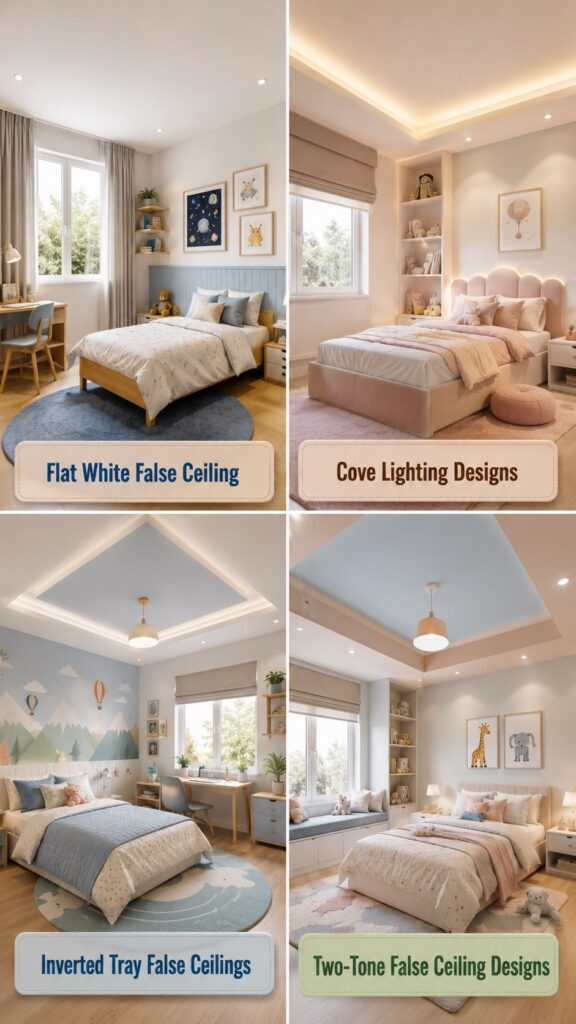
Flat White False Ceiling Ideas That Brighten and Open Small Rooms
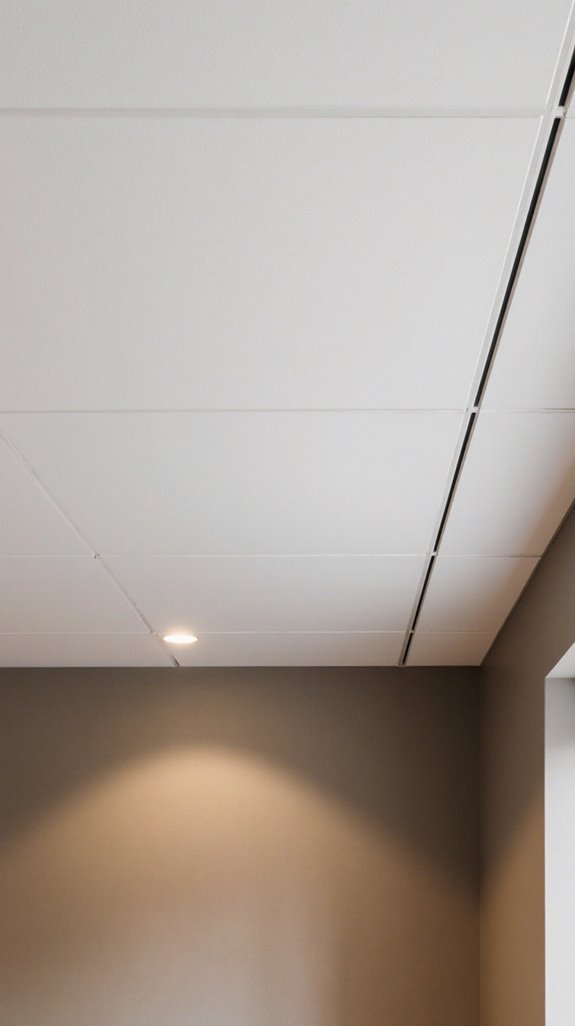
When your ceiling feels like it’s sitting on your shoulders, a flat white false ceiling is one of the cheapest ways to push it back up, visually, at least.
Light colors reflect up to 80% more light than dark ones, which fools your eye into reading more vertical space.
Gypsum board runs $2.6 per square foot installed and delivers that seamless flat plane you need.
Keep it the lightest surface in the room.
Color psychology research suggests that alone boosts perceived spaciousness by 15-20%. Simple math, white paint, flat surface, done. Pairing this with recessed or strip lights instead of hanging fixtures keeps the ceiling visually uncluttered and maintains every inch of perceived height.
Cove Lighting Designs That Make Your False Ceiling Appear to Float
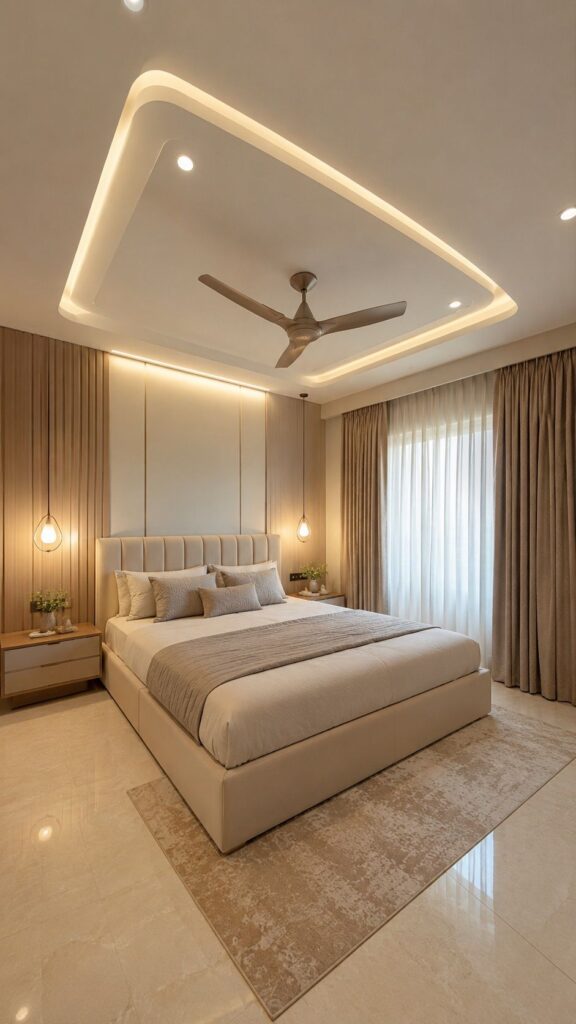
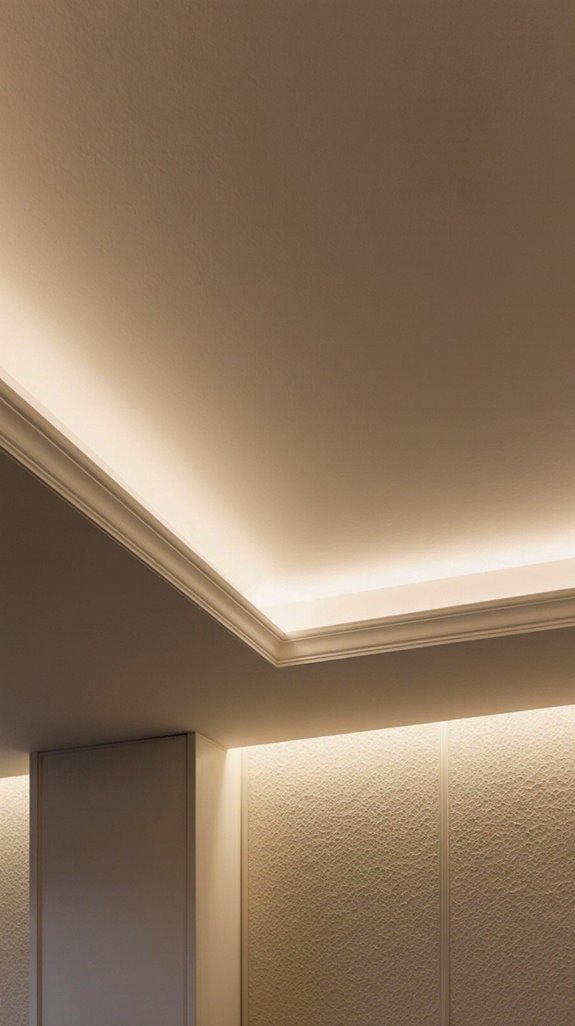
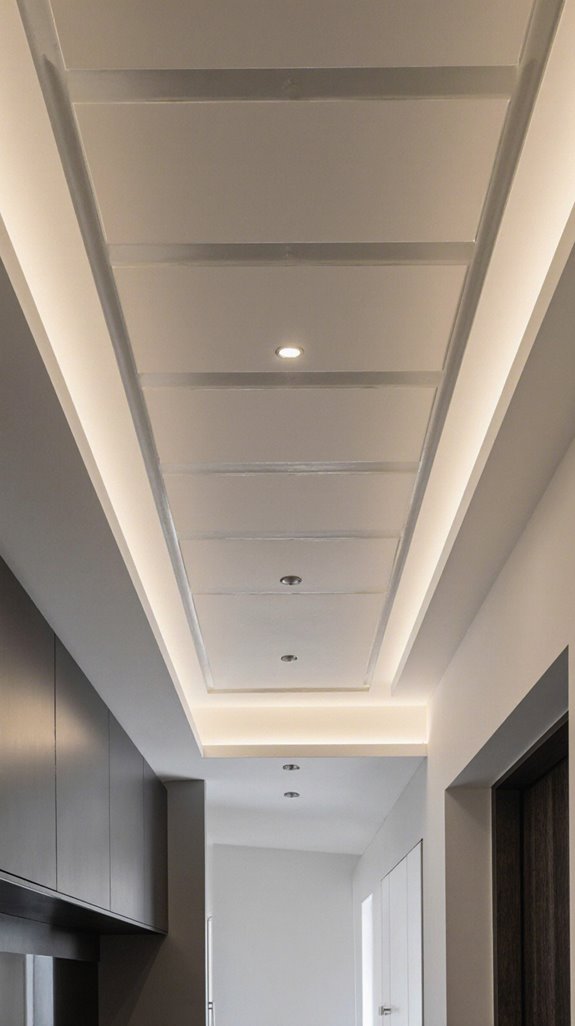
A flat white ceiling gets you halfway there, but add a strip of hidden light around its edge and the whole plane starts to look like it’s hovering.
That gap between the ceiling and the wall, typically 3 to 5 inches deep, conceals the LED strip completely. Keep the strip 2 to 3 inches from the wall to avoid harsh scalloping.
Use 3000K COB LED strips with a CRI above 90 for smooth, dot-free light.
In an 8-foot room, this trick alone can make the ceiling feel roughly 20% taller and you should make them dimmable. Matte finishes on the cove recess diffuse the light further, softening the glow across the entire ceiling plane.
SEE THIS: 13 Top View False Ceiling Design Layouts (Plan Before You Build)!
Inverted Tray False Ceilings That Add Depth, Not Bulk

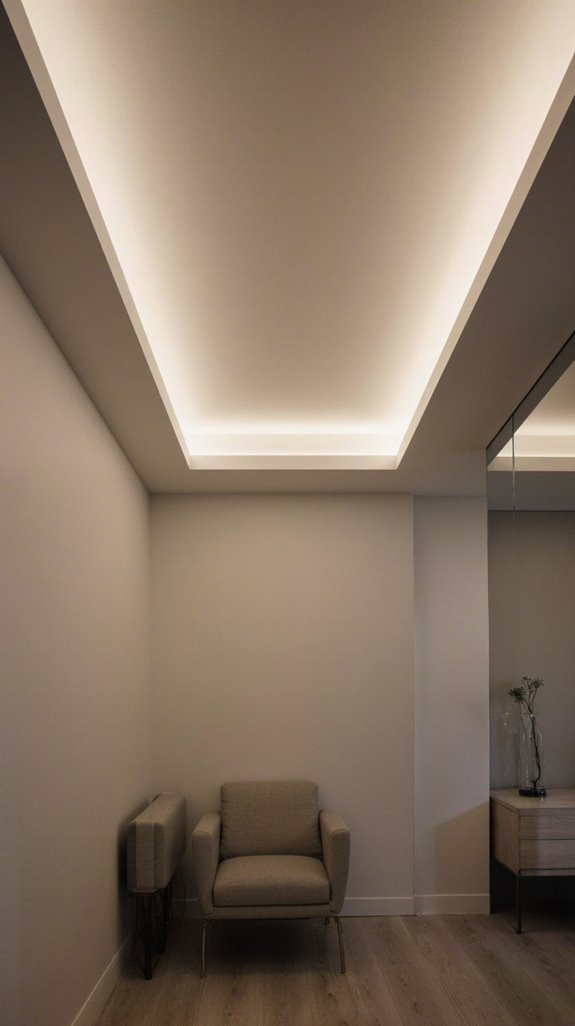
Unlike a flat dropped ceiling that eats into your headroom, an inverted tray ceiling recesses the center section upward, so the middle floats higher than the surrounding border. That single design move draws your eye up, making a cramped room feel bigger without touching the floor plan.
For eight-foot ceilings, keep your drop-down border between one and two inches deep. Anything past six inches starts feeling like a cave.
Paint the recessed center a darker shade than the perimeter, and that contrast alone adds perceived depth. Add concealed LED strips inside the border, and the tray appears to lift.
In hallways and transitional spaces, an Art Deco-style light fixture paired with cohesive floor tiles can turn the inverted tray into a commanding focal point rather than just a structural detail.
Two-Tone False Ceiling Designs That Make Tight Rooms Feel Taller
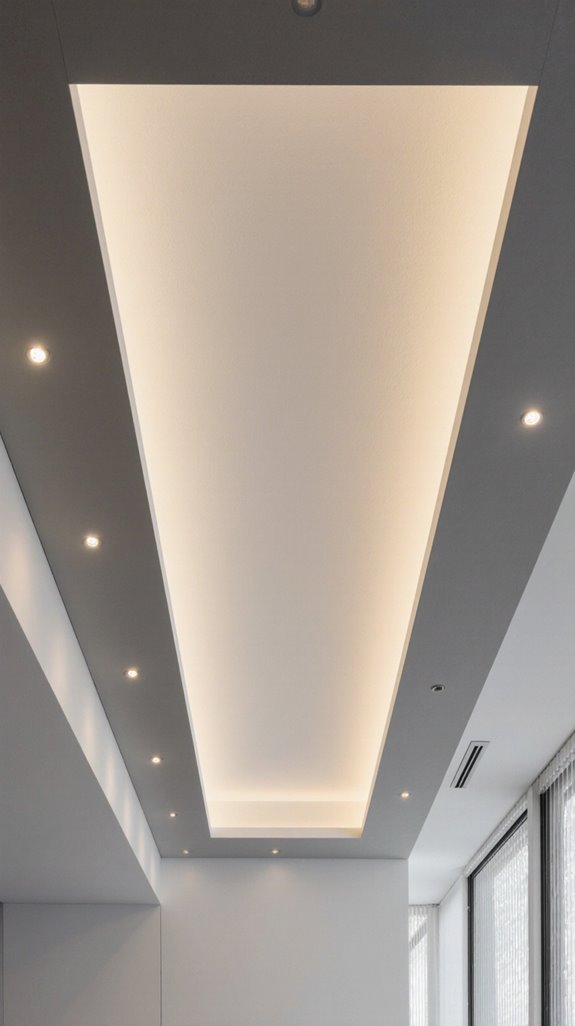
Tray ceilings buy you depth through structure, but two-tone paint gets you halfway there for the cost of a roller and an afternoon.
Paint your ceiling center a warm white with an LRV, Light Reflectance Value, between 80 and 90. Then run a greige or dove gray band around the perimeter. That darker edge tricks your eye into reading the center as higher than it actually is.
Keep the center flat sheen to hide any gypsum imperfections, and bump the border to eggshell. Two sheens, one color family, zero structural work.
Pop Border False Ceiling Designs That Define Space Without Closing It In
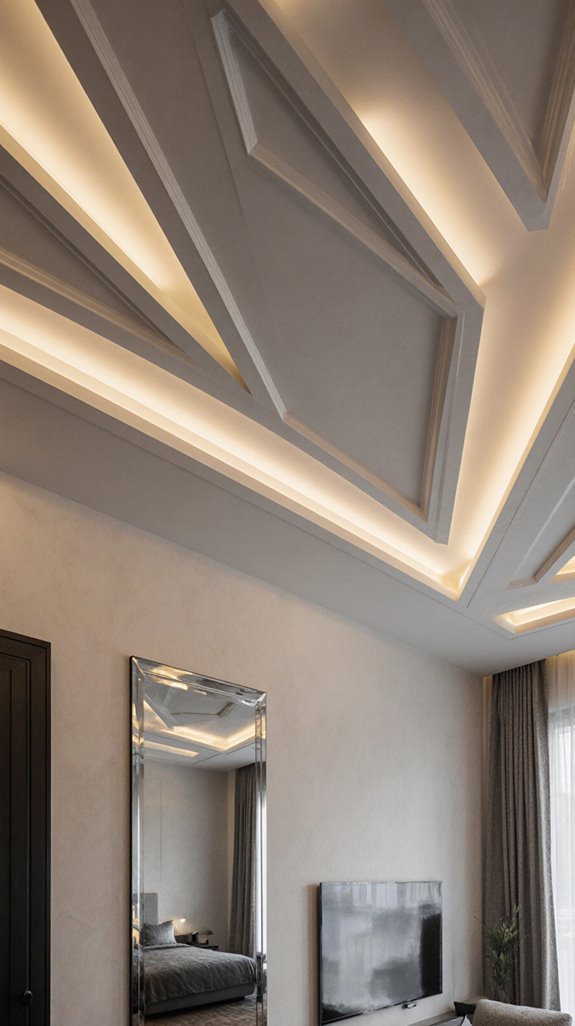
POP border designs, which stands for Plaster of Paris, give you clean perimeter framing without dragging the ceiling down to meet you.
A 2-inch to 3-inch cornice profile adds definition while keeping full height intact. Go with a single-step border dropping 4 to 5 inches around the perimeter, tuck LED strips inside, and you’ve got indirect lighting without sacrificing the central ceiling plane.
Keep border width between 12 and 18 inches for rooms ranging 10’x10′ to 14’x16′.
Matte white paint on flush or recessed cove borders can increase perceived room size by up to 15%, according to Architectural Digest. Pairing this approach with soft LED strips along the border creates a warm ambient glow that enhances the open feel of the space.
Circular False Ceiling Shapes That Soften Small Room Geometry
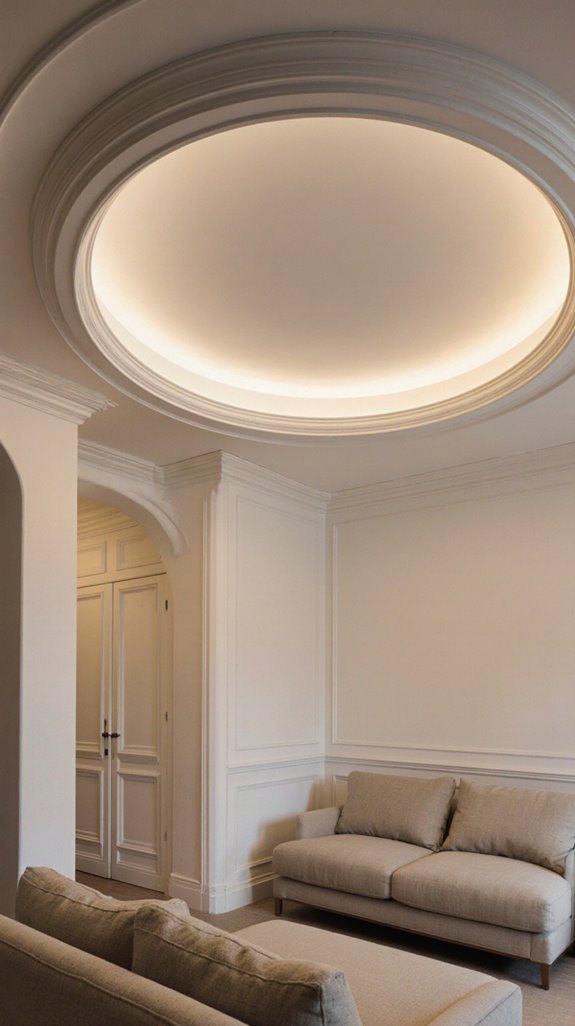
Sharp corners are doing your small room no favors. A circular false ceiling, built from 10,12 mm gypsum board, replaces rigid angles with continuous curves that guide your eye around the room instead of stopping it cold.
That flowing path reduces visual fragmentation, making the space feel calmer and less boxed-in.
Add hidden LED cove lighting around the circular perimeter and your walls appear to push outward. Pair that with a matte white or pearlized satin finish and the ceiling reflects considerably more light.
One clean ring. No ornate detailing required. Geometry does the heavy lifting here. The circular shape softens room angles, creating a more inviting atmosphere that traditional square ceilings simply cannot replicate.
PVC and Gypsum False Ceilings That Stay Slim and Don’t Crowd the Room
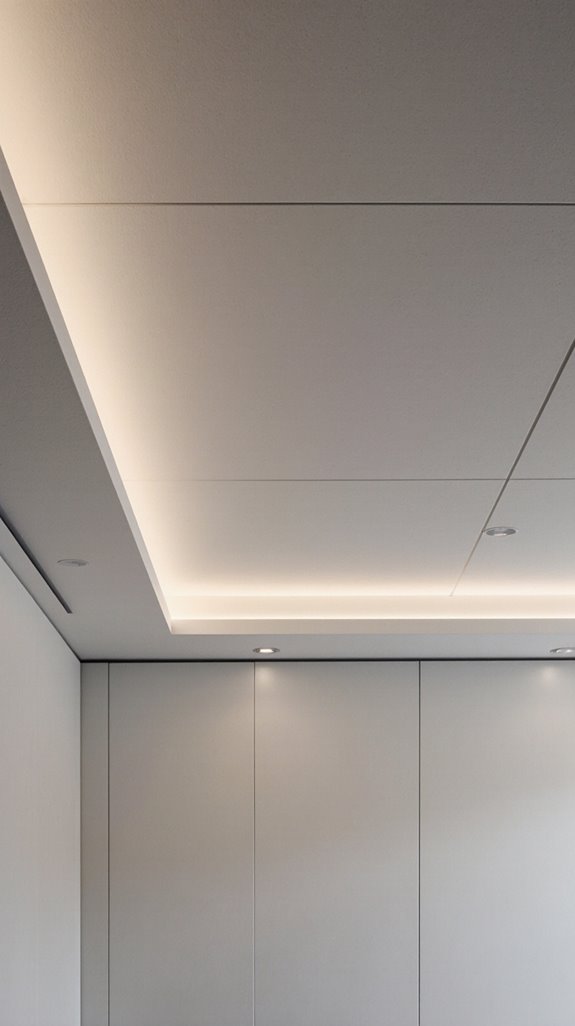
Every millimeter counts when your ceiling is already low.
Gypsum boards start at 6 mm thick, and with adhesive mounting instead of metal channels, your false ceiling drops just 50 mm from the slab. That’s barely two inches lost.
PVC panels are even leaner, weighing 1.5 to 3 kg per square meter and averaging 5 to 10 mm thick. You can clip them directly onto your existing ceiling, no suspension frame needed.
Ultra-slim LED panels at 8 mm fit flush into gypsum cutouts.
Neither material needs to announce itself; the best false ceiling is the one you stop noticing. For best results, installation requires a minimum ceiling height of 9 feet to ensure the finished surface still feels open and breathable.
Glossy and Acrylic Panels That Make Your False Ceiling Feel Higher
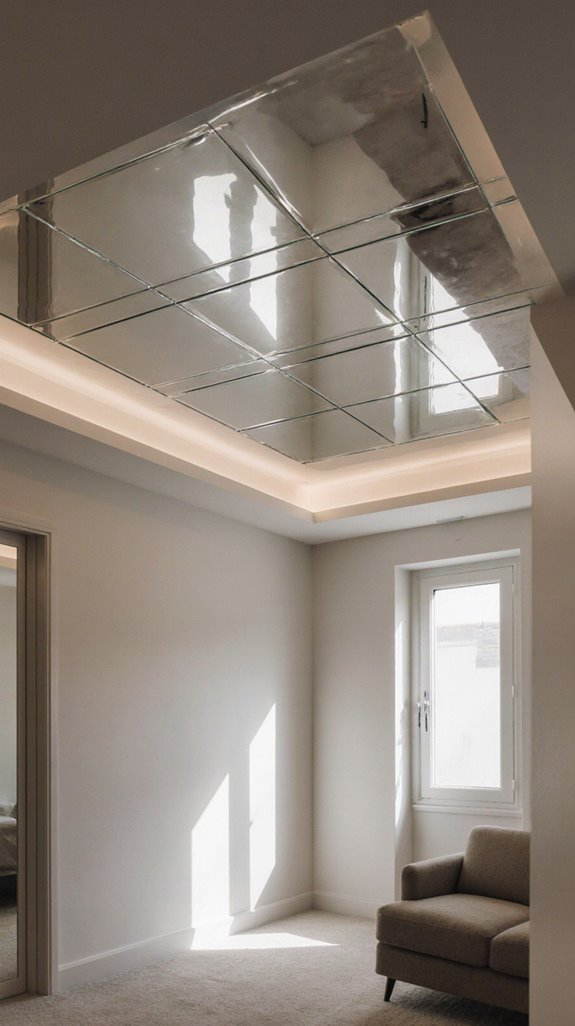
A glossy ceiling doesn’t add height, it borrows it. Light-colored gloss tones like ivory or pearl grey bounce ambient light upward, shifting your eye away from the actual ceiling plane.
Mirror-finished acrylic panels take it further, literally doubling reflected room features and tricking your brain into seeing more space. Frosted backlit acrylic mimics a soft skylight.
Pair it with warm white LEDs around 2700K to 3000K and you get a luminous halo effect without clinical harshness. Keep the surface seamless and unbroken; one busy grid framework undoes everything.
Dark acrylic absorbs light and pulls the ceiling down. Don’t do it.
False Ceiling Designs That Merge With the Wall for Seamless Height
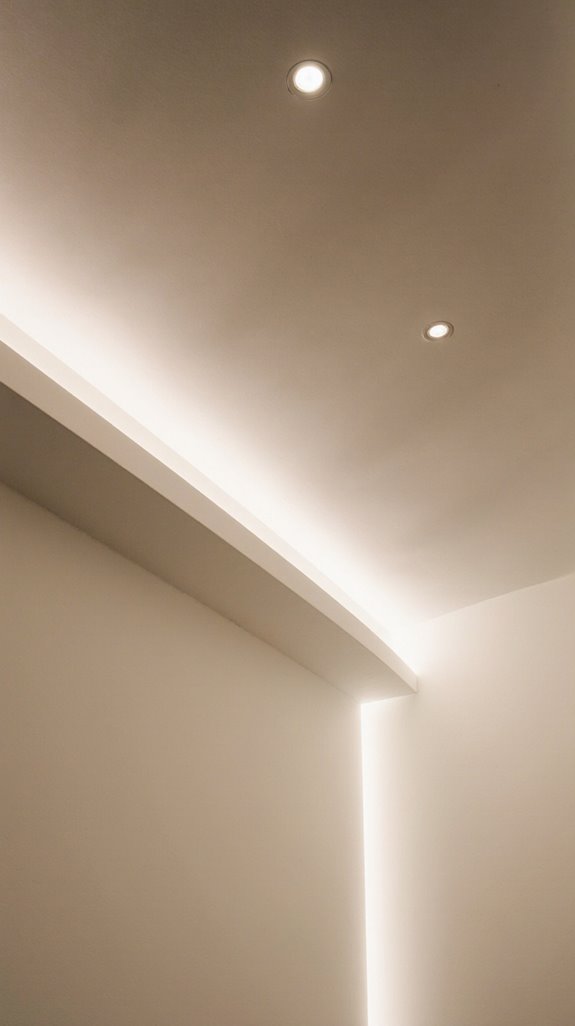
When the ceiling and wall meet at a hard corner, your eye stops there, and the room feels boxed in.
Paint both the ceiling and the upper wall the same soft white or pale neutral. That single move erases the corner visually.
You can also run gypsum board down the wall from the false ceiling, creating one continuous surface. Paint it identically and the seam disappears.
Add hidden LED strips along that vertical accent, and the upward light wash reinforces the height. None of these fixes require more than a few inches of drop from your original ceiling.
False Ceiling Mistakes That Make Small Rooms Feel Even Smaller
False ceiling mistakes in small rooms aren’t subtle; they compound each other fast, and suddenly your 10×12 bedroom feels like a walk-in closet.
Drop your false ceiling more than 4 inches and you’ve already lost the fight. Add a chunky chandelier hanging 12 inches below that, and you’re decorating a submarine.
Dark charcoal paint absorbs light and visually crushes headroom further. Heavy POP crown mouldings frame the ceiling like a coffin lid.
Skip recessed LED panels, ignore perimeter cove lighting, and avoid reflective surfaces; congratulations, you’ve built the most expensive cave on the block.