Your caravan doesn’t need a full gut job to feel like somewhere you actually want to spend time.
A few targeted changes, like swapping a $40 cushion cover or repainting one wall in Dulux Antique White, can shift the whole mood.
Retired couples are pulling off impressive refreshes for under $500 and none of it involves ripping out walls. The specifics of how they’re doing it are worth knowing.
Fresh Paint That Transforms a Caravan Inside and Out
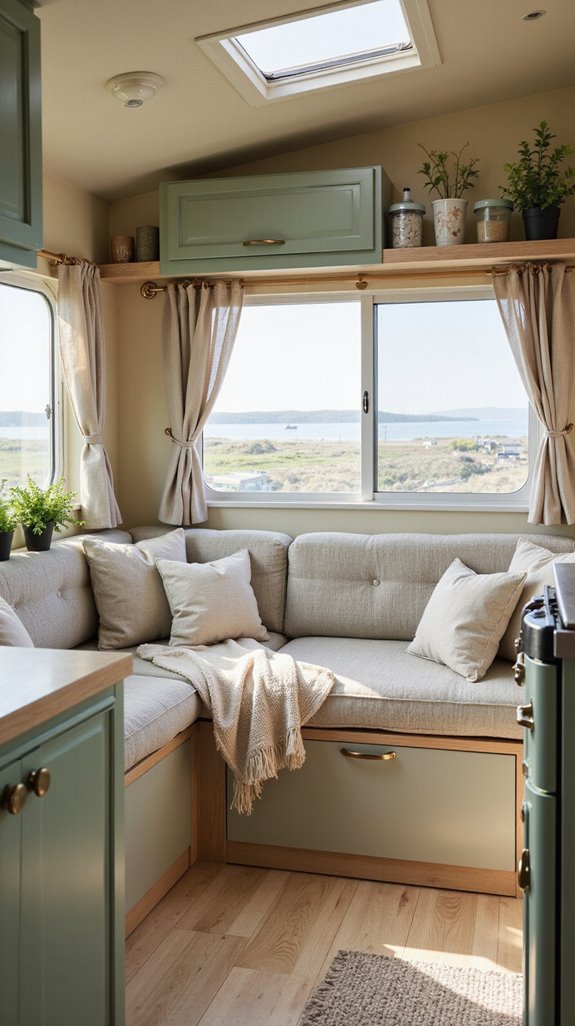
A fresh coat of paint is one of the cheapest ways to make a tired caravan feel like a different vehicle entirely.
Start inside by washing everything with sugar soap, sanding lightly, then wiping down again before you touch a brush.
Zinsser Bulls Eye 1-2-3 works well as a primer on caravan interiors because you’re dealing with timber, laminate, plastic, and metal all at once.
Also, I suggest Dulux Aquanamel for cabinets, apply two to three thin coats, waiting four to six hours between each.
Soft greys and warm whites make cramped spaces feel bigger without requiring a single structural change. Water-based paints are now available in virtually odourless formulas that require no sanding, making them ideal for working in the confined space of a caravan interior.
Fitting Swaps That Look Like a Full Renovation
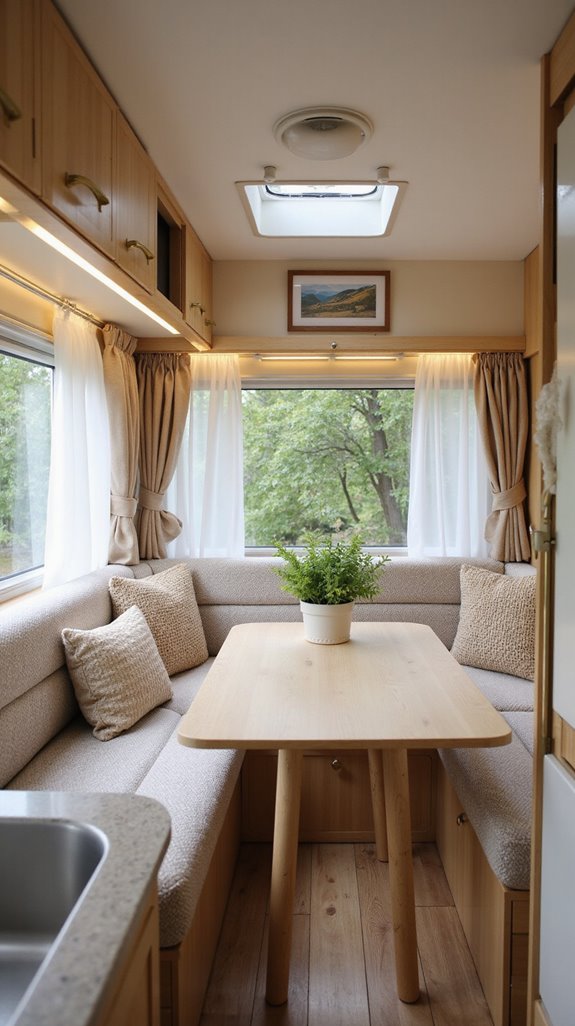
Paint does a lot of heavy lifting, but it can’t fix ugly handles or a benchtop that looks like it survived the 1980s.
Swap laminate cabinet doors for flat-panel or shaker-style fronts, and the interior reads as fully renovated without touching the caravan’s shell. Match your new doors with matte black or brushed brass hardware throughout, and suddenly everything looks intentional.
A fresh laminate or solid-surface benchtop frames the sink and cooktop so the whole kitchen section feels replaced. Soft-close hinges stop the rattling on the road.
Small, visible changes done consistently create a result that looks far more expensive than it actually was. Replacing old box lights with new LED fixtures instantly modernises the ceiling and removes the clinical yellowed glow that dates most caravan interiors.
Soft Furnishings That Make a Compact Caravan Feel Like Home
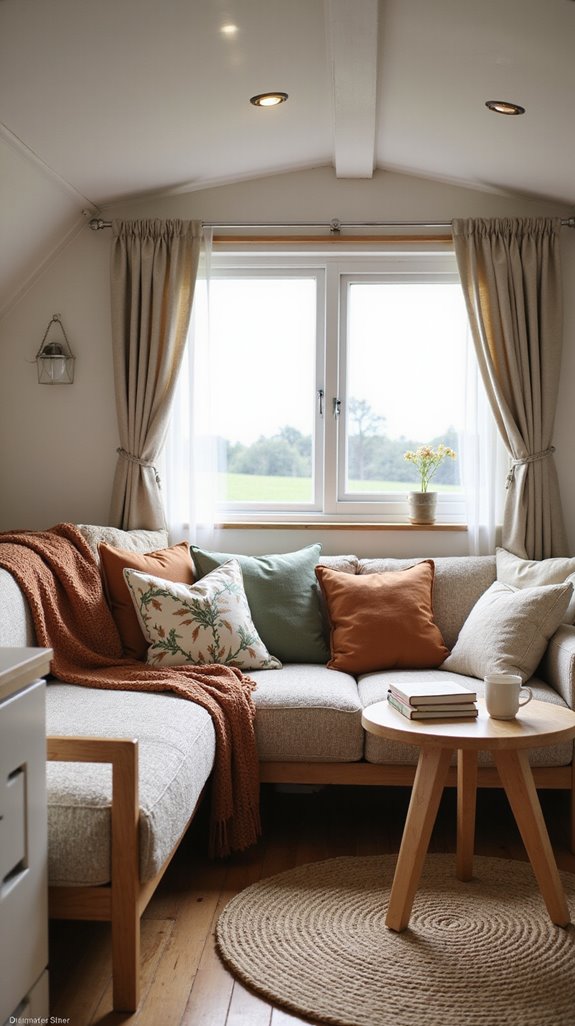
Once the cabinetry looks sorted, soft furnishings are what actually make a caravan feel like somewhere you’d want to spend a month rather than a weekend.
Start with scatter cushions in chenille or chunky knit fabric. Layer two or three sizes, and the seating instantly looks less like a waiting room. Add a washable throw for cooler evenings.
Swap your duvet cover for linen or microfibre in a warm tone. It takes ten minutes and changes the whole mood of the bedroom.
Finish with a deep-pile rug; it covers cold lino, defines the lounge area, and costs less than new flooring. Layering different textures across your cushions, throws, and rug creates a cozy atmosphere that makes even a compact space feel intentionally designed.
How to Rework Caravan Cushions Without Replacing Everything
Everything in your caravan’s seating can look dated, but that doesn’t mean you’re shopping for new cushions. If the foam’s still firm, you’re already halfway done.
A no-sew method uses a duvet cover, plywood backing, and a staple gun to wrap fabric over your existing cushion without touching the foam.
For sewn covers, seam-rip your old cover apart and use the pieces as patterns, cutting new fabric about one inch larger on all sides.
Finish with a Scotchgard spray to protect against spills; repairs beat replacement almost every time. When selecting foam, options like polyester, latex, and high-density foam each offer different balances of comfort and durability worth considering.
Caravan Storage Ideas That Keep Everything in Its Place
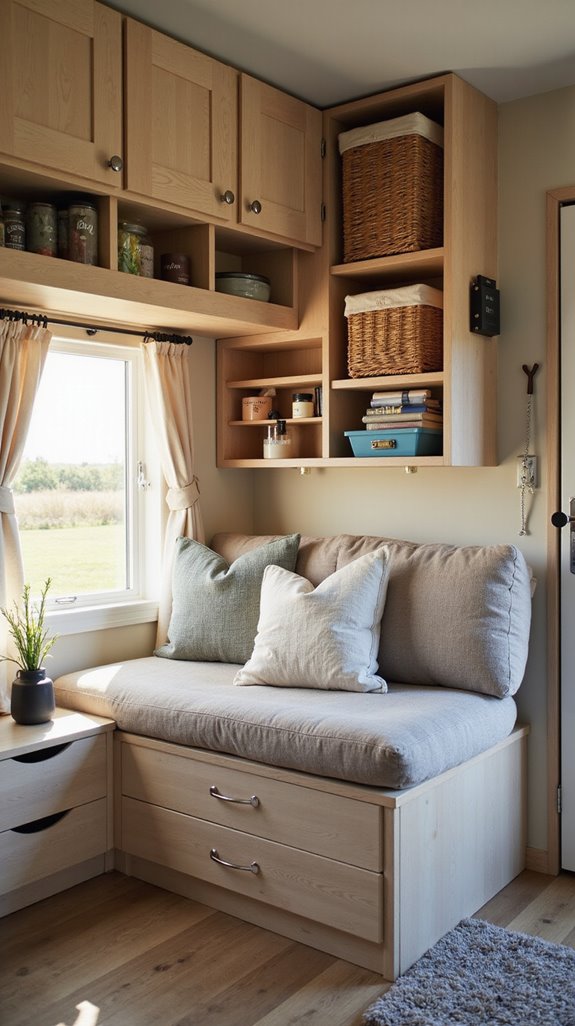
When space is tight, the walls are working harder than the floor. Magnetic strips on metal surfaces hold knives, spice jars, and scissors without touching the bench.
Door backs take hanging pocket organisers for medicines, chargers, and cleaning supplies.
Under the bed and dinette seating, clear plastic containers let you see everything without unpacking. Vacuum bags cut bulky bedding volume by up to 75%.
Square containers fit cupboards better than round ones because they eliminate wasted gaps. Measure the space first, then buy.
Drawers get dividers; every item needs a compact home, not just a temporary landing spot. An ottoman storage box pulls double duty as extra seating and a place to stow spare blankets or games.
Shaker Rails and Shelves That Earn Their Space
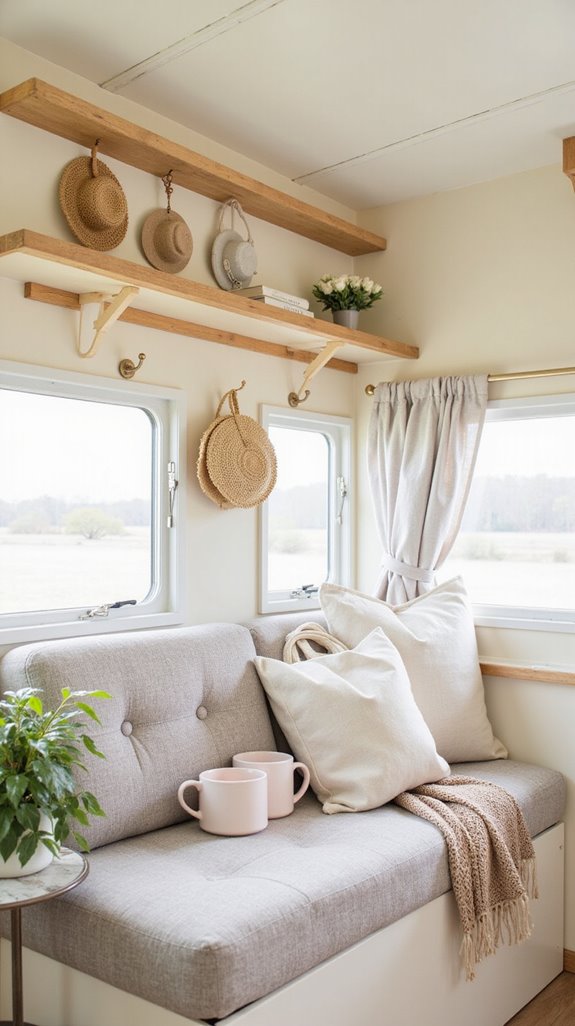
Shaker rails give you two things at once, a clean framed look and a solid mounting edge for shelves, doors, and trim.
The profile hides minor wall irregularities better than flat panels, which matters in a caravan where walls are rarely perfectly straight. Pine framing keeps weight down, and a thin plywood backer handles the door panel without adding bulk.
For shelves, use multiple bracket points and short spans to handle road vibration. Mark your screw positions directly from the fitted panel before you drill anything; one measurement taken twice saves a wall full of regret. GO here to get some solid SHELVES for your camper!
Cabinetry built from solid maple and birch plywood brings the kind of structural reliability that holds up through years of travel without warping or loosening at the joints.
Layout Tweaks That Make a Small Caravan Feel Twice as Roomy
A small caravan doesn’t need a renovation to feel roomier; sometimes rearranging what’s already there does more than any building project.
Start by clearing the entry-to-living-area sightline. When nothing blocks that view, the whole interior reads as one connected space instead of three cramped rooms stacked together.
Swap bulky furniture for fold-down or nesting pieces. A sofa bed replaces two items. A fold-flat table disappears between meals.
That recovered floor space isn’t decorative; it’s where you actually walk.
Finally, run your flooring lengthwise. That single choice visually stretches the caravan without touching a single wall.
Heating and Insulation Upgrades Worth Doing First
Before anything else gets ripped out or redecorated, sort the insulation and heating first.
Start with the floor, it’s usually the coldest surface and the biggest comfort thief. Thick carpet, insulated underlay, or foilboard panels cut easily to fit curved frames and make a noticeable difference fast.
Next, seal drafts under seats, around wheel arches, and beneath cabinetry with weatherstripping. Heat can’t stay put if cold air keeps sneaking in.
Then look at windows. Ten double-glazed windows and doors run around $3,000 installed. Pair them with thermal blinds and you’ve got a genuinely warm caravan, not just a warmer one.
Style Themes That Work Best in a Vintage Caravan
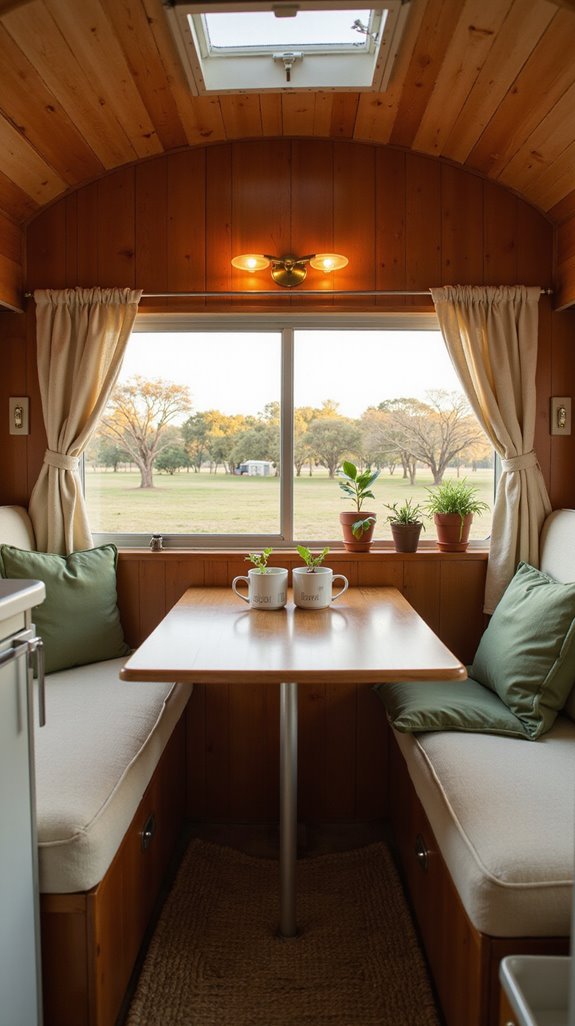
Once the insulation’s sorted, the fun part starts: picking a style that actually suits the bones of a vintage van.
Retro diner works well here, soft pastels, chrome-look hardware, and black-and-white checkered flooring do most of the heavy lifting.
Coastal styling is another strong fit, especially if your van already has a bright, open layout. Think white walls, V-groove lining, and light timber.
If you’d rather keep things low-effort, boho and cottagecore themes build through cushions, textiles, and accessories alone.
You’re not rebuilding cabinets. You’re layering decor until it looks intentional.
Warm Palettes and Timber Accents for a Vintage Caravan Interior
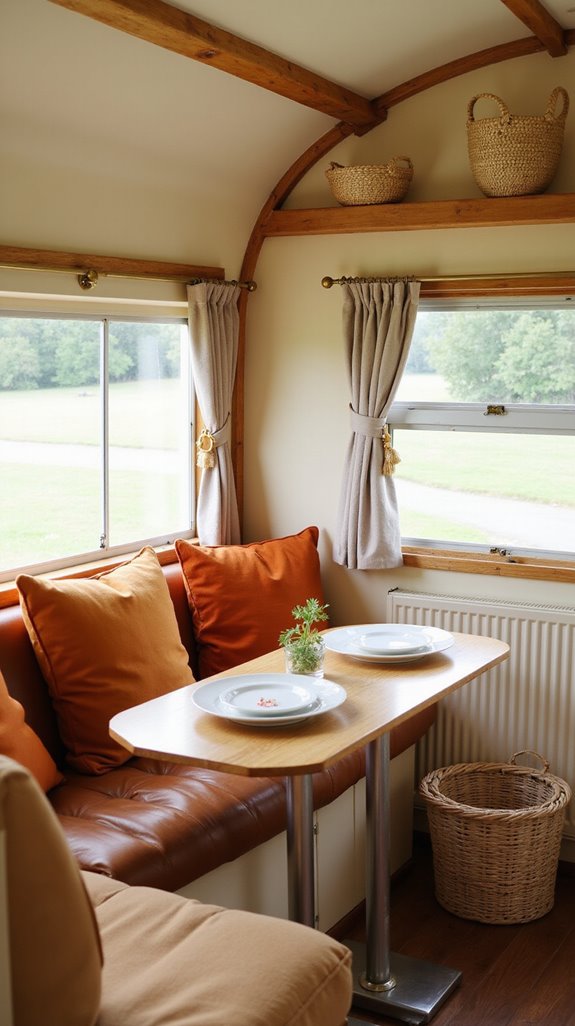
Colour does a lot of the heavy lifting in a small space, and warm neutrals are the right place to start.
Soft whites, cream, and taupe keep narrow interiors feeling open without making them look sterile. They also pair naturally with older timber veneers, so you’re not ripping anything out.
Add timber accents at benchtops, shelving, or a tabletop.
Light oak and pine keep things bright. Walnut-style tones look rich but use them sparingly, or your vintage caravan starts feeling like a very small library.
Swap cabinet hardware for brass.
It signals vintage immediately and costs almost nothing.
Budget Caravan Renovations That Prove Less Is More
Getting the palette and materials right costs surprisingly little, and that’s the pattern worth following for the rest of the renovation.
One static caravan was fully refreshed for around £1,000 using sheet vinyl, paint, and DC Fix vinyl wrap over tired cupboard doors. No structural work. No custom joinery.
You swap handles, spray-paint the tap and oven handle to match, and suddenly the kitchen looks intentional. Sticky-back tiles handle the bathroom.
Leftover carpet offcuts cover the bedroom floor. IKEA TIPHEDE rugs sort the living area.
Spend on what’s visible first, and you’ll rarely need to spend on anything else.
How to Plan a Partial Refresh, Not a Full Rebuild
Before you pull a single cupboard door off its hinges, do a proper condition check. Press along wall panels for soft spots, inspect window seams for staining, and check floor edges for give.
Hidden moisture turns a refresh into a rebuild faster than anything else.
Once you know the bones are solid, separate safety fixes from cosmetic ones. Sort brakes, wiring, and chassis first.
Then tackle one zone at a time, lounge, kitchen, or bedroom, so the van stays liveable throughout. Set a hard finish line before starting or scope creep will quietly double your budget.