If your bedroom ceiling feels like it’s slowly moving toward your face, a false ceiling might be the fix.
It’s a secondary ceiling installed below the original, typically dropping 6 to 12 inches, using materials like POP, gypsum board, or wood panels.
Done right it actually makes a small room feel taller, not shorter. Twelve specific designs pull this off better than the rest, and the differences between them are worth knowing.
Peripheral False Ceiling That Frames the Room Without Shrinking It
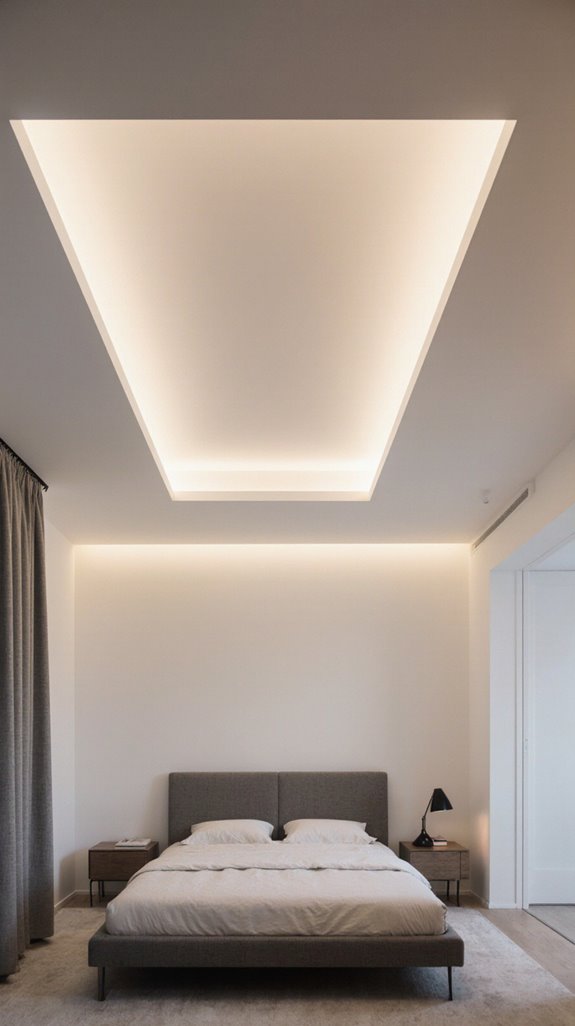
A peripheral false ceiling runs only along the edges of your room. Think of it as a dropped border, or soffit, that frames the perimeter while leaving the center completely open.
You’re fundamentally installing a 6,18 inch wide, 4,6 inch deep frame made from gypsum board or POP around the room’s perimeter. Nothing touches the middle.
That open center keeps your full ceiling height intact, so the room doesn’t feel compressed. The dropped edge creates shadow lines that draw your eye upward.
Light-toned borders reflect light outward, making a small bedroom read noticeably larger than its actual footprint. The peripheral soffit also accommodates hidden LED strip lighting, casting a soft ambient glow around the room’s edges without adding bulk.
SEE THIS: Latest False Ceiling Designs for Bedroom (Cozy + Modern Styles)!
Cove Lighting for False Ceilings That Makes Small Bedrooms Feel Larger
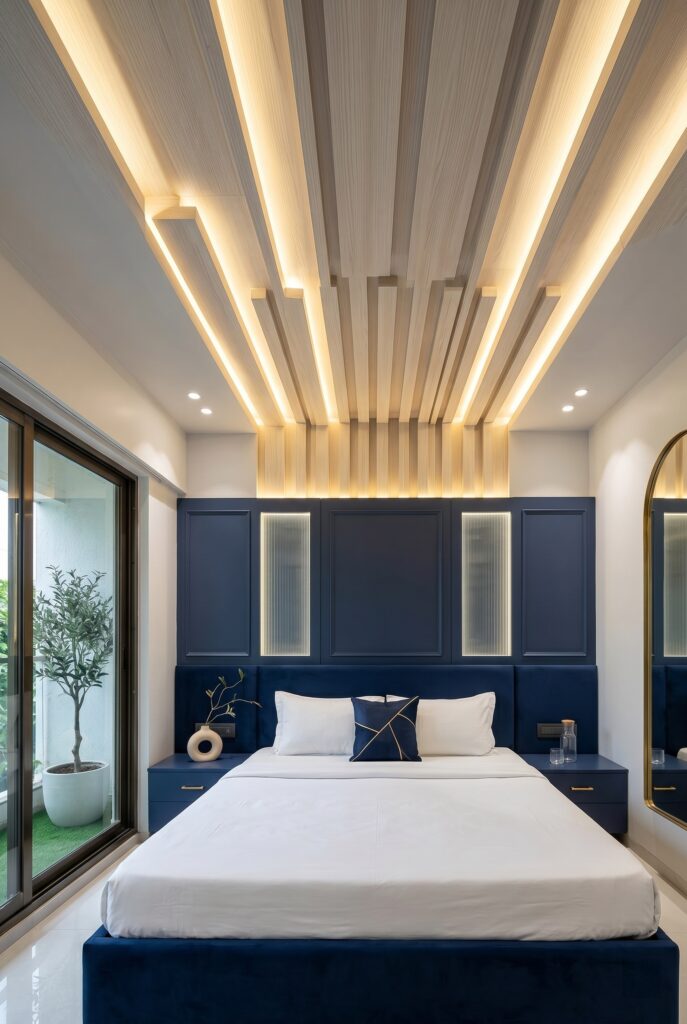
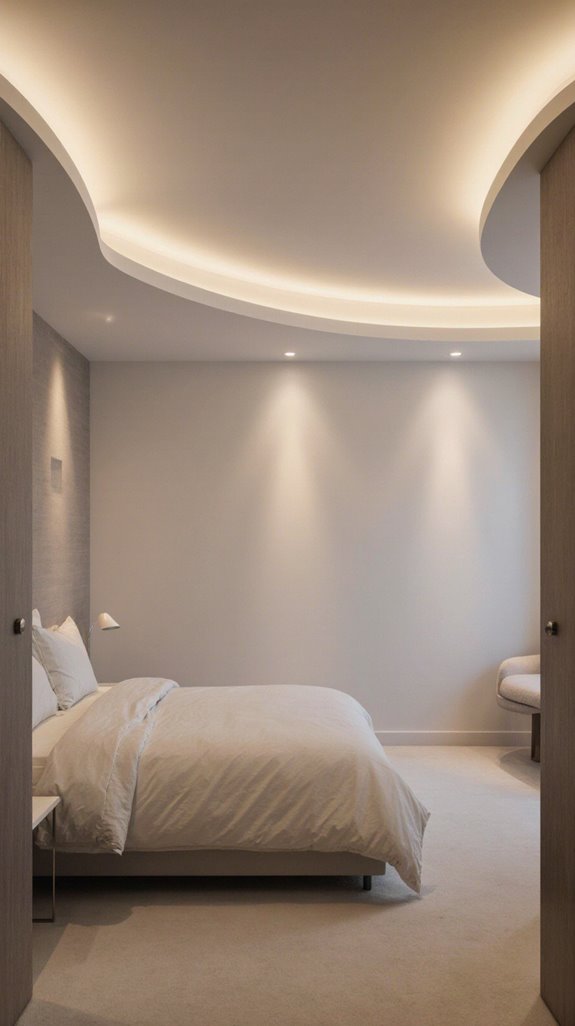
The peripheral border you just built around your bedroom ceiling is fundamentally a shelf waiting to hold light.
Tuck LED strip lights, ideally Govee or Lumary dimmable strips rated at 200 to 300 lumens per linear foot, into that cove facing upward. The light bounces off the ceiling instead of hitting your eyes directly.
That wash of brightness makes the ceiling plane appear to recede, which reads as height your room doesn’t actually have.
Stick to 2700K to 3000K warm white. Cooler temperatures above 4000K flatten the effect completely, turning your clever trick into an expensive fluorescent memory. Installing dimmable lights also lets you adjust the ambiance instantly depending on the time of day or mood you want to create.
MORE IDEAS: 28 Latest False Ceiling Designs That Make Every Room Look Custom-Built (Living Room, Bedroom, Kitchen & More).
Vaulted False Ceiling Designs That Make Low Ceilings Feel Voluminous
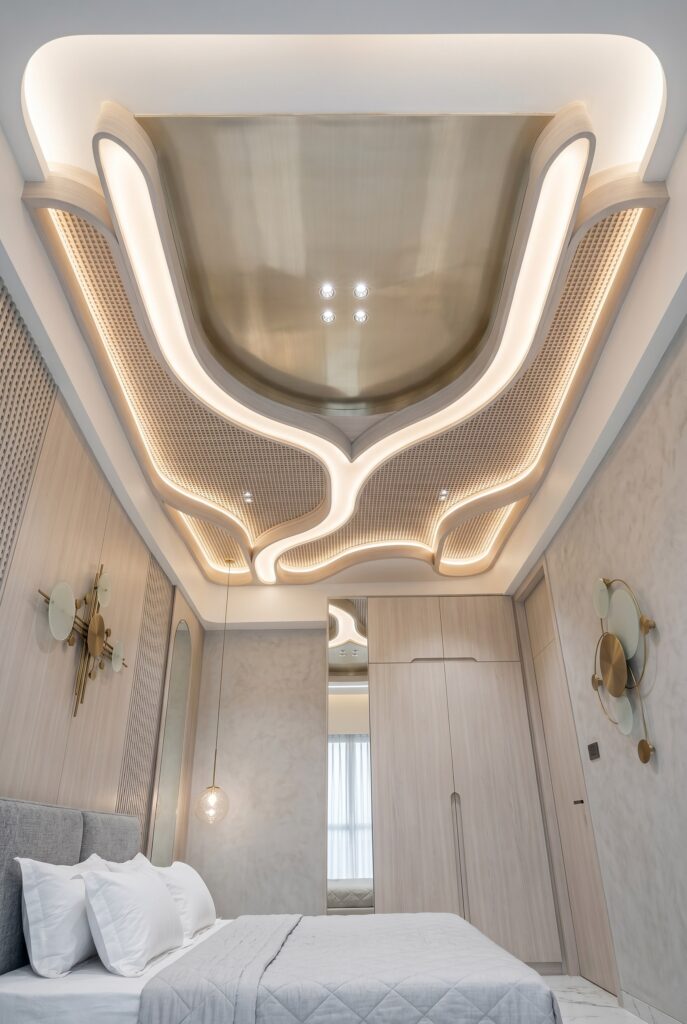
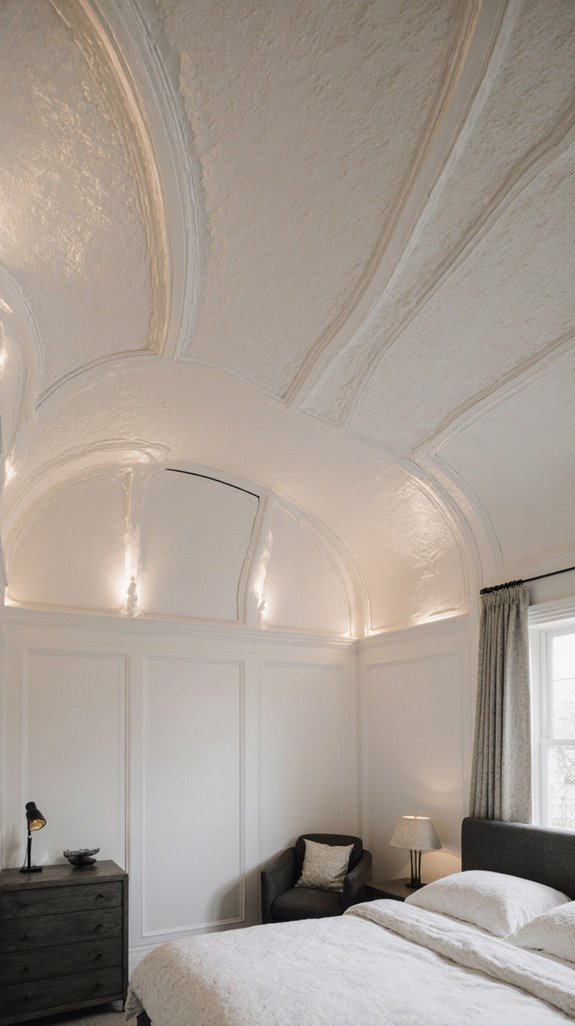
Flat ceilings in small bedrooms do one thing reliably: they sit there looking low and making the room feel like a storage unit.
A vaulted false ceiling fixes that by suspending a lightweight arched framework below your original ceiling, creating a gentle upward curve that pulls your eye toward the peak.
Even a shallow rise of 12, 18 inches transforms an 8-foot ceiling dramatically. Use gypsum boards or PVC panels on slim metal channels to keep weight minimal.
Add recessed LED strips at the ridge in warm 3000K white, and suddenly your ceiling is doing actual work. Beyond aesthetics, vaulted false ceilings also reduce noise levels, creating a noticeably quieter and more peaceful sleeping environment.
SEE THIS: Latest False Ceiling Designs for Bedroom (Cozy + Modern Styles)!
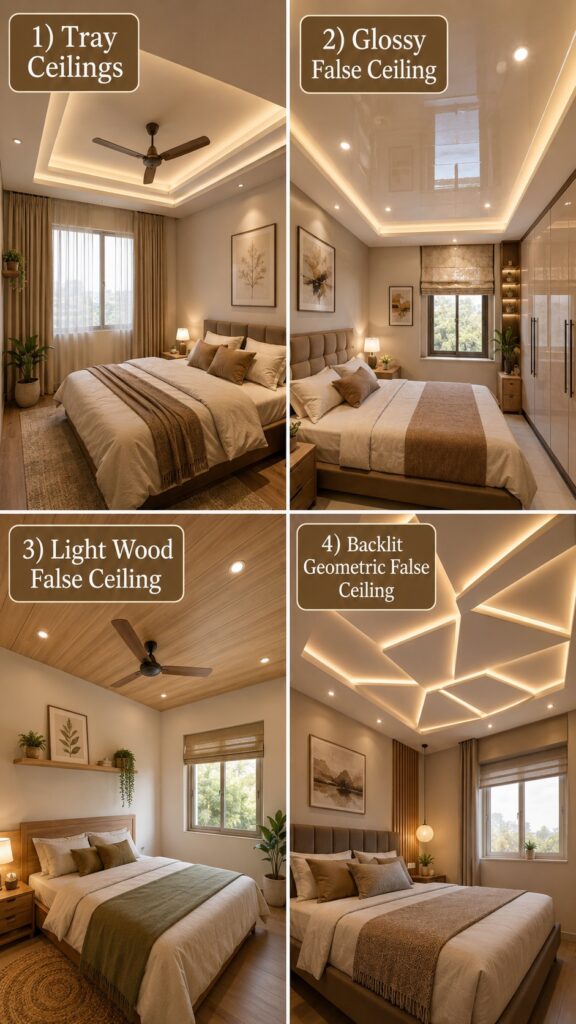
Tray Ceilings That Add Height to a Small Bedroom Without Major Renovation
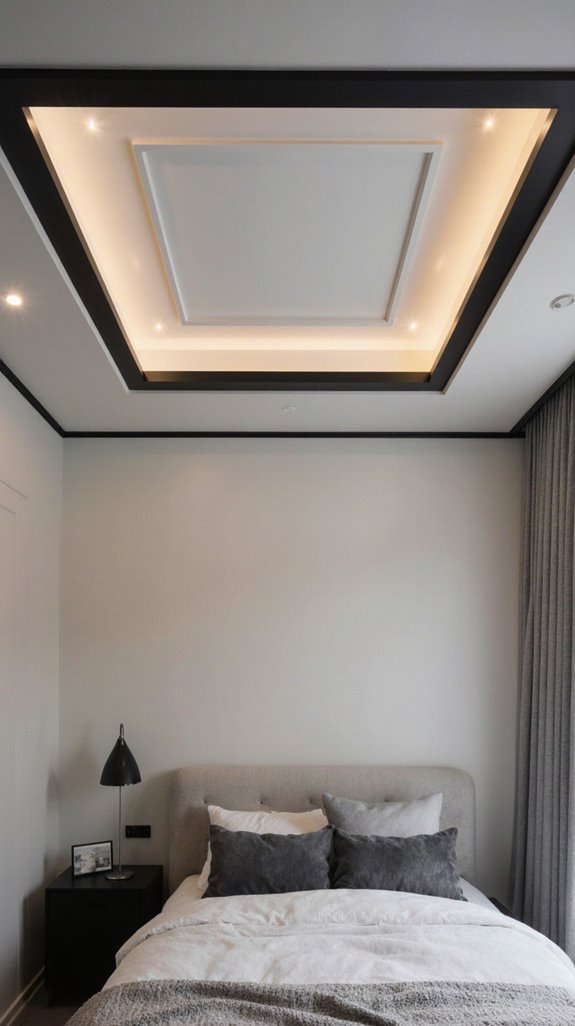
Vaulted ceilings work by lifting your eye upward through a curve, but if your bedroom can’t support even a shallow arch, a tray ceiling gets you similar results through a completely different trick.
You’re not curving anything. Instead, you’re recessing the center section slightly while keeping the edges raised, creating a layered look.
Keep the drop under four inches so you don’t sacrifice headroom in rooms with 8-foot ceilings.
Run warm white LED cove lighting, around 3000K, along the perimeter recess. That upward glow makes your ceiling feel taller without touching a single structural beam. Gypsum board is an ideal material choice for constructing this recess due to its sleek, minimal finish that keeps the design clean and proportioned.
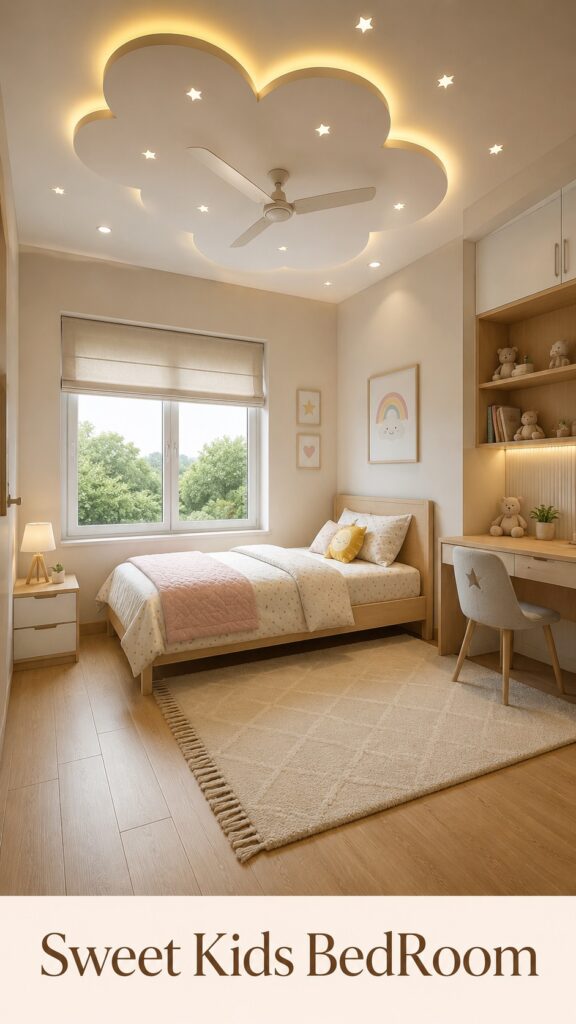
SEE THIS: 14 Kids Bedroom False Ceiling Designs That Feel Fun but Not Overwhelming!
Extended False Ceiling Panels That Pull the Eye Up in Small Bedrooms
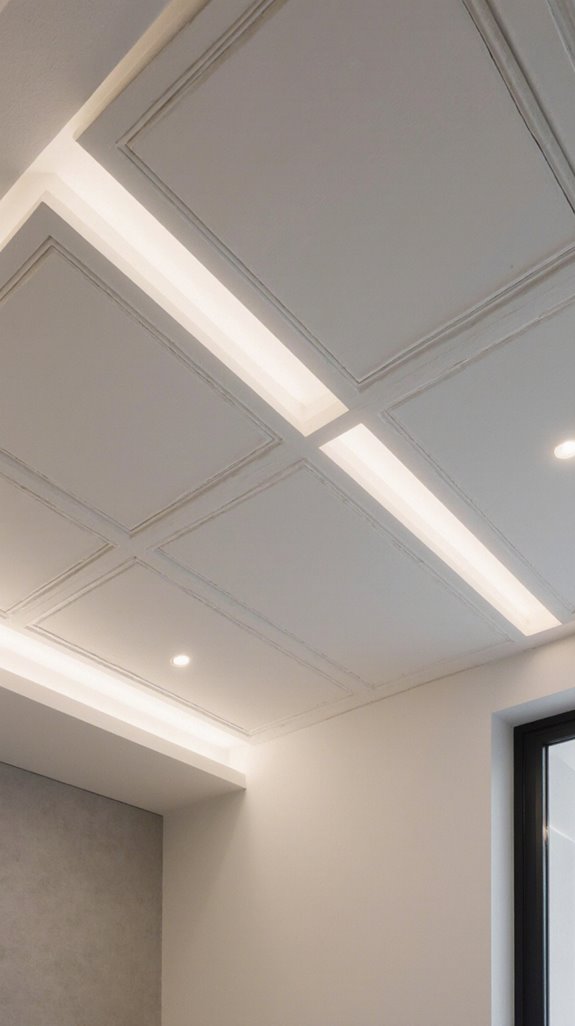
Where a tray ceiling works by pushing layers down, an extended false ceiling panel does the opposite; it pulls the wall surface up and merges it into the ceiling in one unbroken plane.
Start the panel directly behind your headboard, matching its exact width. Run white gypsum or a light matte laminate vertically up the wall, then let it curve or angle flush into the ceiling. Your eye follows that path without hitting a corner.
Tuck cove LEDs along the edges, aim them upward, and the ceiling suddenly reads taller than your tape measure suggests. This approach mirrors headboard lines, extending the panel vertically along the wall to create a seamless, dramatic connection between surfaces.
Island False Ceilings That Steal Attention From the Room’s Size
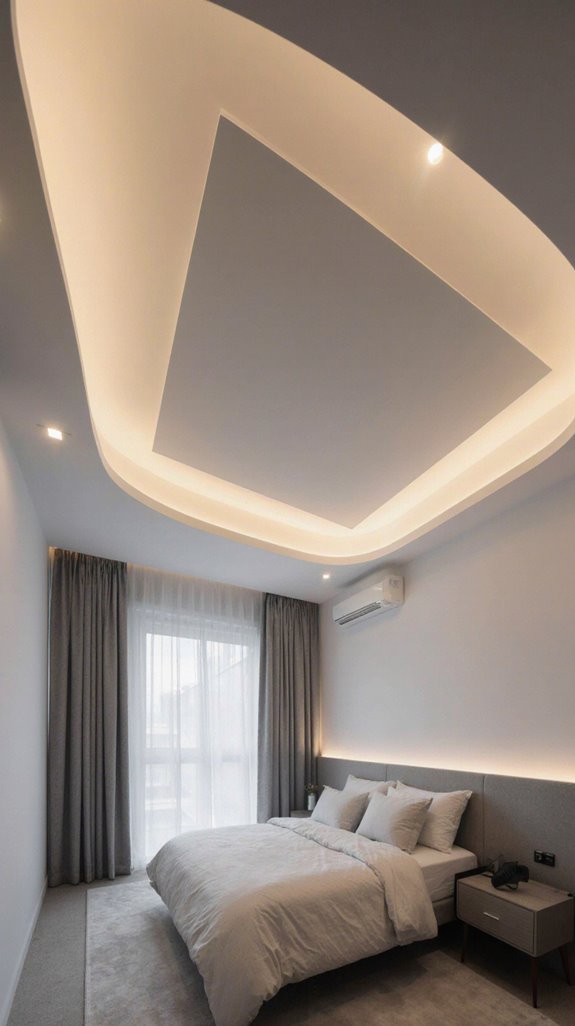
When every wall screams “this room is small,” the ceiling is the one surface most people completely ignore.
An island false ceiling fixes that fast. It’s a suspended gypsum panel centered over your bed, floating roughly 8 to 12 inches below the main ceiling with a deliberate gap around its perimeter.
That gap isn’t wasted space; you tuck LED strips inside it, and suddenly the panel appears to levitate. Your eye chases the light instead of measuring the walls.
The room doesn’t get bigger; it just stops feeling small, which honestly achieves the same result. Center drop ceilings can also double as a dramatic backdrop for your headboard, pulling the entire design together with intention.
Border False Ceiling Above the Bed for a Cozy Niche Feel
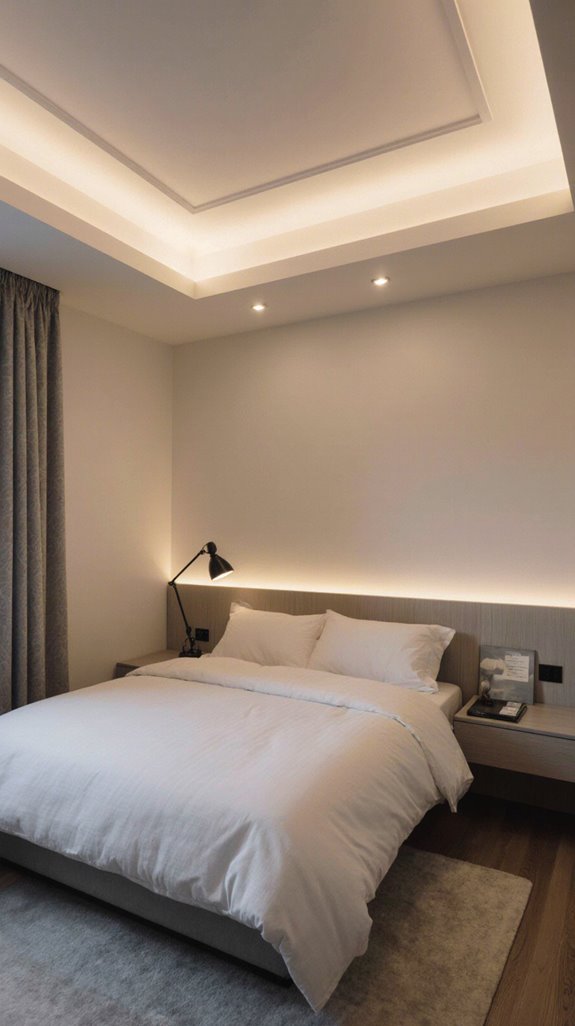
The island false ceiling floats over the entire bed, but a border false ceiling does something more surgical. It frames just the headboard zone, typically a strip 12 to 18 inches wide running along one or two walls directly above where your pillows sit.
This partial frame creates a visual canopy without dropping the whole ceiling. Your room keeps its headroom, and the bed becomes the obvious focal point.
Tuck warm-white LED strips inside the borders inner cove and you get a soft floating glow.
Gypsum board keeps the lines clean. POP handles curves if you want something more ornate.
Layered False Ceilings That Give Small Rooms Depth and Structure
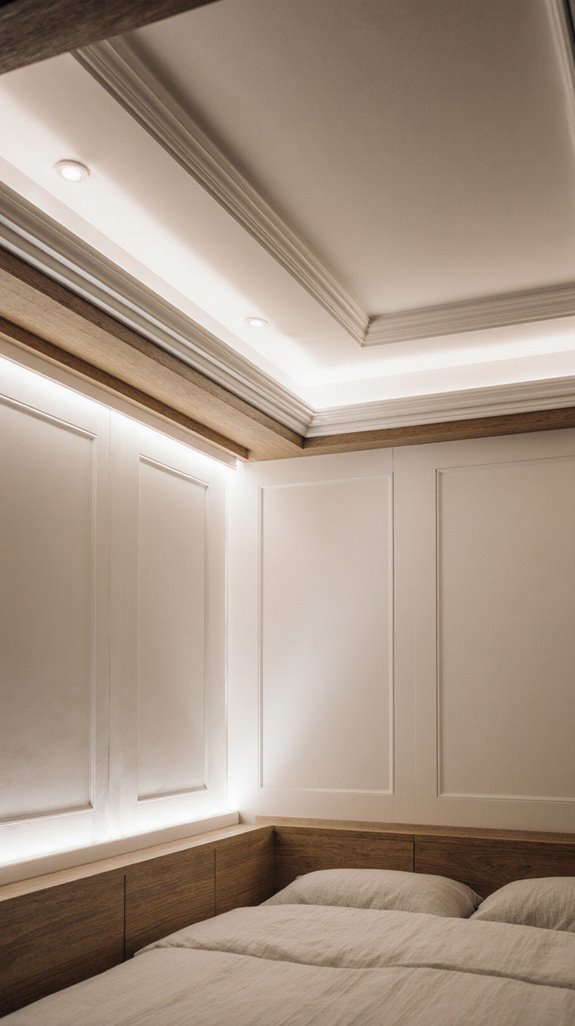
A single flat ceiling in a small bedroom does one thing: remind you the room is small.
Layered gypsum board installations fix that by stacking two or three shallow tiers, each dropping roughly 3 to 4 inches, creating depth without stealing headroom. The graduated steps draw your eye upward instead of sideways, which tricks the brain into reading the room as larger.
Tuck cove lighting between each tier and you get a soft upward wash that makes the ceiling appear to float. Three shallow tiers always beat one dramatic drop, less weight, more dimension, same visual payoff.
Minimalist POP False Ceiling With Hidden LED Strips for Small Bedrooms
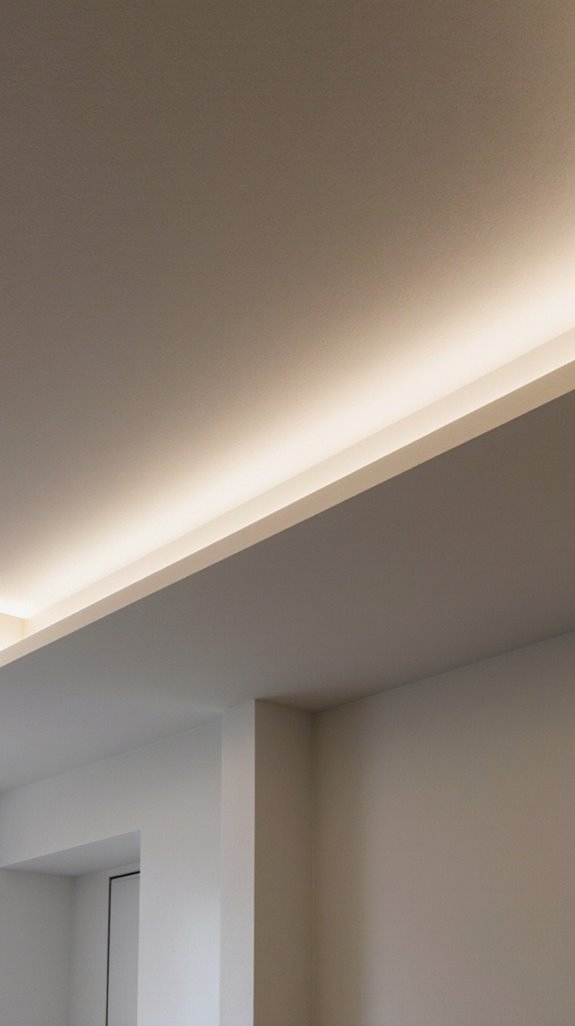
Layered tiers work well, but they’re not the only way to make a small bedroom ceiling feel bigger. A minimalist POP false ceiling keeps things flat or runs a shallow perimeter border, usually under 4 inches deep, so you’re not sacrificing headroom.
The real trick is the hidden cove channel built into that border. You tuck 3000K warm white LED strips inside it, and the light washes upward across the ceiling instead of pushing downward.
Paint everything in matte white or powder grey, skip the hanging fixtures entirely, and the room suddenly reads taller than it actually is.
Backlit Geometric False Ceiling Panels That Add Depth to Small Rooms
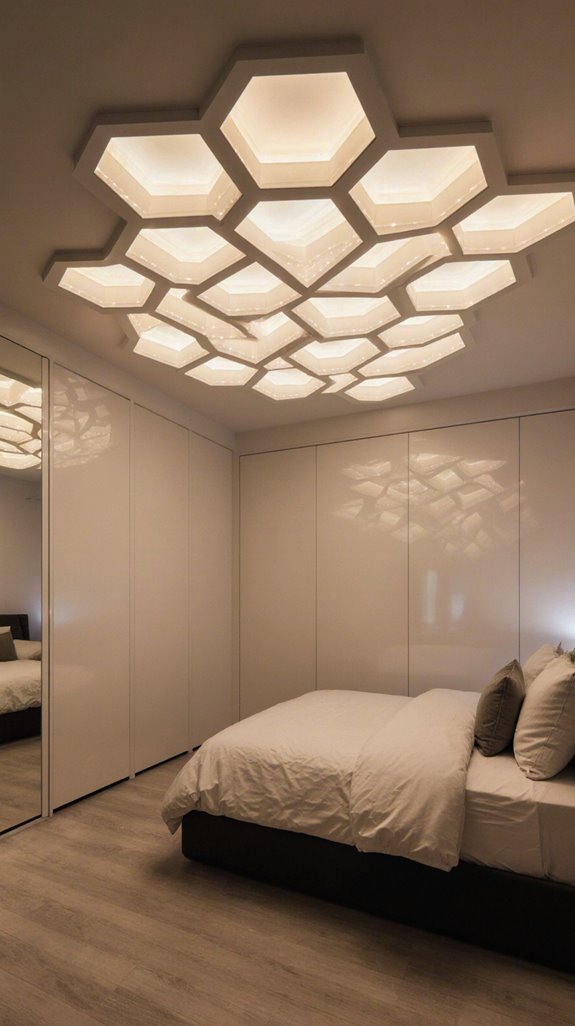
Where minimalist POP keeps everything flat and quiet, backlit geometric false ceilings go the opposite direction by cutting angular shapes, think triangles, hexagons, or interlocking rectangles, directly into gypsum board panels and lighting them from behind.
LED strips hidden inside those cutouts cast indirect light upward, which blurs the edge between the false ceiling and the main ceiling above it. That blurred boundary tricks your eye into reading the room as taller.
A perimeter-backlit geometric panel needs roughly a 4,6 inch gap from the structural ceiling to fit the LEDs and diffuser panels properly. Cool white LEDs push that airy, open feeling furthest.
Light Wood False Ceiling Panels That Give a Small Bedroom an Airy Feel
Backlit geometric panels make a dramatic statement, but they’re not for everyone. Sometimes you want warmth without the sci-fi vibes.
Light wood ceiling panels fix that. Birch, maple, and light ash reflect up to 30% more light than darker woods, which quietly tricks the eye into reading the room as larger.
Stick with narrow slats under 10 cm wide and run them parallel to your longest wall. A whitewashed or limed finish keeps the grain visible without darkening the tone.
Add warm-white LED strips at 2700K tucked into recessed channels and your ceiling genuinely appears to float.
Glossy False Ceiling Finishes That Reflect Light and Double the Space
A glossy false ceiling works like a mirror you never have to clean. It bounces light around the room and quietly makes a small bedroom feel bigger than it is.
High-gloss gypsum boards with lacquered paint or glossy PVC panels are your most practical options. Pair either with cove lighting using warm 3000K LEDs along the perimeter, and the ceiling starts pulling double duty.
Stick to soft whites, ivory, or pearl grey. Skip full mirror-grade gloss; semi-gloss reflects well without making you feel like you’re sleeping inside a jewelry display case.