Your bedroom should be your favorite place to land at the end of a long day, but for many women, it ends up feeling more like a storage unit with a mattress.
Sound familiar? The good news is that creating a calm, beautiful retreat doesn’t require a massive budget or a design degree.
You just need the right ideas and we’ve rounded up 15 practical ones that actually work for real life.
Key Takeaways
- Choose soft neutral tones like warm beiges and whites to create a calming, visually restful bedroom environment that feels timeless.
- Invest in a medium-firm hybrid or latex mattress with natural fiber bedding to improve sleep quality and temperature regulation.
- Position your bed on the longest wall with 30 inches of walkway on each side for balanced, accessible layout.
- Layer ambient, task, and accent lighting using warm 2700K–3000K bulbs and blackout curtains for optimal sleep conditions.
- Limit nightstand surfaces to one essential item plus a lamp, keeping spaces clear to promote calm and reduce clutter.
Why Neutral Tones Create a More Restful Bedroom Than Trendy Colors
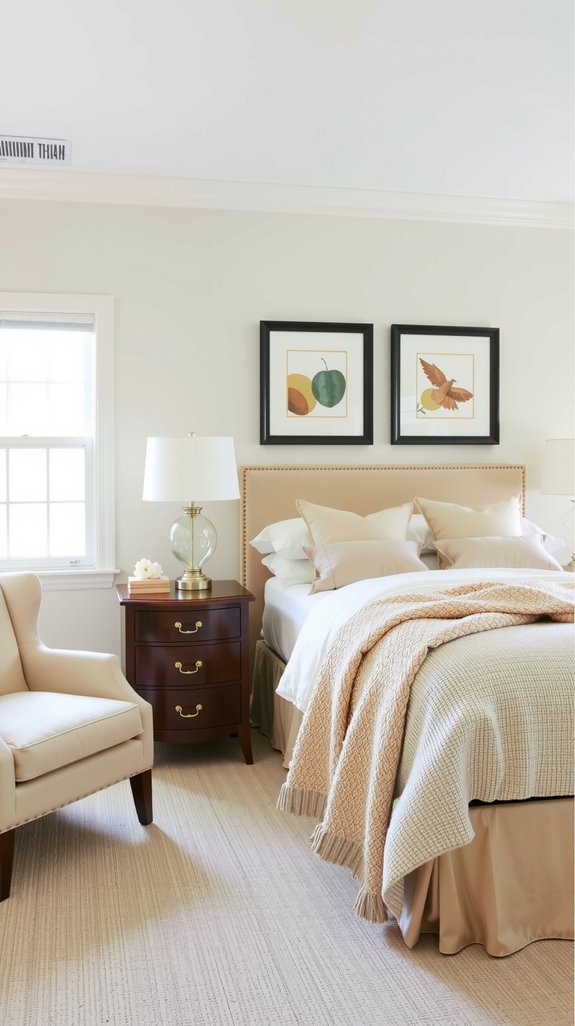
When it comes to designing a bedroom that actually helps you sleep, color matters more than most people realize.
Trendy, super-saturated shades like vivid reds or bright yellows actually raise your heart rate and keep your brain alert — the opposite of what you want at bedtime.
Neutral tones like soft whites, warm beiges, and gentle taupes work with your nervous system instead of against it. They reduce visual noise, lower cognitive load, and support that calm, wind-down feeling your body craves.
Think of neutrals as your bedroom’s secret superpower — quietly doing the heavy lifting while everything looks effortlessly beautiful.
In smaller rooms especially, light-coloured walls reflect light, amplifying a sense of openness and airiness that makes the entire space feel larger than it actually is.
Choose a Calming 2–3 Color Palette That Feels Timeless
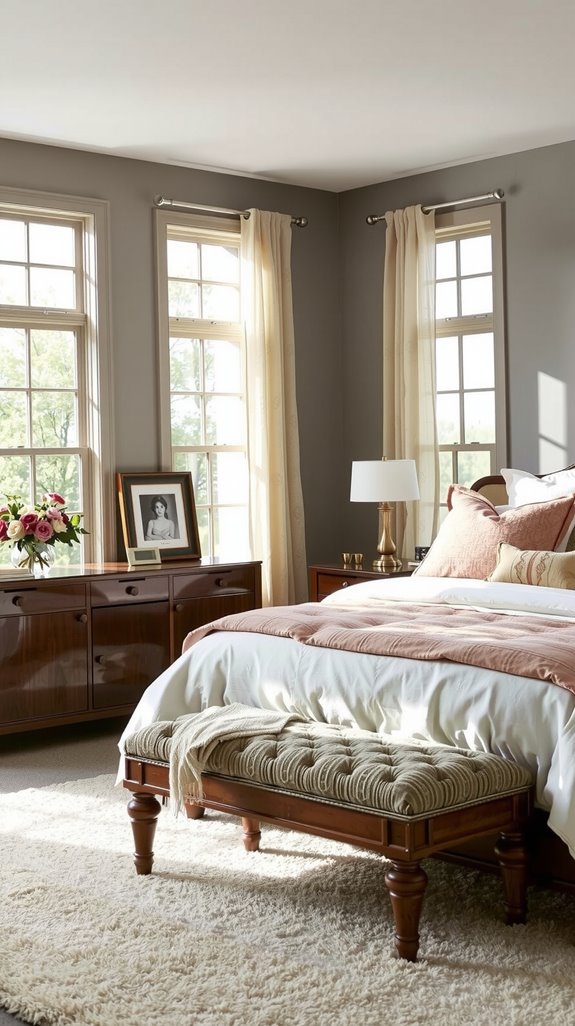
Once you’ve settled on neutrals as your bedroom’s foundation, it’s time to build a real color plan around them. Stick to 2–3 colors plus one neutral, and you’ll avoid that chaotic, mismatched feeling.
The 60/30/10 rule makes this surprisingly easy.
| Role | Coverage | Example Colors |
|---|---|---|
| Base | 60% | Soft sage, pale blue-gray |
| Secondary | 30% | Warm taupe, oatmeal |
| Accent | 10% | Brass, muted terracotta |
Choose muted, nature-inspired shades over bright trendy colors. They stay beautiful longer, feel calmer, and won’t make you cringe in three years!
Colors with low to medium saturation tend to be the most relaxing because they reduce nervous system stimulation and make it easier to wind down at night. Read more here at: Yescolours.
Invest in a Quality Mattress as Your Bedroom’s First Priority
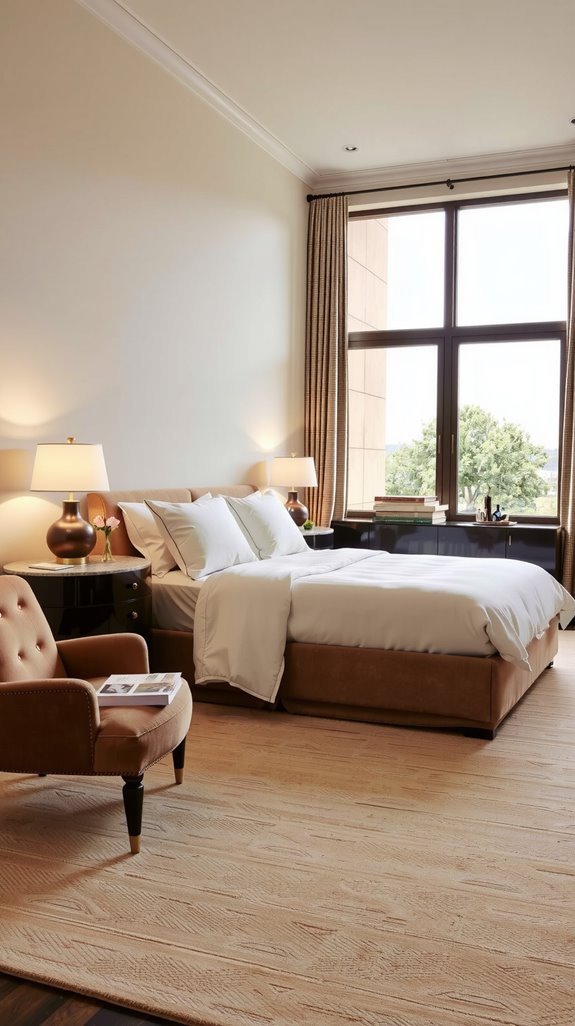
Before you spend a single dollar on throw pillows or curtains, there’s one investment that actually changes your life: your mattress.
A quality mattress reduces pain, helps you fall asleep faster, and keeps you from waking up feeling like you wrestled a boulder.
For women 35–65, a medium to medium-firm hybrid or latex mattress works best, especially if you run hot at night.
Good edge support, pressure relief, and cooling materials make a real difference. Your mattress isn’t just furniture — it’s your health headquarters.
The Helix Midnight Luxe earned top marks across pressure relief, motion isolation, edge support, and cooling — making it one of the most well-rounded options available today.
Choose Natural Fiber Bedding That Breathes in Every Season
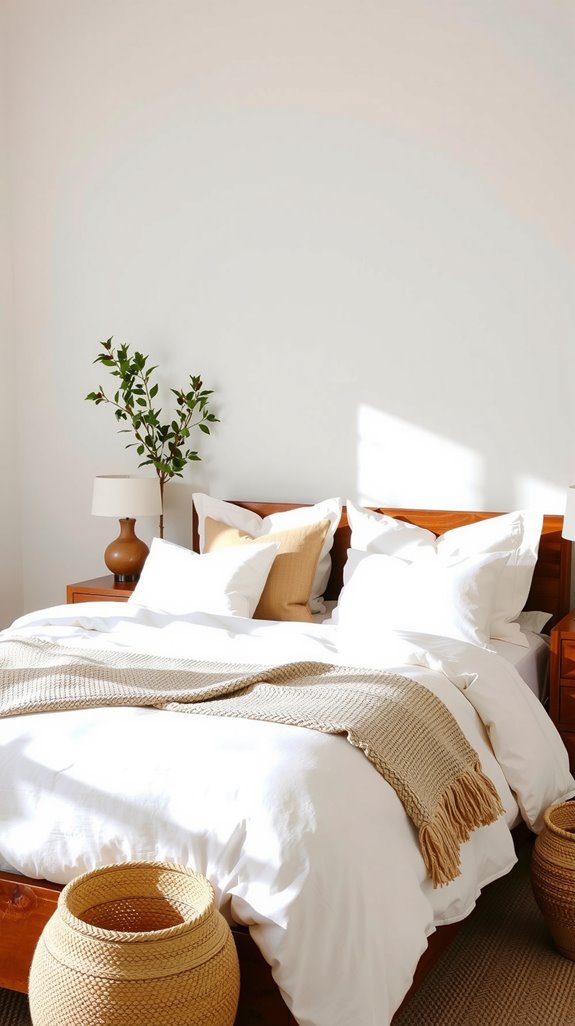
After you’ve locked in the perfect mattress, your next power move is choosing bedding that actually works with your body instead of against it.
Natural fibers like cotton, linen, wool, and bamboo let air flow freely, so heat doesn’t get trapped around you while you sleep.
They also absorb moisture without feeling damp, which means fewer night sweats waking you up at 2 a.m.
Natural fibers breathe, wick moisture, and keep night sweats from stealing your sleep.
Wool even adjusts to temperature changes, keeping you warm when it’s cool and releasing heat when it’s not. Its naturally crimped structure creates air pockets that make this possible, so you get insulation and breathability working together in the same fiber.
Think of natural fiber bedding as your body’s personal climate control system — no batteries required.
Layer Your Bedding for Comfort in Every Season
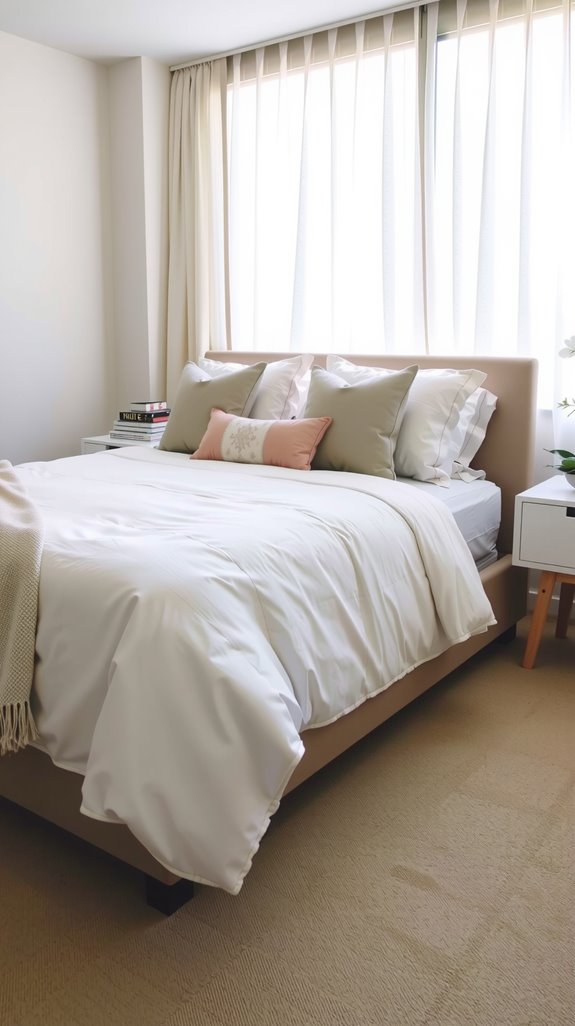
Getting your bedding material right sets a solid foundation, but how you stack those layers is where the real magic happens.
Think of your bed like a cozy sandwich — fitted sheet first, then a flat sheet, a light blanket, and your duvet on top. This setup lets you peel back or add layers quickly without remaking everything.
Tuck a throw at the foot for those surprise chilly nights. Swapping your duvet for a lighter one in summer keeps overheating at bay.
With the right layers, you’re basically building your own personal climate control system — no thermostat battles required! For summer, a 4.5 tog duvet is the recommended choice, while a 13.5 tog is better suited for the colder winter months.
Place Your Bed on the Best Wall in the Room
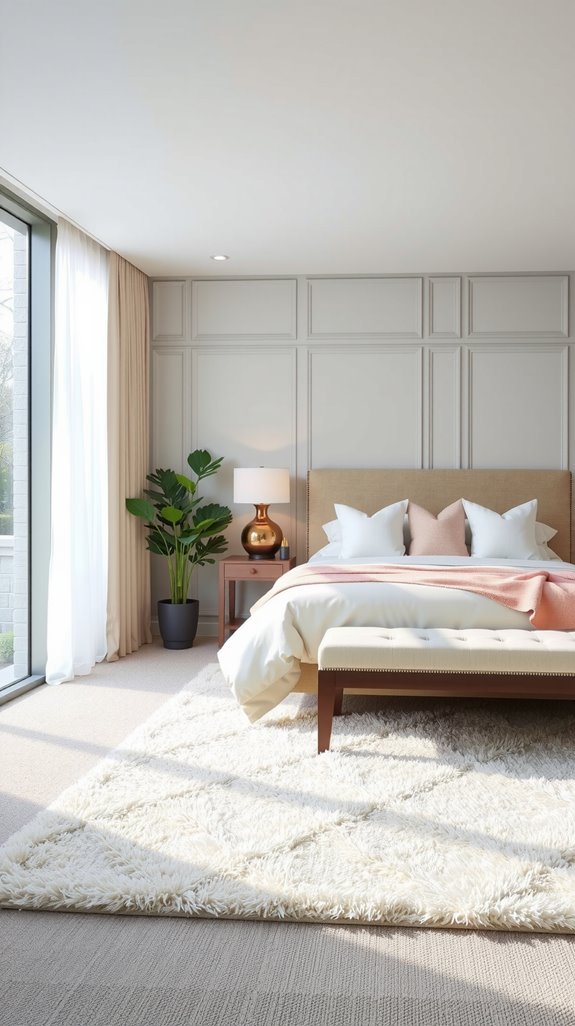
Once you’ve got your bedding layers sorted, it’s time to tackle one of the biggest decisions in your bedroom layout — which wall your bed actually lives on.
This choice sets the tone for everything else. Here’s what makes a wall the winner:
- It sits directly across from the door
- It’s the longest interior wall
- It lets you center the bed with room on both sides
- It allows 30 inches of walkway on each side
Nail these four things, and your room instantly feels calmer, more intentional, and beautifully pulled together. For a king-size bed, that bed wall minimum needs to be at least 12 feet and 4 inches wide to comfortably fit the bed and nightstands on either side.
Use an Oversized Headboard to Anchor the Whole Room
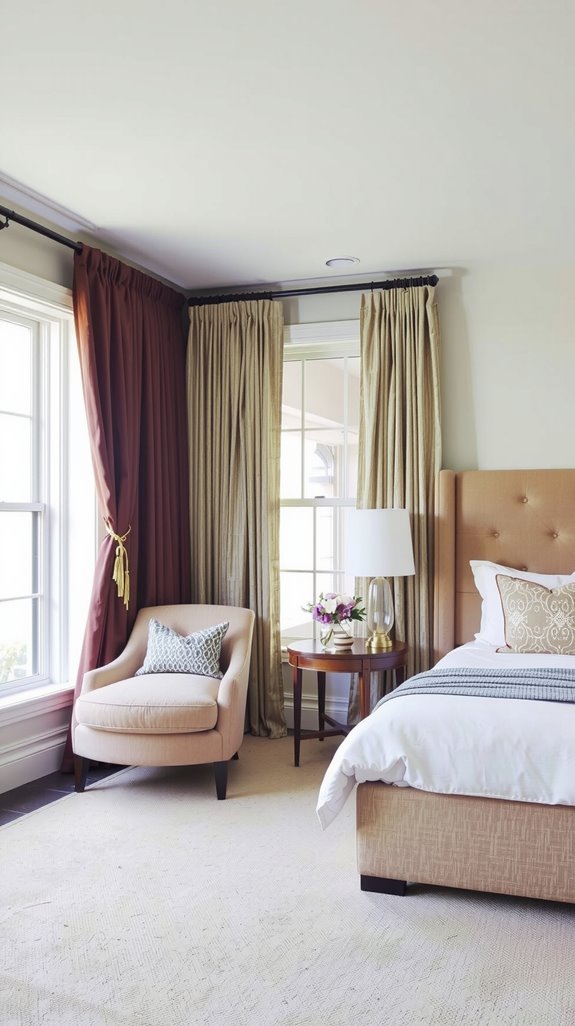
There are few things in a bedroom that make as big a statement as an oversized headboard, and honestly, it’s one of the easiest ways to make your whole room feel intentional and designed.
It anchors the entire space and tells the eye exactly where to look. Choose upholstered fabrics like linen, velvet, or boucle for that cozy, quiet feeling. Aim for 48–60 inches above the mattress for serious impact.
| Feature | What It Does | Best Choice |
|---|---|---|
| Height | Draws eyes upward | 48–60 inches |
| Material | Adds softness and sound absorption | Linen or velvet |
| Color | Sets your whole room palette | Warm neutrals |
| Width | Balances wall proportions | Beyond nightstand edges |
The Right Bedroom Lighting Setup for Winding Down at Night
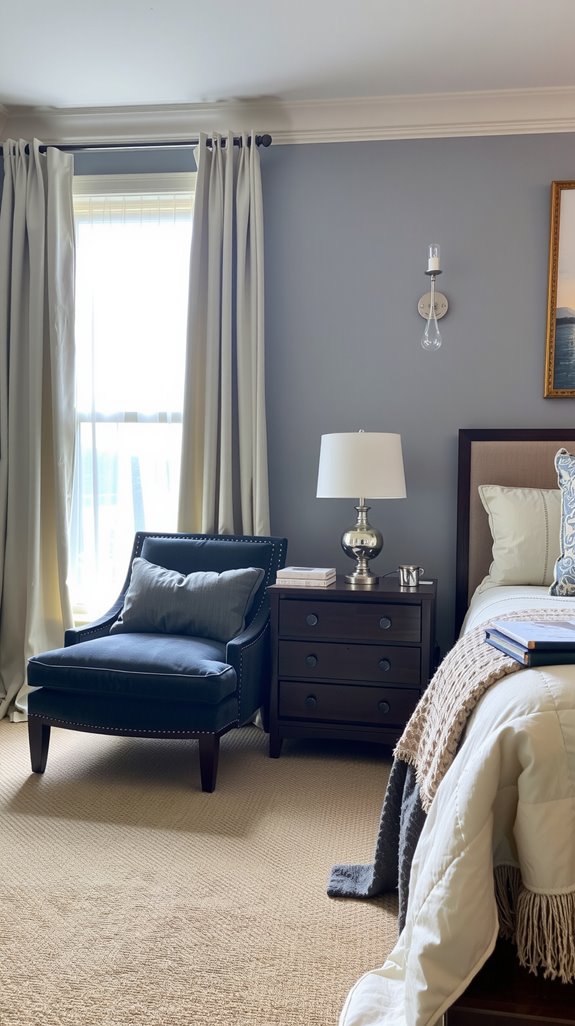
Lighting is honestly one of those things that can make or break how well you sleep, and setting it up the right way is way easier than you’d think.
Getting your bedroom lighting right isn’t complicated — and the payoff for your sleep quality is absolutely worth it.
Build your bedroom lighting in layers:
- Ambient – soft, dimmable ceiling lights for overall glow
- Task – warm bedside lamps at eye level for reading
- Accent – LED strips or small dresser lamps for cozy depth
Stick to 2700K–3000K warm bulbs, and dim everything to 30–50% about an hour before bed.
How to Use Blackout Curtains Without Making the Room Feel Heavy
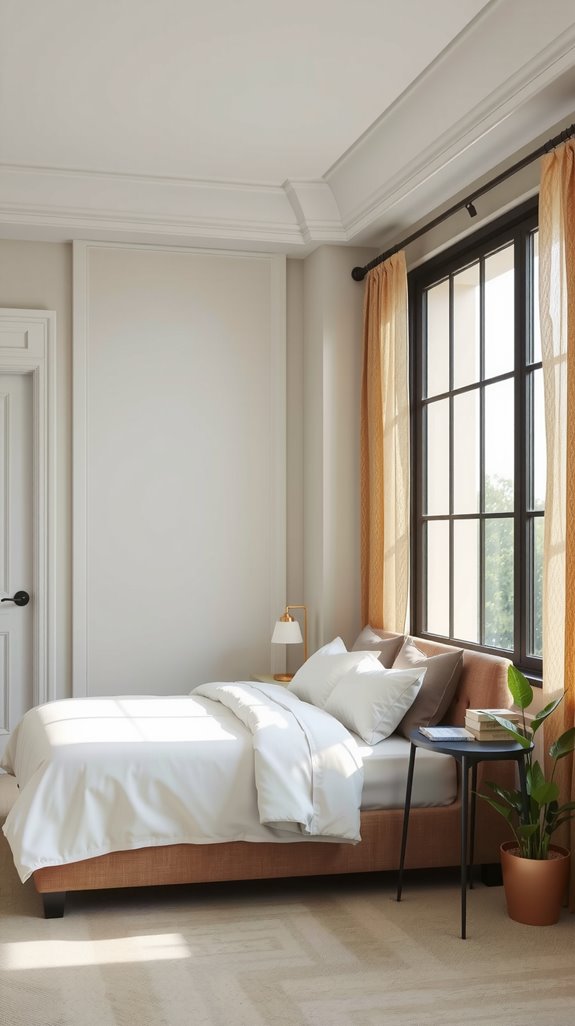
Getting your bedroom lighting perfectly set up is a big win, but all those warm, cozy bulbs won’t mean much if early morning sun is blasting through your windows at 6 AM!
Blackout curtains are your secret weapon, and they don’t have to feel like a cave. Choose light colors like white, cream, or soft gray to keep things feeling fresh.
Layer sheer panels underneath for daytime softness. Mount your rod high and extend it wide so panels stack off the glass completely when open.
Slim hardware and simple, clean fabric keep everything looking elegant, not heavy.
Storage Ideas That Keep Nightstands and Dressers Clear
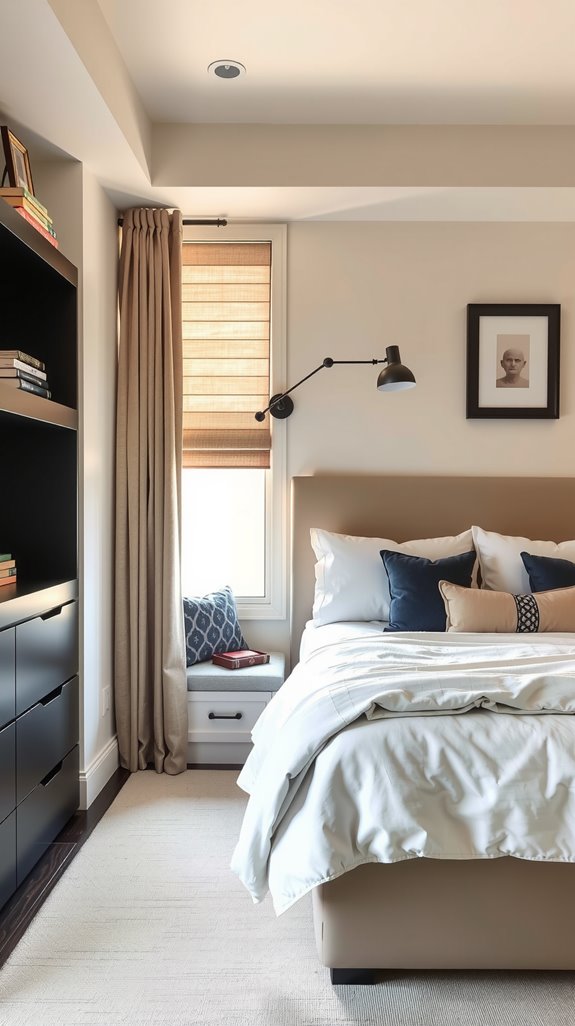
Even if your bedroom looks amazing, a cluttered nightstand or dresser top can make the whole space feel chaotic and stressful.
Luckily, small changes make a huge difference! Try these smart strategies:
- Limit your nightstand surface to one essential item plus your lamp.
- Use drawer dividers so bedtime essentials stay hidden but organized.
- Add a bedside caddy for your phone, remote, and book.
- Treat your dresser top as a display zone only, not a landing strip for stuff.
These simple swaps keep surfaces clear, your mind calm, and your bedroom actually enjoyable to wake up in!
Layer Textures: Velvet, Linen, Wood: to Add Depth on a Neutral Base
Once your surfaces are clear and your nightstand’s no longer a dumping ground, it’s time to make your bedroom actually *look* as good as it feels.
Start with soft neutral walls, then layer in different textures to add depth.
Soft neutral walls are just the beginning — layered textures are what give a room its soul.
Think linen bedding for that relaxed, breathable feel, velvet cushions for a touch of luxury, and a chunky knit throw for coziness.
Add a wood nightstand or bench to ground the space with natural warmth.
Aim for three to five textures total. They’ll create richness without chaos, turning your neutral bedroom into something that genuinely feels beautiful and intentional.
Create a Small Reading Corner in Your Bedroom
A reading corner might sound like a luxury, but it’s actually one of the easiest upgrades you can make to your bedroom.
You just need four things:
- A quiet corner or window nook with natural edges
- A plump armchair or small bench that fits your space
- A floor lamp, wall sconce, or battery-powered light for evening reading
- A floating shelf or small side table for books and tea
Toss in a throw blanket, add a tiny rug, and suddenly that forgotten corner becomes your favorite spot in the whole house.
Plants and Flowers That Make a Bedroom Feel Fresh
Plants and flowers can completely change the way your bedroom feels, and the best part is you don’t need a green thumb to pull it off.
A few well-chosen plants can transform your bedroom’s entire vibe — no gardening expertise required.
A snake plant or ZZ plant handles low light and forgotten watering like a champ. Pothos trails beautifully from a shelf, and aloe vera stays compact without much fuss.
For flowers, lavender brings a calming scent, while pale roses or orchids add quiet elegance.
Keep one plant or arrangement simple so your room stays restful, not jungle-y. Just avoid spiny cacti near your bed unless you enjoy unexpected midnight surprises.
Display Books, Photos, and Mementos Without Visual Clutter
Everything you love — your favorite books, a stack of old photos, that bracelet from your trip to the beach — deserves a spot in your bedroom, but dumping it all out at once turns your dresser into a yard sale.
Try these smart tricks instead:
- Group similar items together in one defined spot.
- Use a tray or shadow box to corral small keepsakes.
- Mount floating shelves to keep surfaces clear.
- Rotate seasonal mementos so nothing gets overcrowded.
Edit ruthlessly, keep only your favorites, and give each piece breathing room.
Intentional display feels like art, not chaos.
Lighting Accents and Details That Elevate a Neutral Bedroom
Lighting is honestly one of those secret weapons that can completely transform a neutral bedroom without changing a single piece of furniture.
Skip the single harsh ceiling light and layer your sources instead. Wall sconces on both sides of your bed free up nightstand space and create beautiful symmetry.
Choose warm bulbs between 2700K and 3000K because they make beige, cream, and gray tones look incredibly cozy.
Add dimmers so you can go from bright reading mode to sleepy wind-down mode easily. Small brass or gold fixtures add just enough shine to keep things polished without looking overdone.