
What this is: Thirteen specific decisions about rugs, bedding, curtains, throws, and textiles that most men’s room guides either skip or get wrong. With the reasoning, the right materials, and the specific mistakes that make a room look assembled rather than considered.
Who benefits most: You, if your room has decent furniture and good lighting but still feels like something is missing. Why it’s worth reading: Soft furnishings are where the room either comes together or exposes itself as a collection of purchases. This guide explains why.
Most men get the furniture right and the lighting right and then treat textiles as an afterthought. A rug in front of the bed instead of under it. Polyester duvet cover because it was on sale.
No curtains because curtains seem optional. The room then looks like someone assembled furniture in a space and stopped.
Soft furnishings are not decorative finishing. They are infrastructure, the layer that determines how the room feels to be inside, not just how it looks in a photo.
Here are 13 decisions that make the difference.
Decision 1: Rug Sizing — Under the Bed, Not in Front of It
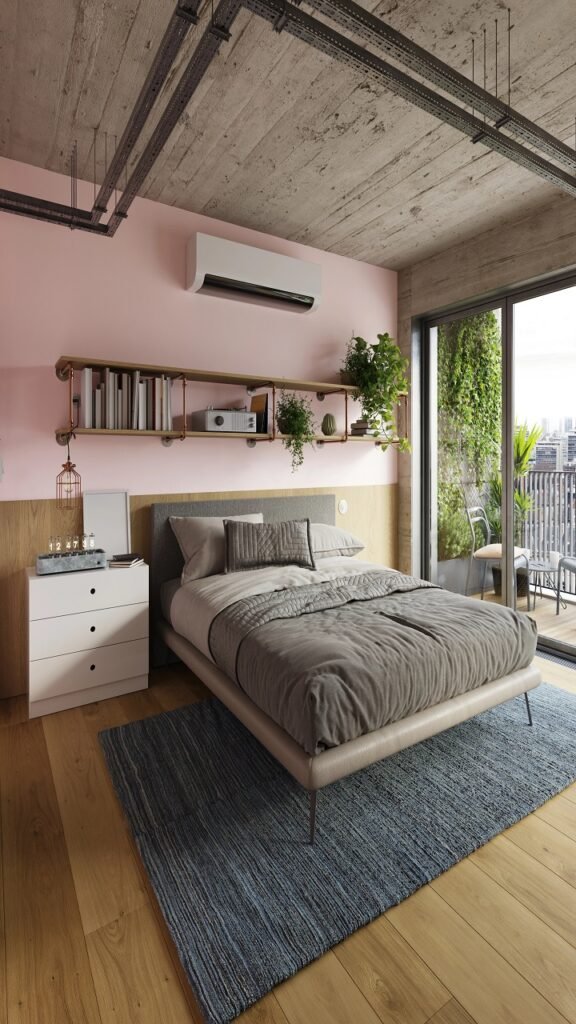
The single most common rug mistake in a bedroom is buying a rug that sits in front of the bed rather than under it.
A rug that does not extend under the bed looks like a bath mat in a larger room. A rug that extends under the bed on both sides, by at least 18-inches on each side — anchors the entire room.
For a queen bed in a standard bedroom, a 5×8 rug is the minimum. A 6×9 is better. An 8×10 is right for a room that can carry it.
Rug sizing is consistently the most cited textile mistake in bedroom design guides, and the fix costs nothing — you simply need to know the rule before you buy.
Decision 2: Rug Material — Jute, Wool, or Low Pile, Not Shag
The material of the rug determines how it reads in the room and how it wears over time. Shag rugs trap dust, pull under furniture, and read as a college dorm decision regardless of how expensive they are.
Natural fibre alternatives do the opposite.
Jute —
Warm, earthy, textured, and genuinely inexpensive. It works in every dark moody aesthetic and adds organic warmth against dark walls without introducing colour noise.
Wool —
More expensive and significantly more durable. A wool rug in charcoal, warm grey, or dark olive holds its appearance for years, handles furniture weight without compressing, and adds texture that changes with light through the day.
Low pile in dark tones —
The most versatile option for a bachelor pad bedroom aesthetic. Dark charcoal, warm grey, or olive in a flat woven or low pile finish reads as considered and contemporary.
Decision 3: Bedding Material — Linen Is the Correct Answer
Most men choose polyester bedding because it is cheap and soft. Both of those qualities reverse within six months.
Polyester traps heat, pills after washing, and feels increasingly synthetic the longer you sleep in it.
A 2024 systematic review published in the Journal of Sleep Research found that linen bedsheets improved sleep quality under warm conditions in young adults compared to cotton-polyester blends.
Specifically reducing night-time waking and time spent in light sleep stages.
The mechanism is physical
Linen’s hollow fibre structure allows air to circulate through the fabric, managing body temperature in a way synthetic fibres structurally cannot.
Charcoal linen is the specific choice for a dark bedroom.
It looks considered, fades gracefully, and softens with each wash rather than thinning and pilling like polyester. Budget for forty to eighty dollars for a quality duvet cover set.
Replace everything else you’ve been sleeping in.
Decision 4: Thread Count Is Marketing, Not Quality
Thread count above 400 is frequently a marketing figure achieved by counting individual threads in twisted multi-ply yarns.
It tells you almost nothing about the feel or durability of the sheet.
According to textile research, the fibre quality and weave structure matter more than thread count at any number.
A 300-thread count 100% linen sheet outperforms a 1,000-thread count polyester cotton blend on every measure that affects sleep.
Stop reading thread counts. Start reading fibre content. 100% linen or 100% long staple cotton are the only two answers.
Decision 5: Duvet Color — Dark Without Going Black
The room ideas for men bedding conversation defaults to two options; white or black.
Both are wrong for most dark bedrooms.
White bedding against dark walls reads as a clinical contrast. It draws the eye and dominates the room without earning that attention.
Black bedding in a dark room creates a composition with no visual variation.
Everything flattens.
Charcoal, olive, deep navy, and warm stone are the colours that work.
Each sits visually within the dark palette without disappearing into it. Each creates contrast against dark walls without the harsh pop that white introduces.
Start with charcoal and build from there.
Decision 6: The Throw Blanket — Functional First, Decorative Second
A throw blanket folded at the foot of the bed does something that decorative throw pillows do not.
It signals that the bed is actually used, not staged.
The distinction between a throw and a decorative pillow is that a throw earns its place functionally. You reach for it, use it, and fold it back.
Choose wool, cotton, or a heavy knit in a tone that complements the bedding without matching it exactly.
Dark olive against charcoal linen. Warm grey against deep navy. Textural contrast matters more than colour matching.
Decision 7: Eliminate the Decorative Pillow Pile
Four decorative pillows stacked in front of sleeping pillows reads as a hotel staging exercise, not a room that someone lives in.
Every pillow on the bed at the end of the day needs to be there when you wake up — or it has no place being there at all.
Two sleeping pillows in quality pillowcases in the same material as your duvet cover. One additional accent pillow in a contrasting texture if the room needs it.
Nothing else earns a place on the bed.
Decision 8: Curtain Height — Ceiling to Floor, Always
Standard window curtains that end at the windowsill or a few inches below make every ceiling feel lower and every window look smaller.
Hanging curtains from ceiling height, or as close to it as the rod allows, extends the visual line from floor to ceiling and makes the room feel taller than it is.
Mount the rod two to four inches below the ceiling. Let the curtains fall to the floor with a slight break.
Use dark linen or velvet in a shade that sits within the room’s palette. This single change is one of the highest value visual upgrades available in any rental.
Decision 9: Blackout Lining vs Blackout Fabric
Men choosing blackout curtains for sleep quality have two options. Blackout fabric throughout, or a standard curtain with a blackout lining sewn or clipped behind it.
Blackout lining behind a standard linen curtain is the better approach.
The face fabric can be the aesthetic choice, dark linen, deep olive, charcoal, while the lining provides the sleep function.
Pure blackout fabric tends to have a commercial quality that fights against a considered bedroom aesthetic.
The same layering principle that applies to lighting applies here — the decorative and functional elements serve different roles and work better when they are treated separately.
Decision 10: Curtain Material — Linen Over Polyester
Polyester curtains drape badly, attract static, and have a manufactured quality that reads as temporary.
Linen curtains hang with natural weight, drape well, and add texture to the wall in a way that polyester panels never achieve.
Dark linen in charcoal, olive, or deep navy costs more than polyester alternatives and earns that cost.
IKEA’s linen blend options and Amazon’s NICETOWN linen look panels cover the budget end of this category. Spend more on material than on curtain hardware.
Decision 11: The Rug Pad — Non Negotiable
Every rug needs a rug pad beneath it.
A rug without a pad moves, bunches, creates trip hazards, and damages the floor underneath.
A rug pad adds thickness underfoot, prevents movement, protects the floor, and extends the life of the rug.
Buy a pad cut to the same size as the rug. Felt and rubber combination pads work on all surfaces. Cost: fifteen to thirty dollars. This is not optional.
Decision 12: One Texture at a Time
The most common textile mistake after rug sizing is layering too many competing textures simultaneously.
Linen duvet. Waffle weave throw. Patterned accent pillow. Jute rug. Velvet curtains. Each element is individually considered but collectively the room feels like a texture sampler.
Pick two or three textures that work together and commit. Linen bedding, jute rug, linen curtains — the texture story is consistent.
Wool throw on the same linen bedding adds weight and contrast without introducing a new visual language. Adding velvet beside jute beside linen beside waffle creates noise where the room should read as settled.
Decision 13: Material Quality Over Brand Recognition
The room ideas for men carpet and bedding conversation online overweights brand names relative to material quality.
A no name 100% linen duvet cover from a small Etsy shop outperforms a branded polyester cotton blend on every measure that affects sleep and appearance over time.
Read the fabric content, not the brand name.
Natural fibre content and construction quality (how tightly the seams are finished, how consistently the weave sits), are what determine how a textile performs and ages.
The room notices material quality. It does not notice brand names.
Quick Reference: The Textile Decisions at a Glance
| Decision | Right call | Wrong call | Why it matters |
|---|---|---|---|
| Rug sizing | 5×8 minimum, under the bed | Small rug in front of bed | Anchors the room vs bath mat energy |
| Rug material | Jute, wool, low pile | Shag | Durability and visual quality |
| Bedding material | 100% linen or long staple cotton | Polyester | Sleep temperature and longevity |
| Thread count | Fibre quality first | High thread count polyester | Thread count is marketing above 400 |
| Duvet colour | Charcoal, olive, navy, stone | Pure white or pure black | Visual cohesion in a dark palette |
| Throw | Wool or heavy knit, functional | Decorative only | Lived-in vs staged signal |
| Pillows | Two sleeping, one accent maximum | Four-pillow staging pile | Room looks inhabited, not styled |
| Curtain height | Ceiling to floor | Window-frame length | Makes ceiling feel higher |
| Blackout | Lining behind linen face | Pure blackout fabric | Aesthetic and function separated |
| Curtain material | Linen | Polyester | Weight, drape, and texture quality |
| Rug pad | Always | Never | Movement, safety, floor protection |
| Texture layering | Two to three consistent | Five competing textures | Settled vs noise |
| Material vs brand | Natural fibre first | Brand name recognition | Performance over marketing |