
If your kitchen ceiling is still flat white drywall, you’re leaving a lot of character on the table.
Farmhouse-style false ceilings, decorative layers added below your actual ceiling, can completely shift how the room feels.
We’re talking exposed Douglas fir beams, shiplap panels, tongue-and-groove pine, even reclaimed barn wood. Each option hits differently depending on your space, budget, and ceiling height and ten solid designs are worth your attention.
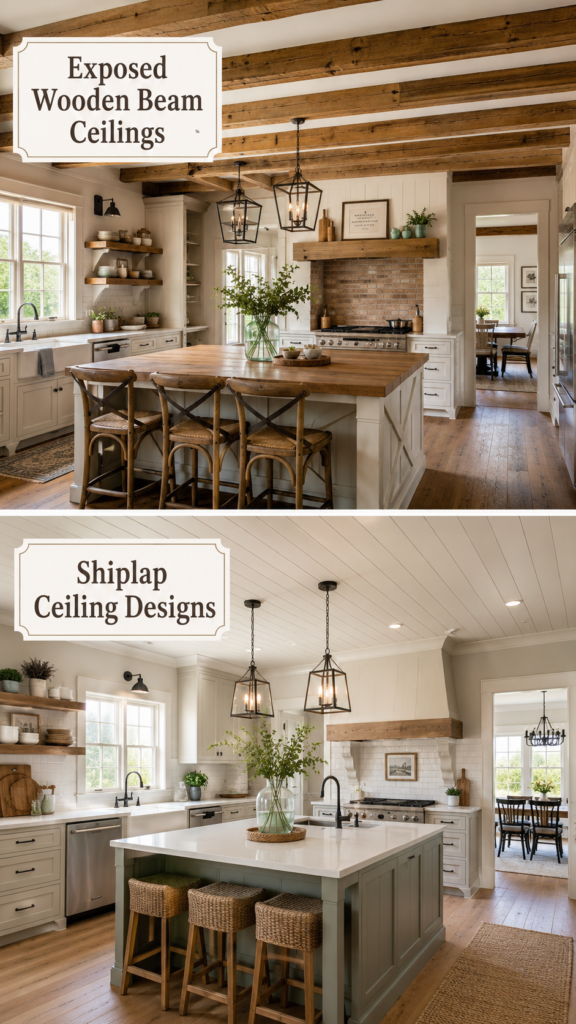
Exposed Wooden Beam Ceilings for Farmhouse Kitchens
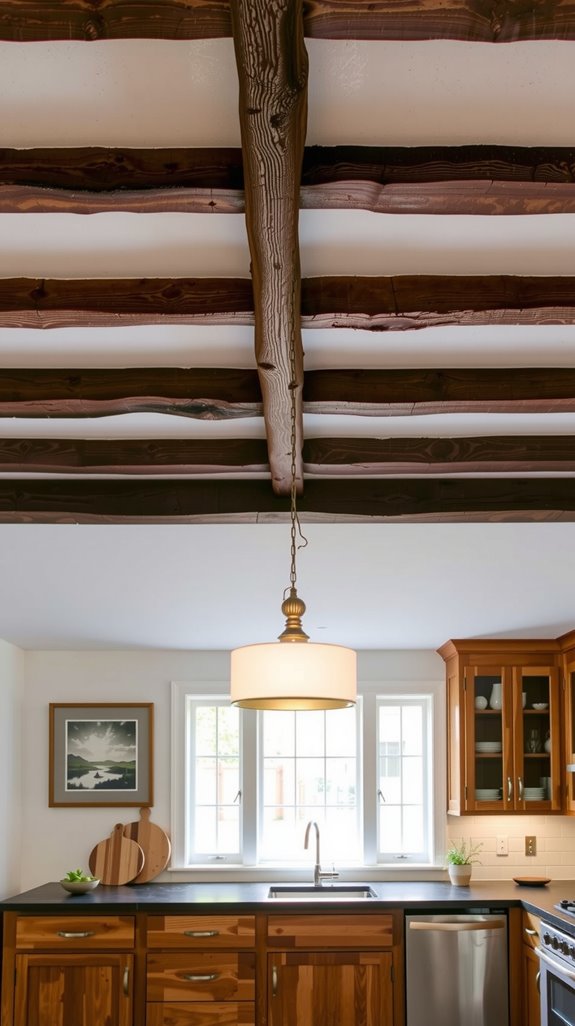
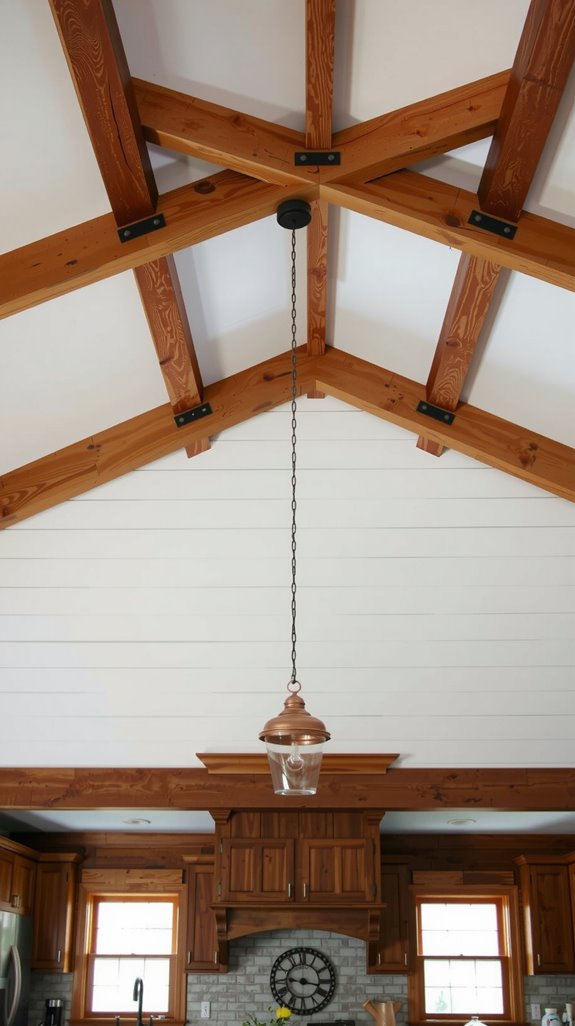
Exposed wooden beams are the backbone of any farmhouse kitchen. They do more than just hold up the roof; they define the entire character of the space. They pull your eyes upward, making the ceiling feel higher than it actually is.
White or muted walls work best as a backdrop, letting the beams’ texture and color do the heavy lifting. Classic farmhouse designs favor natural wood with aged, distressed finishes. Imperfections aren’t flaws here; they’re the whole point.
Modern farmhouse versions keep the beams but smooth out everything else, blending rustic character with cleaner, more contemporary lines throughout the kitchen. For homeowners looking to achieve this look without the expense, faux wood beams offer a budget-friendly alternative that closely mimics the appearance of real wood.
Shiplap Ceiling Designs for Modern Farmhouse Kitchens
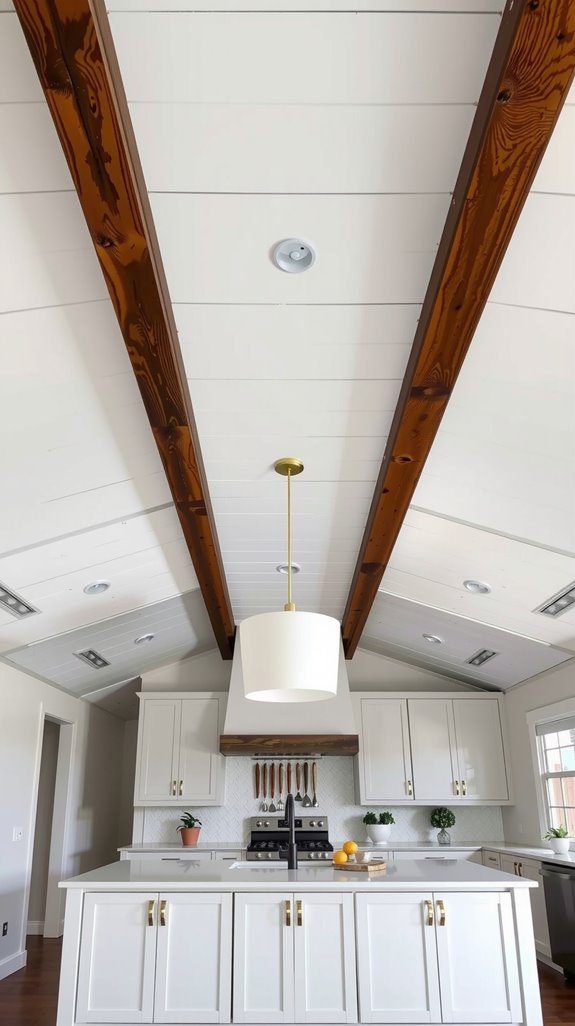
Wooden beams give a farmhouse kitchen its bones, but shiplap gives it its skin. These horizontal wood planks interlock with a slight gap, creating that signature lined ceiling texture you’ve seen everywhere.
White-painted shiplap reflects the most light and works in almost any kitchen. Natural oak or pine adds warmth if white feels too sterile. Go dark charcoal only if you’ve got solid natural light, or the room just gets heavy.
Six-to-eight-inch wide planks look contemporary with fewer groove lines, while narrower planks feel more traditional. Pick your width before you pick your paint. Shiplap ceilings are a defining characteristic of farmhouse charm, making them a natural fit for kitchens that blend rustic and modern aesthetics.
MORE IDEAS: 28 Latest False Ceiling Designs That Make Every Room Look Custom-Built (Living Room, Bedroom, Kitchen & More).
Tongue-and-Groove False Ceiling Panels for a Classic Farmhouse Look
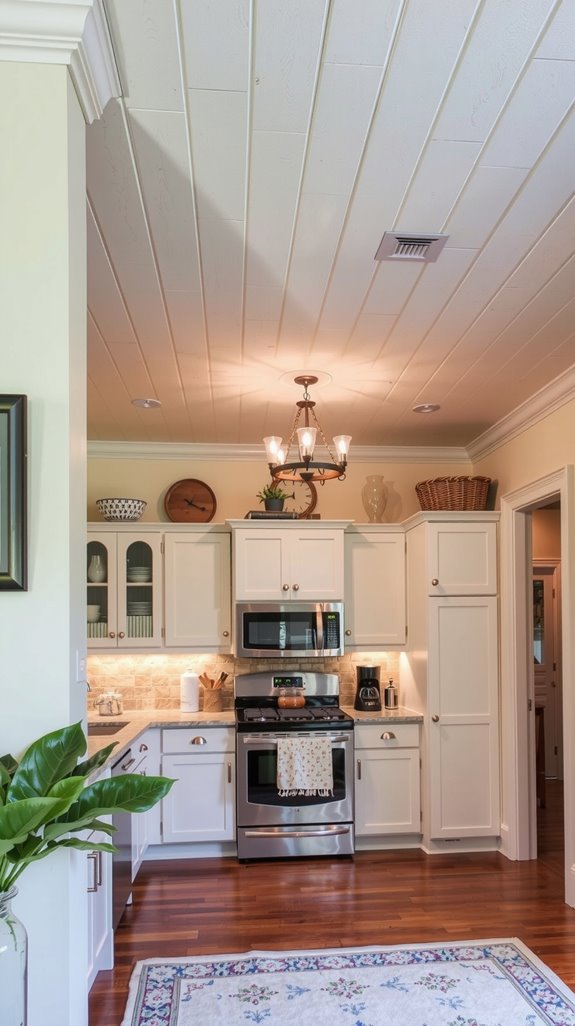
Shiplap gets the Instagram glory, but tongue-and-groove does the quieter, more refined work. Each plank locks into the next through interlocking edges, creating a seamless surface with zero gaps.
Install 3.4 inch beadboard-style planks for vintage charm, or go wider at 6,8 inches for open-concept kitchens. Fasten through the tongue at joist locations so nail heads disappear completely.
Paint with Benjamin Moore White Dove in satin or semi-gloss for durability and easy cleaning. Caulk seams before painting for a furniture-grade finish; it won’t trend on social media, but it’ll still look sharp twenty years from now. For an elevated result, finishing the perimeter with crown molding adds a polished, upscale touch that ties the entire ceiling into the room’s architecture.
SEE THIS: 11 False Ceiling Designs With Hidden Lighting for a Luxury Look!
Reclaimed Wood Farmhouse Ceilings With Weathered Character
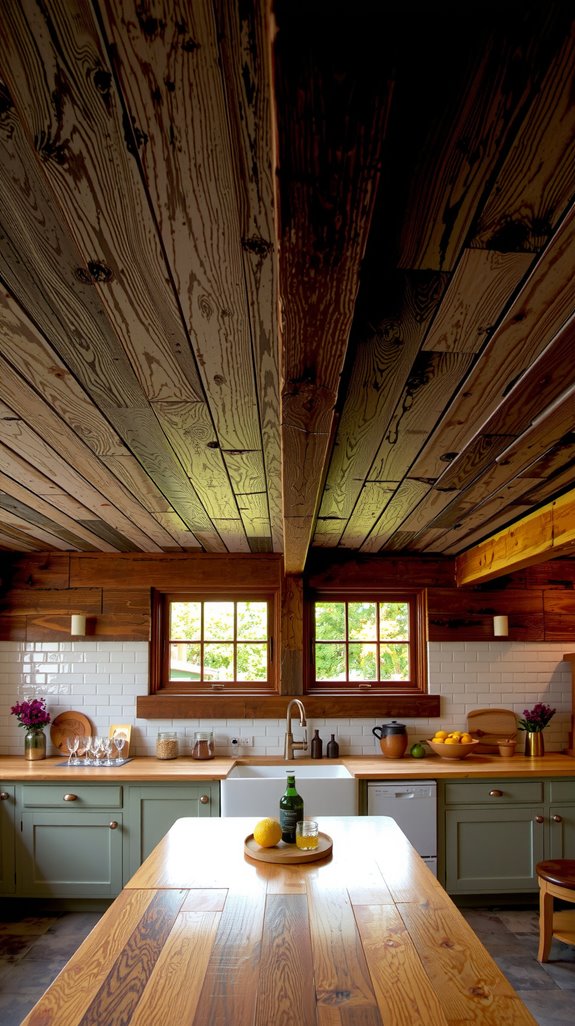
When you pull a plank off a barn that’s been standing since the 1880s, you get something no lumber yard can manufacture: a surface with 140 years of oxidation, nail holes, saw marks, and color shifts ranging from silvery gray to deep brown.
Oak, pine, chestnut, and hemlock each weather differently, so your ceiling won’t look like a catalog photo. That’s the point.
For kitchens with standard drywall ceilings, peel-and-stick systems like Stikwood slice genuine reclaimed wood to 1/8 inch thick with adhesive already applied.
No nails, no structural assessment needed. Acclimate the planks for three days first, or they’ll warp on you. Each batch carries natural imperfections like knotholes, splits, and color variations that guarantee no two ceilings will ever look identical.
SEE THIS: 13 False Ceiling Designs for Office Cabin (Clean & Professional Look)!
Which Ceiling Material Works Best for Farmhouse Kitchens?
Choosing the right ceiling material for a farmhouse kitchen comes down to four things: weight, moisture resistance, budget, and how much work you’re willing to put in.
Polyurethane faux beams handle humidity without warping and install faster than real lumber.
Shiplap painted in light colors opens up smaller kitchens visually. Tin tiles reflect light well but need proper framing underneath. Tongue-and-groove planks look polished but require more cutting and fitting.
If you want low maintenance with high visual payoff, faux beams and shiplap are your safest bets.
Pick based on your ceiling height, not just what looks good on Pinterest. Farmhouse design naturally embraces imperfect matches and eclectic styles, so don’t stress over finding materials that coordinate too precisely.
SEE THIS: 9 Modern Kitchen False Ceiling Designs (Minimal + Functional Styles)!
Coffered Ceilings That Add Structure and Elegance to Farmhouse Kitchens
Coffered ceilings, a grid of recessed square or rectangular panels framed by beams, borrow from ancient Roman architecture but fit surprisingly well in a farmhouse kitchen. They add structure without feeling stiff.
The beams can be stained oak, painted white, or faux polyurethane if your budget prefers less drama. Inside each panel, beadboard or tongue-and-groove planks reinforce that handcrafted look.
For low ceilings, keep beams just two to three inches deep and paint everything the same soft white. The grid also frames recessed lighting cleanly and creates a natural spot for a statement pendant above your island.
Tray Ceilings Above Farmhouse Kitchen Islands Worth Considering
A tray ceiling is just a recessed panel built into your ceiling, and above a kitchen island, it does three things at once: defines the workspace, hides your pendant wiring, and makes a 9-foot ceiling feel taller by drawing the eye upward through the stepped levels.
Cut your pendant holes before mounting the ½-inch maple or birch plywood panel, or you’ll regret it later.
Slanted side panels with 30-degree beveled edges shift the drop smoothly. Finish with a paint wash, sand with high-grit paper, then seal using spray-on matte polyurethane.
Match the wood tone to your island stain for a unified focal point.
SEE THIS: 12 False Ceiling Designs With Mirror Elements (Reflective & Luxurious)!
Vaulted Farmhouse Ceilings That Open Up Your Kitchen
When you open up a kitchen ceiling into a vault, meaning you remove the flat ceiling and follow the roofline upward, you can add 3 to 5 feet of vertical headroom without touching the floor plan.
Exposed rough-hewn beams draw your eye upward while shiplap planks or tongue-and-groove pine panels run the length of the slope, visually stretching the space.
Paint everything white, add a skylight along the slope and you’ve effectively built a different room without building a different room.
Drop a low-profile island underneath, skip upper cabinets on one wall, and the kitchen genuinely feels twice its actual size.
Recessed, Cove, and Pendant Lighting for Farmhouse Ceilings
Three layers of light do more for a farmhouse kitchen ceiling than any single fixture ever could. Recessed cans on a grid handle your task lighting over counters, and 2700K LED bulbs keep everything warm instead of clinical.
Slim LED strips tucked behind the ceiling’s perimeter create cove lighting, which washes light upward and kills harsh shadows.
Two or three pendants spaced 28 inches apart over your island add the focal layer. Run each type on a separate dimmer, and you can shift the kitchen from full-brightness prep mode to a genuinely cozy dinner atmosphere without touching a single fixture.
Best Colors and Finishes for Farmhouse Ceilings
Color choices for a farmhouse ceiling come down to five basic categories: whites, warm neutrals, earthy accents, matte finishes, and natural wood.
Stark white reflects light well, but khaki creams and woodsy tones feel less clinical. Warm neutrals like beige pair easily with most countertops and flooring.
For accent ceilings, muted blues, greens, or terra-cotta add depth without overwhelming the room. Stick with matte or satin finishes rather than gloss.
If you’re working with wood beams or shiplap, a dark stain adds definition, while lighter finishes keep things bright.
One ceiling, five options, pick what fits your space.