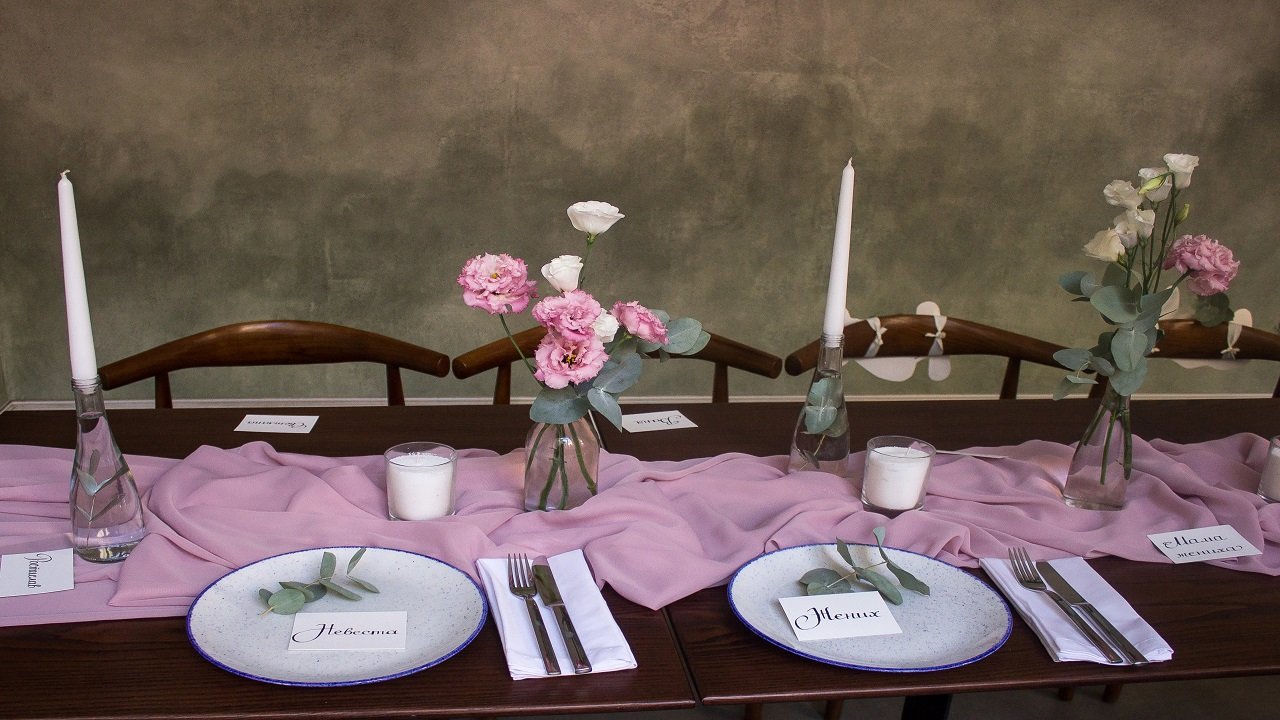
A 10×12 bedroom in Mumbai got a complete visual makeover with just a 12mm gypsum board false ceiling and two layers of paint. No structural changes, no contractor drama.
False ceilings can transform a space without touching the walls, and gypsum board is one of the cheapest ways to do it.
But the design you pick determines whether you gain or lose headroom, money, and sanity. Eleven options follow, starting with the most budget-friendly.
Simple Single-Layer Gypsum Ceiling for Small Rooms and Apartments
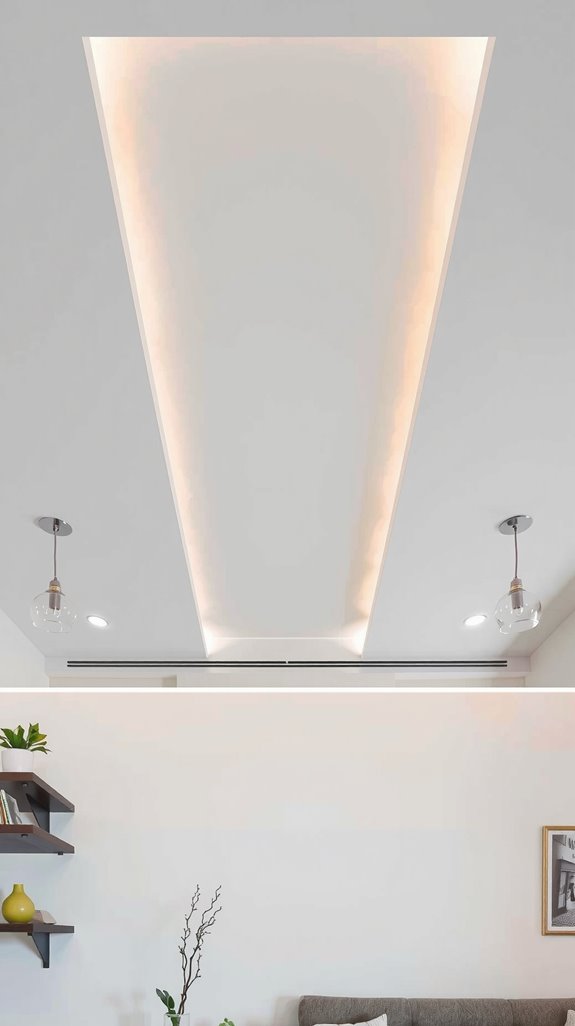
A single-layer gypsum false ceiling is exactly what it sounds like, one flat plane of gypsum boards mounted on a metal framework, hung 4.8 inches below your original ceiling.
Standard 4×8 ft. boards attach to metal channels, joints get taped and filled with jointing compound, and you end up with a smooth, paint-ready surface.
Thats genuinely it.
For small rooms, this design works well because its not trying too hard. You keep your headroom, avoid visual clutter, and spend about $1.02–$1.32 per sq. ft. on materials.
Installation typically wraps up in one to two days. Most manufacturers back this with a warranty up to 10 years, covering material durability, structural integrity, and installation quality.
Border Gypsum Ceiling That Cuts Costs Without Cutting Style
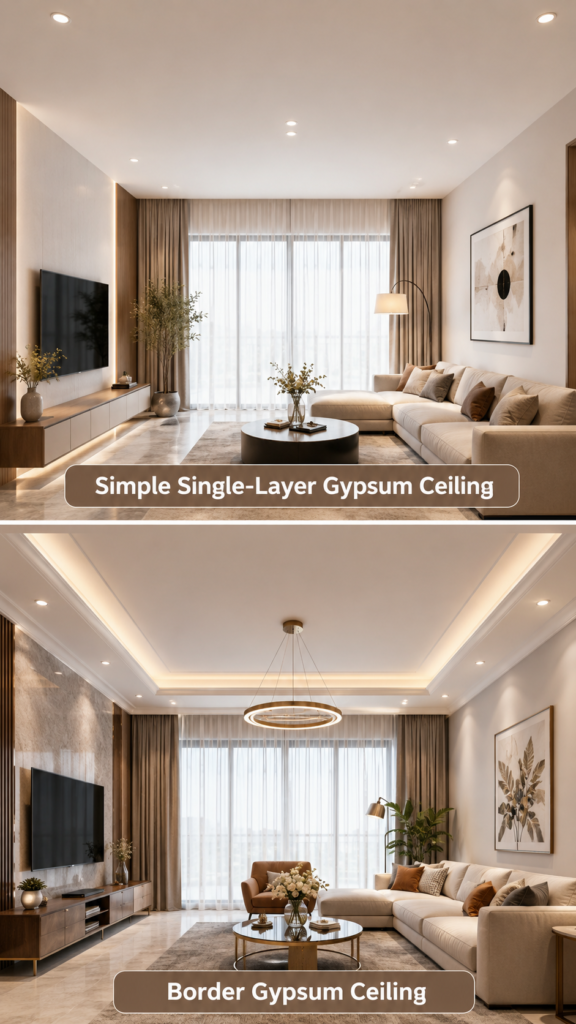
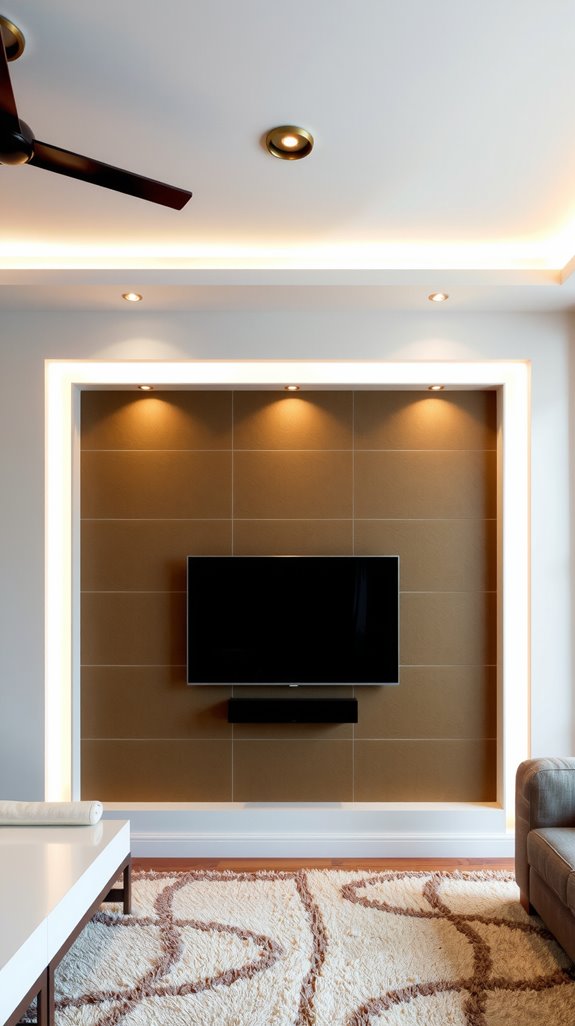
Unlike a full false ceiling that covers every square foot overhead, a border gypsum ceiling runs only along the room’s perimeter, leaving the original slab exposed or painted at the center.
You’re basically framing the room instead of boxing it in. That alone cuts material costs by 20-30%, since you’re using less gypsum board and less metal framing.
Labor drops too, because less coverage means less installation time.
Add LED cove lighting hidden inside the border groove, and suddenly the perimeter appears to float.
You get the premium look without the premium invoice. With proper upkeep, a gypsum false ceiling can last 20-25 years, making this a cost-effective investment that pays off long after installation.
SEE THIS: 10 CNC Cut False Ceiling Designs That Add Pattern & Detail!
Coffered Gypsum Ceiling for Homes That Want Classic Built-In Elegance
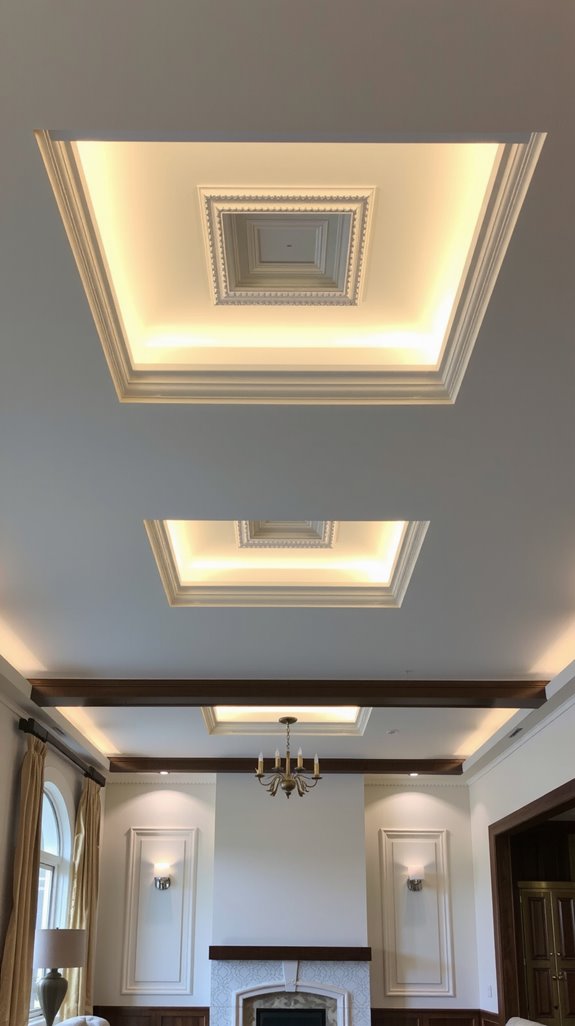
Coffered ceilings basically carve a grid of sunken rectangular panels into your ceiling, turning a flat slab into something that looks like it belongs in a manor house.
Each recessed section sits roughly 1.5 to 2 inches deep in standard-height rooms, which preserves headroom while still delivering that sculptural depth.
You’ll use 12mm gypsum boards for the grid framing.
Hidden LED strips running along the coffer beams at 2700K to 3000K create a soft ambient glow.
Factor in about $2.63–$3.71 per sq. ft., and make sure your layout aligns with the room’s symmetry before a single board goes up. Gypsum is inherently fire-resistant due to its chemical composition, making it a particularly smart material choice for coffered installations where enclosed beam cavities can otherwise trap heat.
MORE IDEAS: 28 Latest False Ceiling Designs That Make Every Room Look Custom-Built (Living Room, Bedroom, Kitchen & More).
Minimalist Gypsum Cove Ceiling for Low-Height Rooms
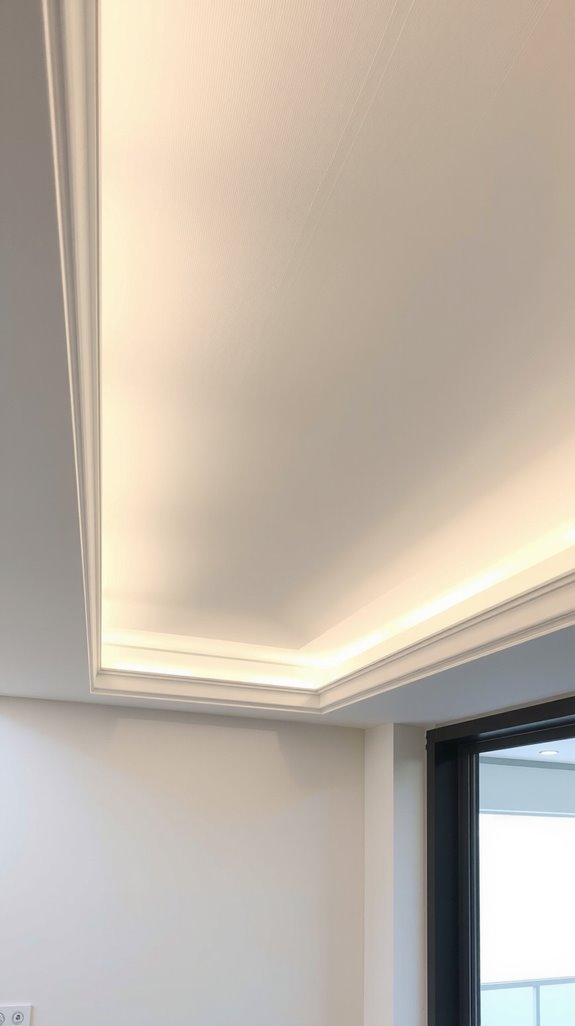
Low ceilings don’t need to be a design problem; they just need a smarter or minimalist approach. Keep your gypsum false ceiling ultra-slim, no deeper than 3-4 inches, so you’re not eating into headroom you can’t afford to lose.
A shallow perimeter cove with concealed LED strips does the heavy lifting here. Position warm white LEDs at 3000K to cast an upward glow that tricks your eye into reading the ceiling as higher than it actually is.
Stick to matte white or pale grey finishes and you’ll reflect light instead of swallowing it. This approach is recommended for rooms under 9 feet to prevent the ceiling design from visually encroaching on your living space.
SEE THIS: 11 False Ceiling Designs With Hidden Lighting for a Luxury Look!
Multi-Layer Tray Gypsum Ceiling for a Luxury Layered Effect
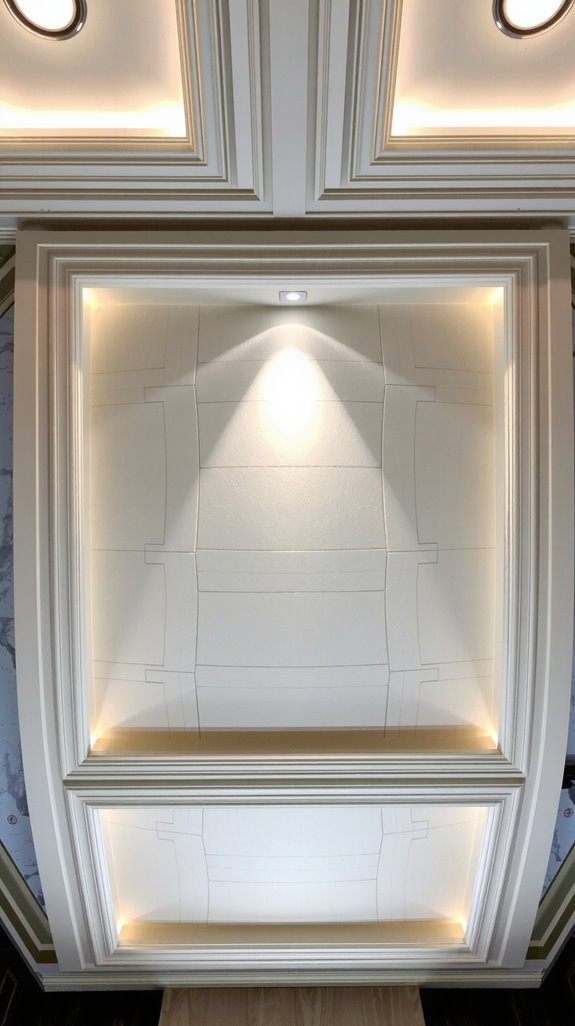
When you want a ceiling that actually looks designed rather than just finished, a multi-layer tray ceiling is the move.
Two stepped gypsum board layers create a recessed central panel that visually floats above the room. You’ll need at least 9 feet of ceiling height; below that, it starts feeling like a lid.
Hidden cove lights along the inner lip add indirect glow without visible fixtures. Recessed LEDs handle task lighting.
This works best in rooms 12×14 ft and larger, where the layers actually have room to breathe.
SEE THIS: 13 False Ceiling Designs for Office Cabin (Clean & Professional Look)!
Wood and Gypsum Combination Ceiling for Warm, Premium Spaces
Few ceiling combinations actually earn the word “premium,” but wood paired with gypsum board genuinely does.
Timber slats over a flat gypsum base add warm earth tones without making the room feel heavy. Dark wood against white gypsum creates depth while keeping your perceived ceiling height intact.
For lighting, LED strips along wood battens at 2700K, 3000K produce a glow that flatters the grain beautifully.
Stick with engineered wood veneers over solid timber to avoid warping, and budget about $1.50–$3.35 per sq. ft., depending on the design complexity.
You’ll need at least a 9-foot ceiling to pull this off comfortably.
SEE THIS: 10 Farmhouse Style False Ceiling Designs for Kitchen Spaces!
Geometric Gypsum Ceiling Patterns for Living Rooms and Offices
Six basic shapes, rectangles, hexagons, triangles, circles, squares, and symmetrical linear arrangements, cover almost every geometric gypsum ceiling pattern you’ll encounter.
Nested squares add depth without stealing extra height, while layered boards with painted edges make the geometry pop visually.
In living rooms, tuck LED cove strips inside recesses for soft shadow lines. Central circular cutouts handle chandeliers cleanly.
Offices benefit more practically. Grid patterns mirror desk layouts, conceal HVAC ducts and data cables, and accept recessed LED panels for uniform task lighting.
Use 12, 15 mm standard boards in dry zones, moisture-resistant boards near pantries.
SEE THIS: 12 False Ceiling Designs With Mirror Elements (Reflective & Luxurious)!
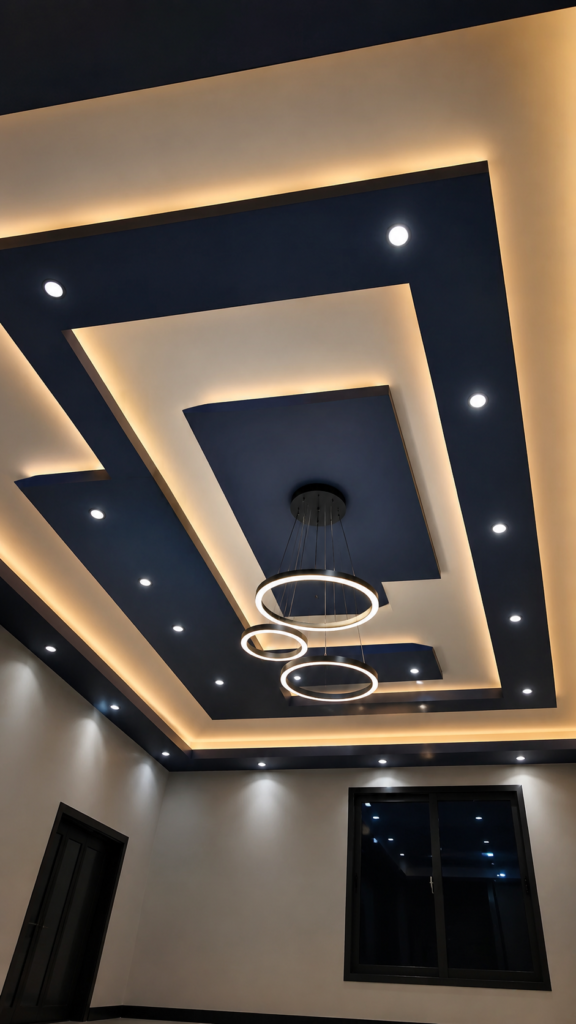
Night Sky LED Gypsum Ceiling for Bedrooms and Kids’ Rooms
Turning a bedroom ceiling into a night sky is one of those ideas that sounds gimmicky but actually works.
Dark blue or black gypsum board paired with recessed micro LED pin lights mimics actual star density surprisingly well. Fiber optic strands go further, creating a soft twinkle effect without heat buildup.
You’ll need at least 9 feet of original ceiling height to fit the false ceiling layers comfortably. Budget around $5.15 per sq. ft., so a 12×10 ft room would run roughly $599–$838.
Curved and Wavy Gypsum Ceiling for a Sculptural Modern Feel
While flat ceilings get the job done, curved and wavy gypsum designs turn the ceiling itself into the focal point of a room.
POP, or Plaster of Paris, lets contractors mold seamless curves and deep profiles that standard boards can’t match. For something stronger, GRG, Glassfiber Reinforced Gypsum, resists cracks and runs $50, $300 per sq.m.
Pair your curved perimeter with cove lighting for a soft glow that follows every contour.
Just remember, you’ll need at least 9 feet of ceiling height and curved installation labor runs 30, 50% more than a basic flat job.
Nature-Inspired Gypsum Ceiling With Wood, Earthy Tones, and Organic Shapes
Biophilic design, the idea that humans feel calmer around natural textures and shapes, takes gypsum ceilings well beyond plain white rectangles.
You pair gypsum panels with wooden accents, earthy shades like terracotta and warm beige, and organic shapes that avoid straight edges.
Two-tiered setups add dimension, and warm cove lighting tucked between layers produces that soft ambient glow your living room or master suite actually needs.
The result feels resort-like without costing resort money.
Add flowing, irregular curves instead of geometric grids and you get a ceiling that looks sculpted rather than installed.
Choosing the Right Gypsum Board for Your Ceiling Design
Once you’ve settled on a ceiling design, the board you pick determines whether that design actually holds up. Regular gypsum suits bedrooms and living rooms just fine.
Kitchens and bathrooms need moisture-resistant board, which you’ll recognize by its green facing. Fire-resistant board has pink facing and glass fibers in the core, making it smarter for rooms with heavy electrical wiring.
If you’re installing over a wide ceiling span, sag-resistant board keeps things flat over time.
One rule applies everywhere: gypsum alone can’t hold a fan or chandelier, so place plywood above any heavy mounting point.