
Your kitchen ceiling does more work than you think. It affects lighting, airflow, and how cramped the space feels.
A poorly chosen false ceiling in a 8-foot kitchen can eat 6 inches of headroom fast. The right design fixes that while hiding ducts and wiring cleanly.
Nine specific styles handle these problems differently and knowing which one fits your kitchen dimensions and moisture levels changes everything.
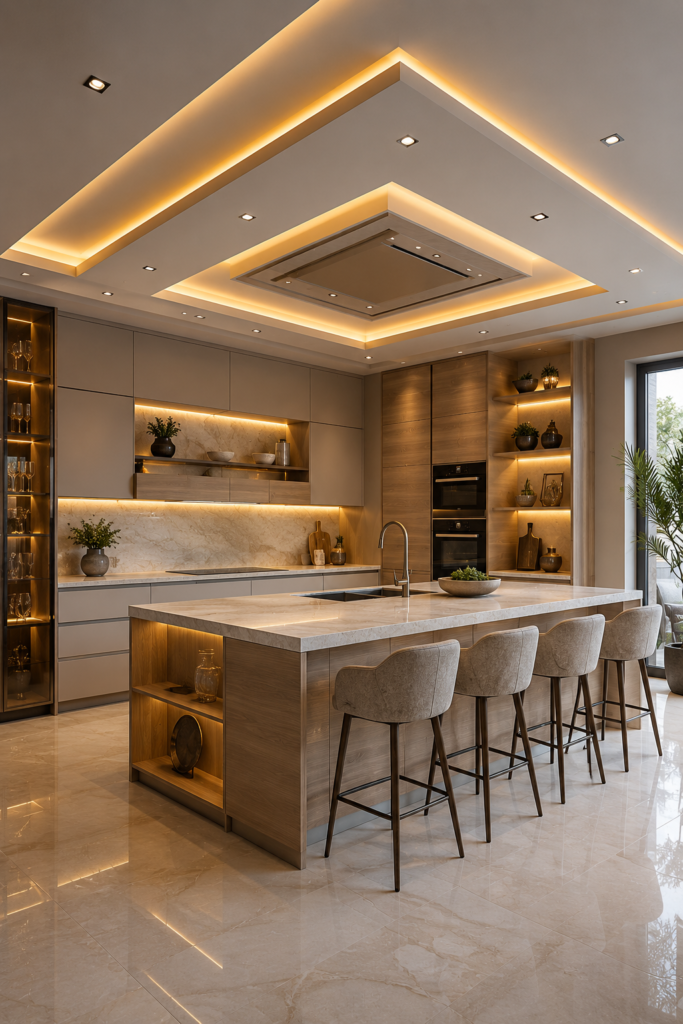
Ceiling Height Thresholds That Determine Which Designs Are Safe
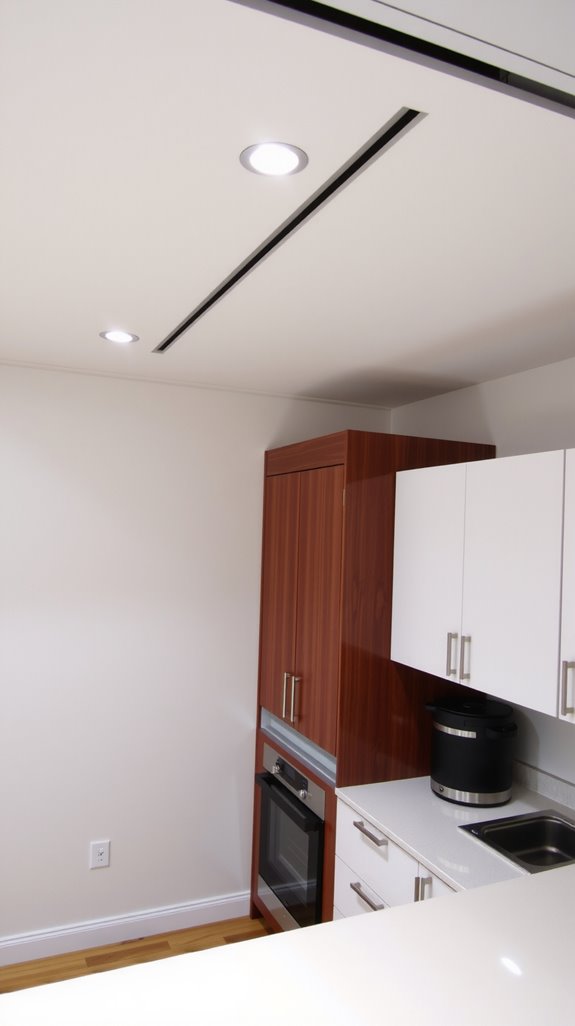
Three numbers decide whether a false ceiling works in your kitchen or turns it into a cave: your raw slab height, the drop you’re planning, and the finished clearance you’re left with.
Below 2400mm, skip the suspended ceiling entirely. Between 2400mm and 2743mm, you can afford a shallow 50mm to 100mm gypsum drop without feeling like you’re cooking in a submarine.
Hit 2743mm and layered tray designs become realistic. At 3000mm, multi-tier drops of 200mm to 300mm open up.
Most Delhi NCR apartments sit at 9ft, so flat and slim-tray designs are your practical default. For these tighter clearances, moisture-resistant gypsum is the preferred material choice, especially in zones near the sink where humidity accelerates ceiling damage.
SEE THIS: 10 Latest False Ceiling Designs for Hall with 2 Fans (Balanced Layout Ideas That Actually Work!
Flat False Ceilings That Work Best Under 9 Feet
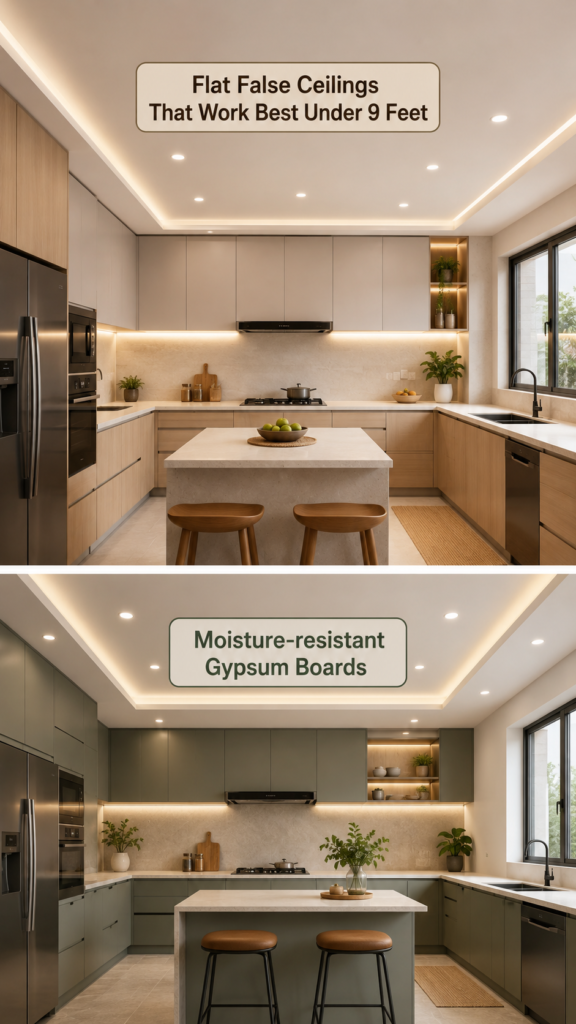
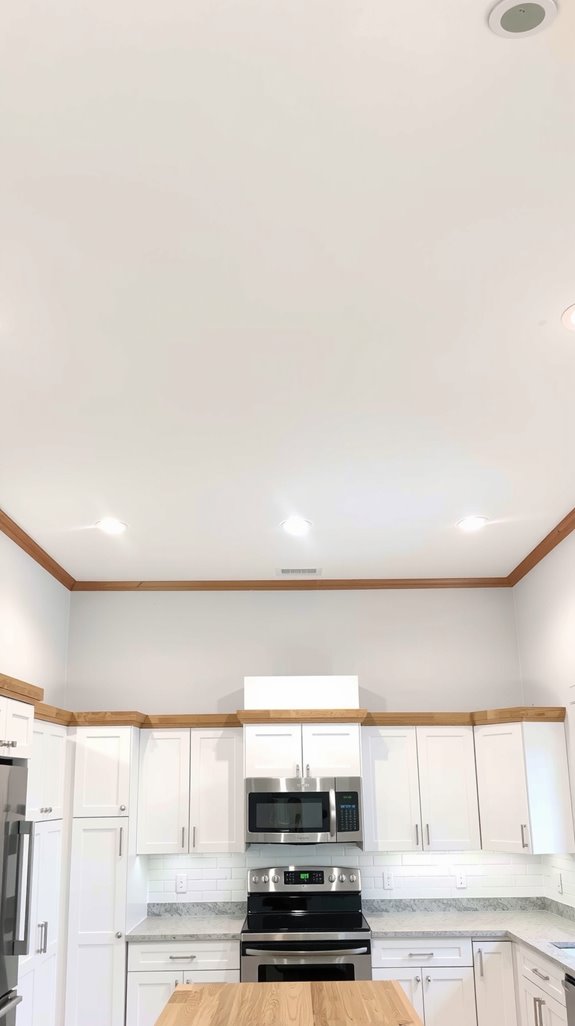
Most Delhi NCR kitchens sit at exactly 9 feet, and that single number quietly eliminates half the false ceiling catalog.
Drop designs, coffered panels, and layered POP frames all steal 6 to 12 inches you simply don’t have.
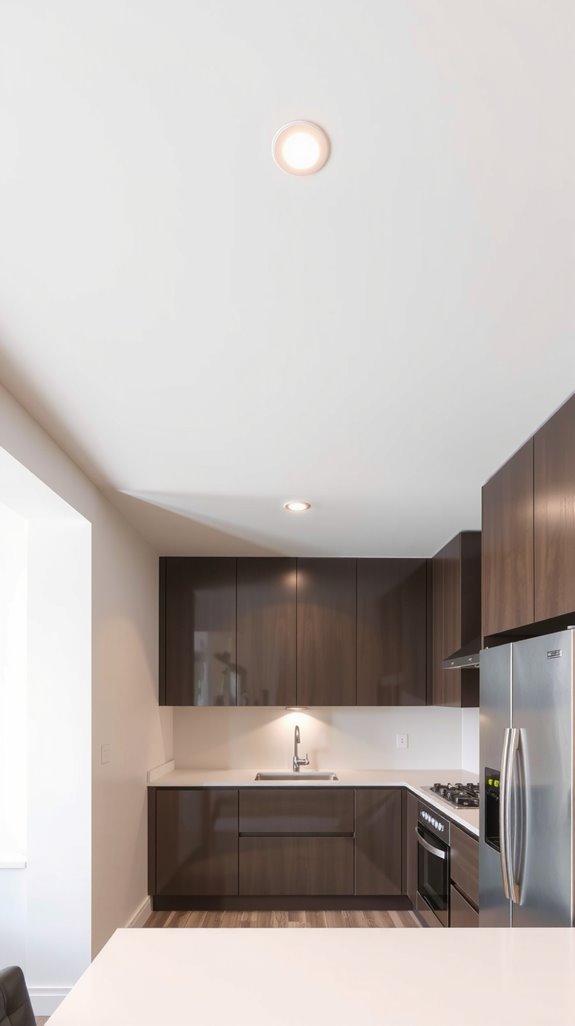
What actually works here is a single-plane gypsum flat ceiling with zero surface detailing. It keeps your headroom intact and gives you a clean finish that makes the room read larger.
Add a slim recessed light strip around the perimeter border for depth. Your not losing design ambition, you’re just putting it where it belongs: the lighting plan. Cove lighting diffuses light evenly across the ceiling plane, reinforcing the sense of height without adding any physical bulk.
MORE IDEAS: 28 Latest False Ceiling Designs That Make Every Room Look Custom-Built (Living Room, Bedroom, Kitchen & More).
POP, Gypsum, or PVC : Which Material Suits Your Kitchen
Once you’ve settled on a flat ceiling layout, the next question hits fast: what do you actually build it out of?
Three options dominate Indian kitchens: POP, gypsum, and PVC.
Skip PVC near your gas stove. It ignites around 390°C, and cooking flames hit over 600°C, releasing chlorine gas. That’s a hard pass.
Gypsum boards cost ₹75,120/sqft installed, last 10 – 15 years, and go up in one to two days. Solid middle-ground choice.
POP gives you curves and custom hoods, but costs about $1.80–$2.99 per sq. ft. and takes around five days. Worth it only if you need sculpted detailing. POP and paint textures can be combined for a more cohesive and decorative kitchen theme.
SEE THIS: 11 False Ceiling Designs With Hidden Lighting for a Luxury Look!
The Best Ceiling Materials for Kitchens Prone to Steam and Moisture
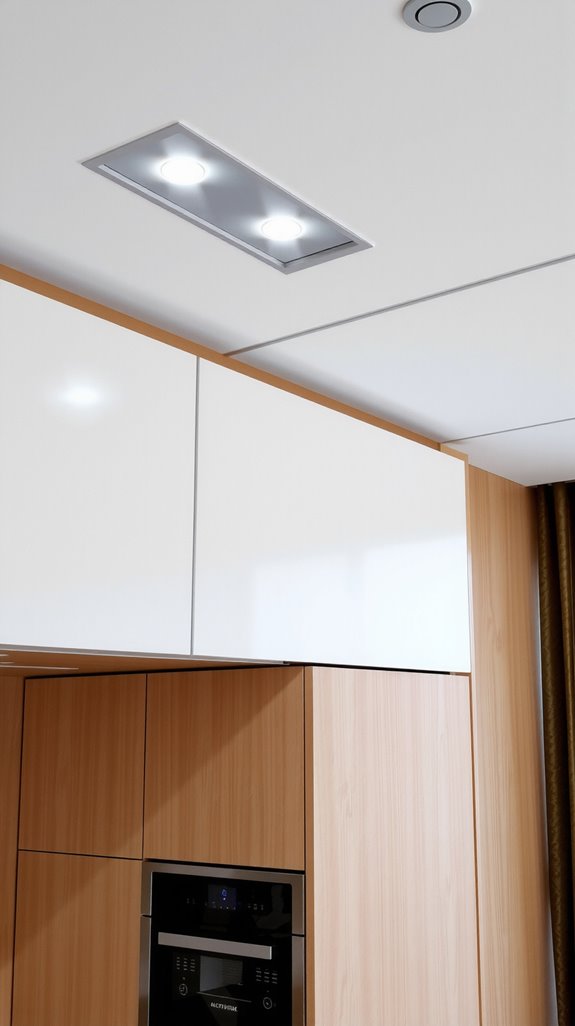
Steam doesn’t care about your design choices. It’ll warp, stain, or rot the wrong ceiling material without hesitation.
Your best options here are PVC panels, aluminum, and moisture-resistant gypsum boards. PVC is fully waterproof and wipes clean with mild detergent. Aluminum panels are rust-proof, fire-resistant, and genuinely low-maintenance.
MR gypsum works too, but you’ll need sealed edges and proper ventilation, or mold shows up at the joints eventually.
Skip solid wood entirely; wood-look PVC gives you that rustic finish without the rot. Match your material to your kitchen’s actual humidity level, not just its aesthetic mood. Beyond looks, the right ceiling material also conceals electrical and ductwork cleanly while holding up to daily kitchen conditions.
SEE THIS: 13 False Ceiling Designs for Office Cabin (Clean & Professional Look)!
The Plus-Minus Ceiling Design With Built-In LED Layers
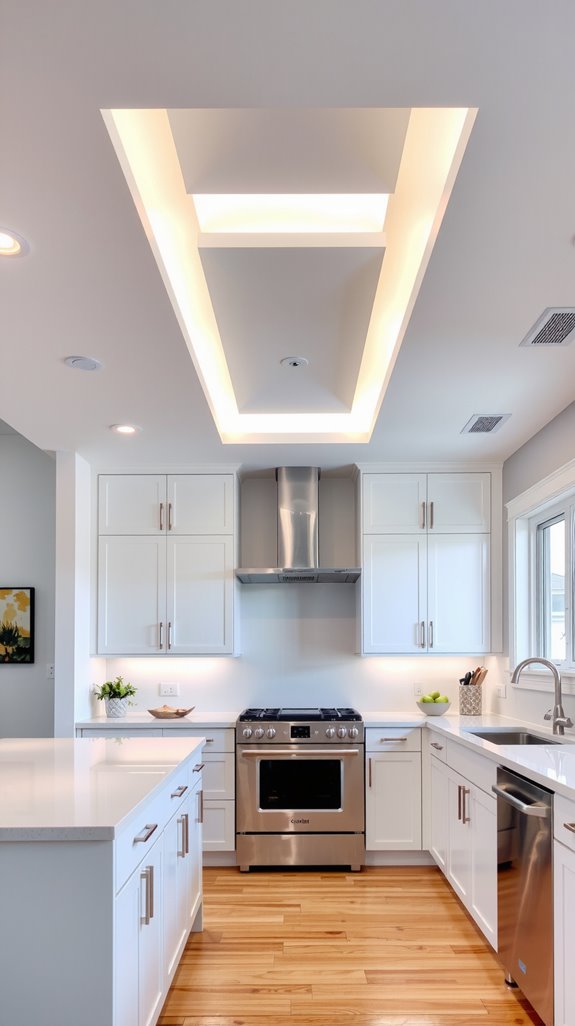
Choosing the right material is only half the job; how you shape the ceiling does just as much work. The plus-minus design uses protruding panels and recessed sections to create a layered, sculptural ceiling that actually earns its complexity.
Strip LEDs hide inside the recessed minus layers, producing soft cove lighting. Spotlights mount onto the raised plus panels directly above countertops and islands.
You’ll need at least 9 feet of original ceiling height to pull this off without bumping your head on drama. Add dimmers, and the same ceiling handles both meal prep and a quieter dinner setting.
SEE THIS: 10 Farmhouse Style False Ceiling Designs for Kitchen Spaces!
Single-Plane POP Ceilings With Strategic Lighting Placement
Not every kitchen needs a sculptural ceiling to look intentional. A single-plane POP ceiling, one flat, unbroken gypsum surface with zero grooves or moldings, gets the job done quietly.
It’s the smartest move for kitchens under 9 feet because it wastes nothing. Then lighting does the heavy lifting. Space recessed spotlights every 3 to 4 feet, and position them 10 to 14 inches from the wall over counters to avoid scalloping shadows.
Use 3000K warm white near the stove, neutral white at the prep counter and pull 90+ CRI LEDs throughout.
Simple ceiling, smart fixtures, finished room.
False Ceiling Cove Lighting That Makes Low Kitchens Feel Taller
A cove ceiling, basically a shallow ledge running around the room’s perimeter that hides an LED strip and bounces light upward, does something a flat ceiling can’t: it makes a low kitchen feel a foot taller without touching a single wall.
Keep your POP border slim, just 2,3 inches wide and 1.5,2 inches deep, so you’re not trading one low ceiling for a slightly lower one.
Use 2700K,3000K LEDs with a CRI of 90+ inside an aluminum profile channel, set the glowing edge 4,8 inches from the wall and pair it with under-cabinet task lighting so your counters don’t disappear into shadow.
SEE THIS: 12 False Ceiling Designs With Mirror Elements (Reflective & Luxurious)!
Slim Border Ceilings That Hide Ducts Above Wall Cabinets
That exposed duct snaking above your wall cabinets isn’t a design feature, no matter how your contractor tries to spin it. A slim border ceiling fixes this.
You run a 2,3 inch POP drop along the perimeter, hiding a 6-inch exhaust duct without lowering your entire ceiling. The border stays 6,8 inches wide max, so compact kitchens don’t feel crushed.
Align the inner edge flush with your cabinet faces for a clean, built-in look. Add a 1.5,2 inch cove inside for LED strips at 2700K,3000K and you’ve got indirect light plus zero visible ductwork.
Zone-Based Ceiling Layouts for L-Shaped and Large Kitchens
Hiding a duct behind a slim border works fine for a single run of pipe, but once your kitchen stretches into an L-shape or crosses 200 square feet, one ceiling treatment can’t do the heavy lifting alone.
You need zones. Split your space into three: cooking, cleaning, and prep. Each gets its own ceiling treatment. A 4-to-6-inch drop signals a boundary without building a wall. Align those drops with your counter edges, not randomly.
The corner junction in an L-shaped kitchen becomes your natural anchor. Different heights, different functions. Your ceiling starts doing the organizing your floor plan already planned.